
Your cart is empty
How to Winterize Your Pool (Closing It the Right Way)
Even in Texas, a hard freeze can crack equipment and plumbing. Closing your pool properly protects it through winter — and makes opening a breeze.
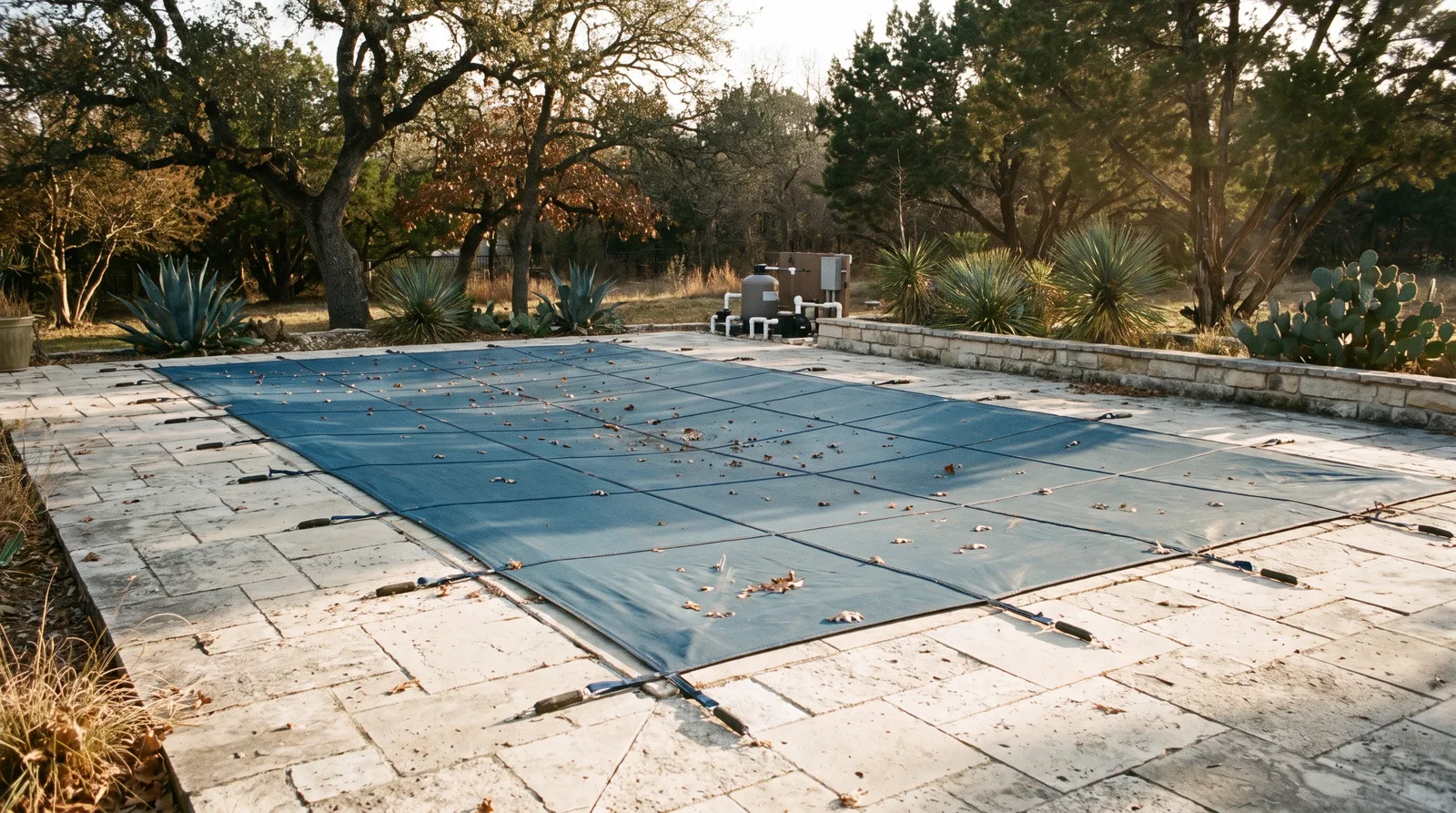
Winterizing is easy to skip in a mild climate — right up until a hard freeze cracks a pump housing or bursts a pipe. Even in Texas Hill Country, closing your pool properly protects your equipment, keeps the water from turning into a spring science project, and makes reopening painless. If you keep the pool running through winter, some of this still applies for freeze protection. Here's how to close it down.
When to Close Your Pool
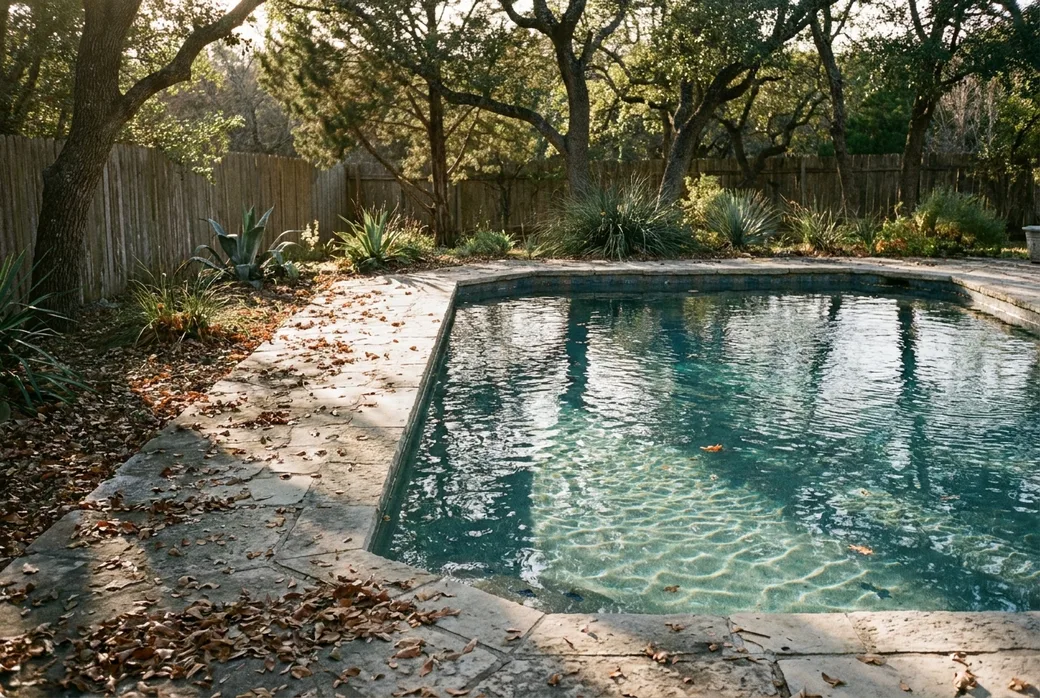
Close when the water cools and stays there — consistently below about 60 °F. Cold water slows algae and chlorine consumption to a crawl, so a properly balanced pool can sit closed without trouble. Closing too early, while the water is still warm, invites algae under the cover; closing after a freeze risks damage you were trying to prevent. Watch the forecast and close ahead of the first sustained cold snap.
Step 1: Deep Clean and Balance
Go into winter with clean, balanced water and you'll come out of it far ahead:
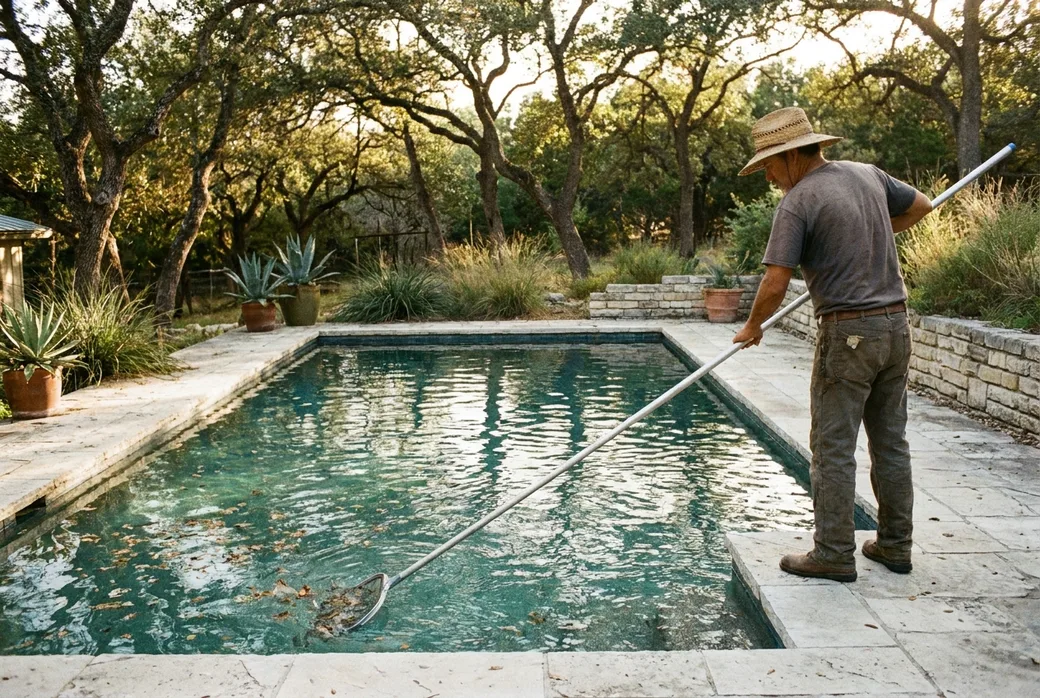
- Skim, brush, and vacuum so no debris is left to stain or feed algae.
- Balance the water — pH 7.4–7.6, alkalinity 80–120 ppm, calcium in range.
- Shock a few days before closing so sanitizer is solid but settled.
Balanced water resists algae and protects surfaces through months of dormancy.
Step 2: Lower the Water and Drain Equipment
Freeze protection is the whole point of this step:
- Lower the water level below the skimmer and returns (per your cover type).
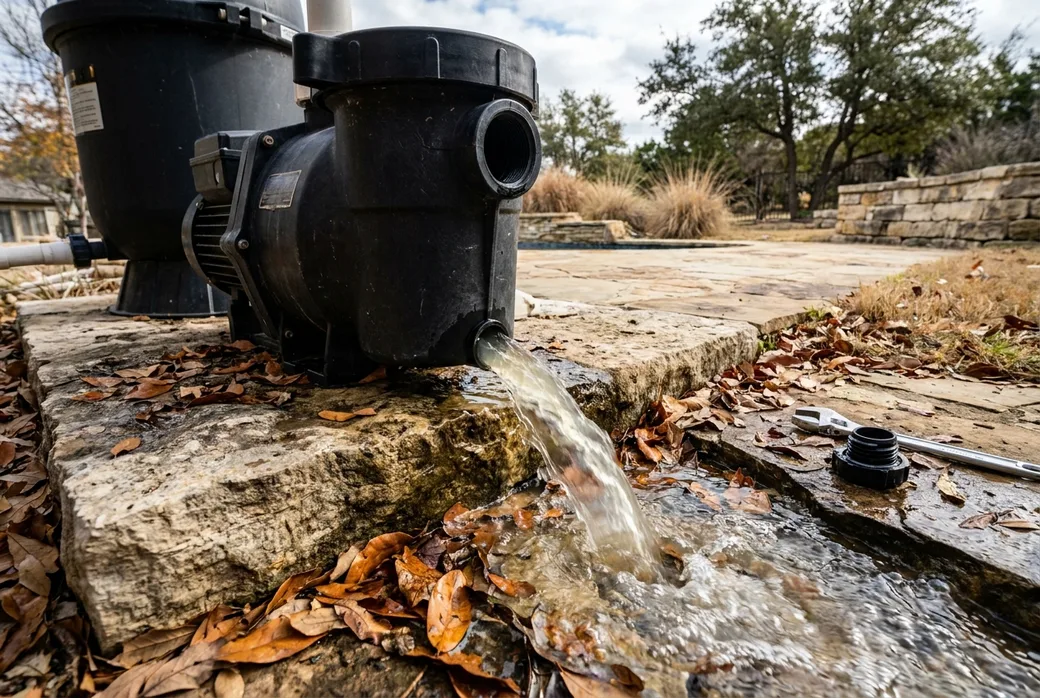
- Drain the pump, filter, heater, and plumbing — remove drain plugs and blow out lines so no water is left to freeze and expand.
- Store removable equipment (pump drain plugs, baskets, gauges) somewhere you'll find them in spring.
Trapped water that freezes is what cracks equipment — get it all out.
Step 3: Add Winterizing Chemicals
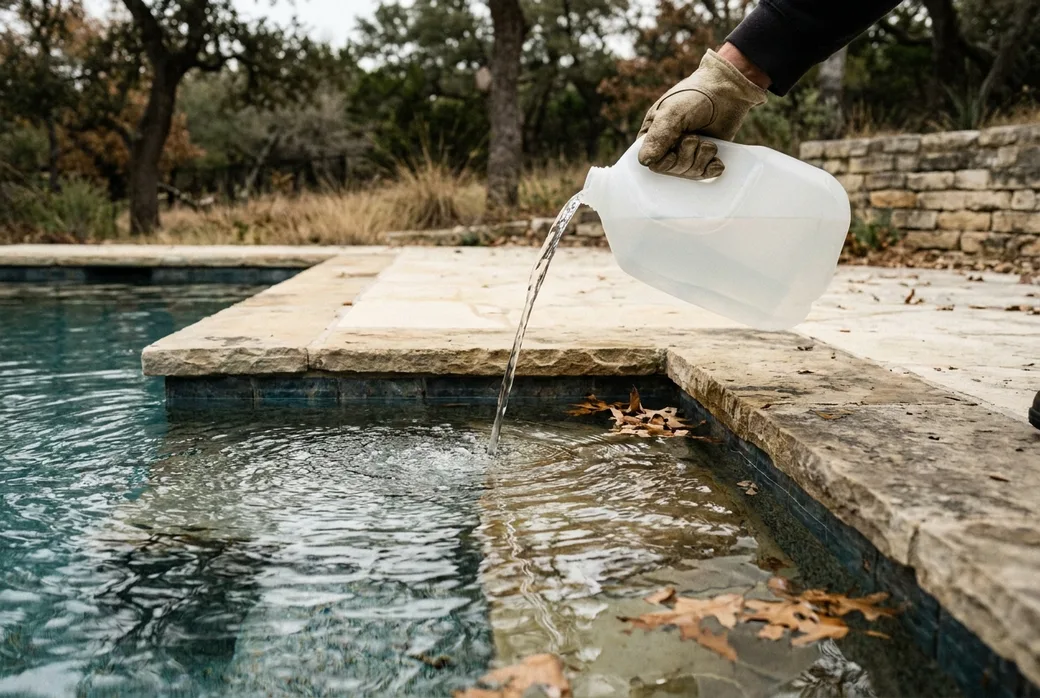
With levels lowered, add a winterizing kit to hold the water over:
- Winter algaecide to suppress growth during dormancy.
- A final sanitizer/oxidizer dose so the water starts winter clean.
- Avoid floating chlorine tablets under a closed cover — concentrated acid can damage the surface.
Circulate briefly to distribute everything before the final close.
Step 4: Cover the Pool
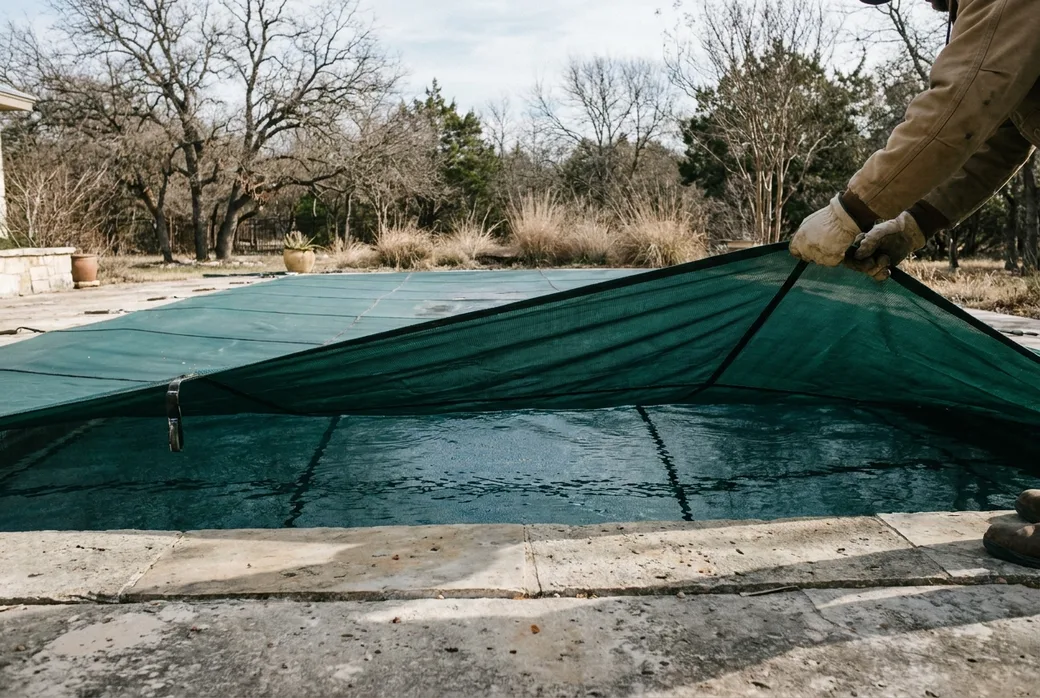
Finally, protect the water from the elements. Fit a clean winter or safety cover snugly so leaves, debris, and animals stay out. Make sure it's secured against wind, and if you use a mesh safety cover, plan to check water level occasionally through the season. A well-fitted cover keeps your balanced water balanced and dramatically reduces spring cleanup.
Monitoring Through the Off-Season
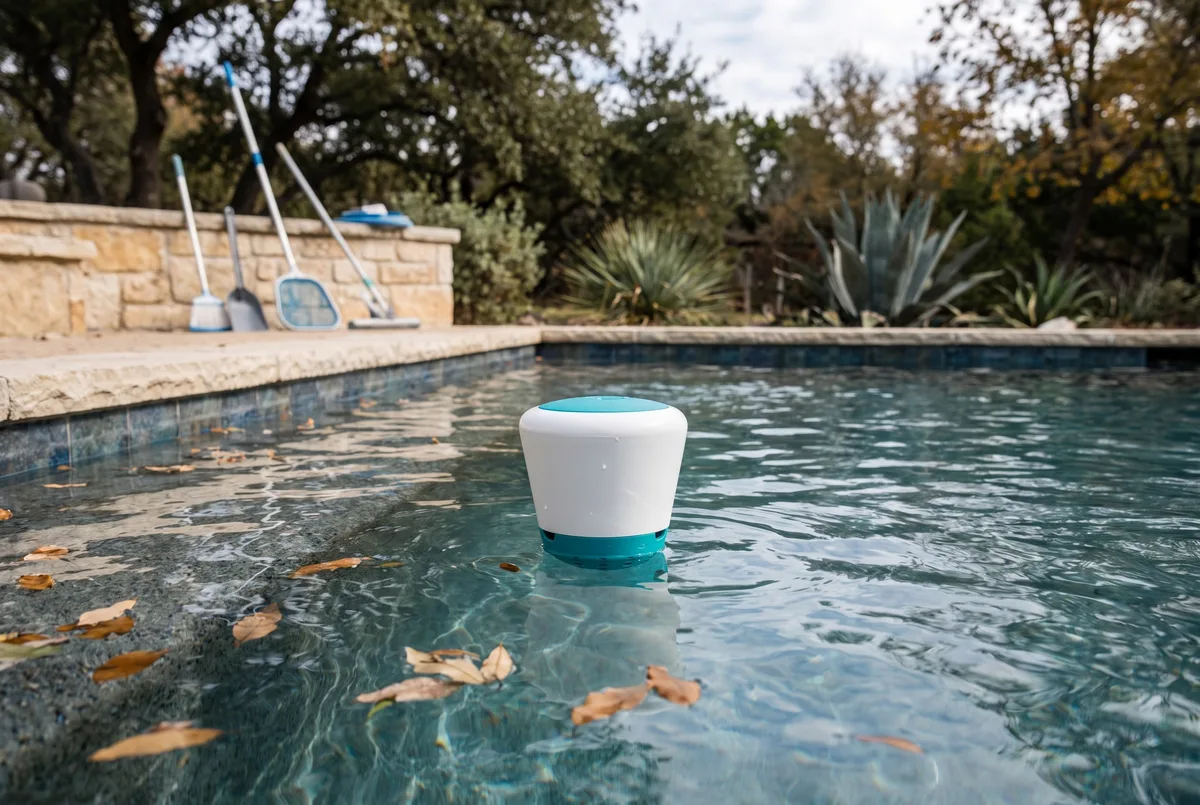
A closed pool isn't a frozen moment in time — water chemistry still drifts slowly, and a warm spell can wake up algae under the cover. Keeping an eye on things through the off-season means you reopen to clear, balanced water instead of a surprise. A smart monitor that keeps logging temperature and chemistry — and warns you of a freeze risk or a chemistry swing — turns the anxious "what will I find in spring?" into a calm, known quantity.
Make pool maintenance effortless
Our smart water monitors track pH, ORP, and more in real time — and tell you exactly what to add. No guessing, no test strips.
Explore Smart Water Monitors