
Your cart is empty
What Is TDS in Pool Water? (Total Dissolved Solids Explained)
Every chemical you've ever added leaves something behind. TDS is the running total — and when it climbs too high, your water turns dull and your chemicals stop pulling their weight.
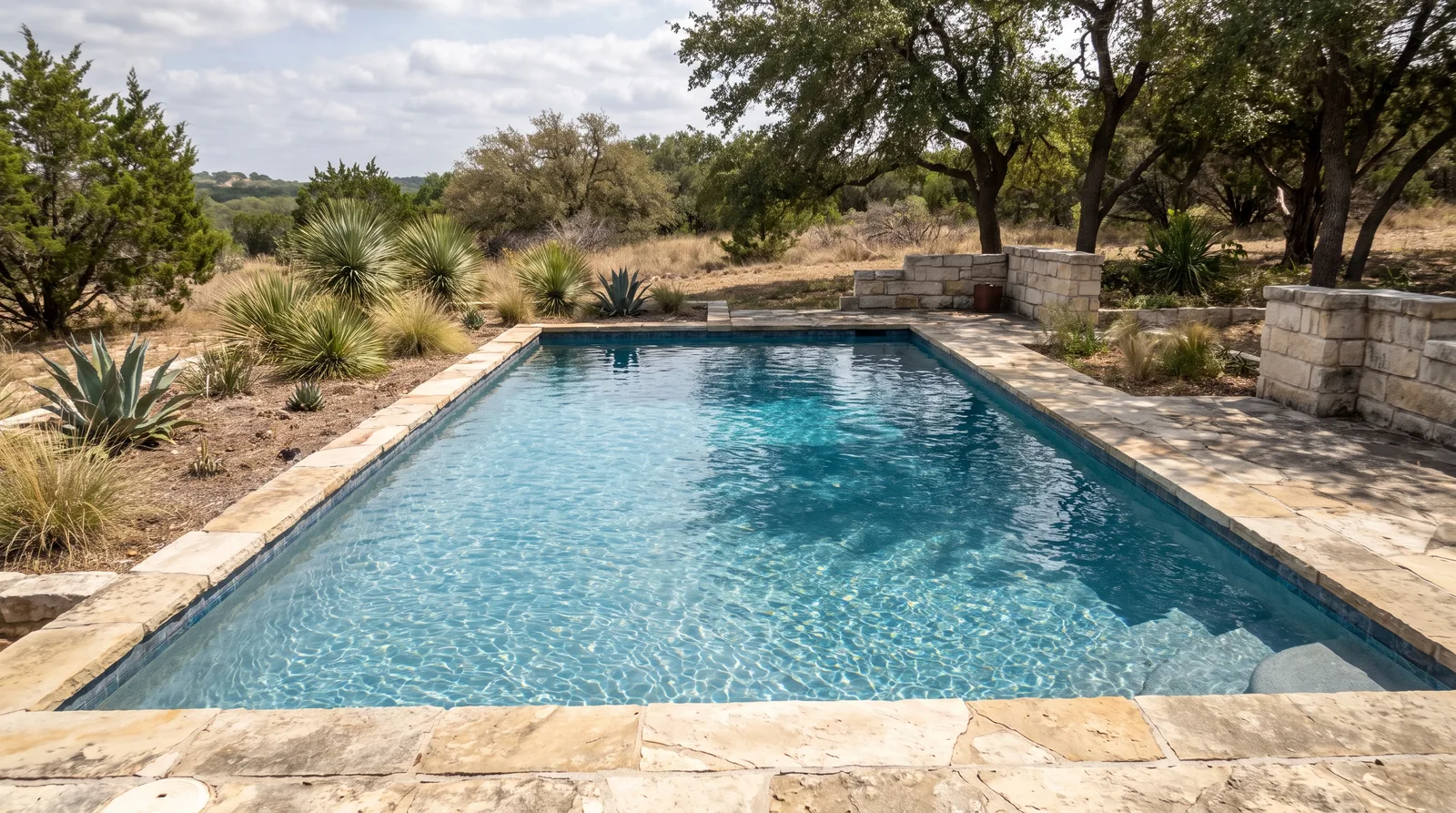
TDS — total dissolved solids — is the sum of everything dissolved in your pool water that isn't water itself. Salt, calcium, magnesium, chlorides, sulfates, leftover chemical byproducts, and minerals from your fill water all add up into a single number, measured in parts per million (ppm).
A little TDS is normal and harmless. But because every chemical you add and every gallon of hard fill water raises it, TDS only climbs over a season — and once it gets high enough, it quietly sabotages everything else you're doing. Here's what TDS actually tells you and when it's worth acting on.
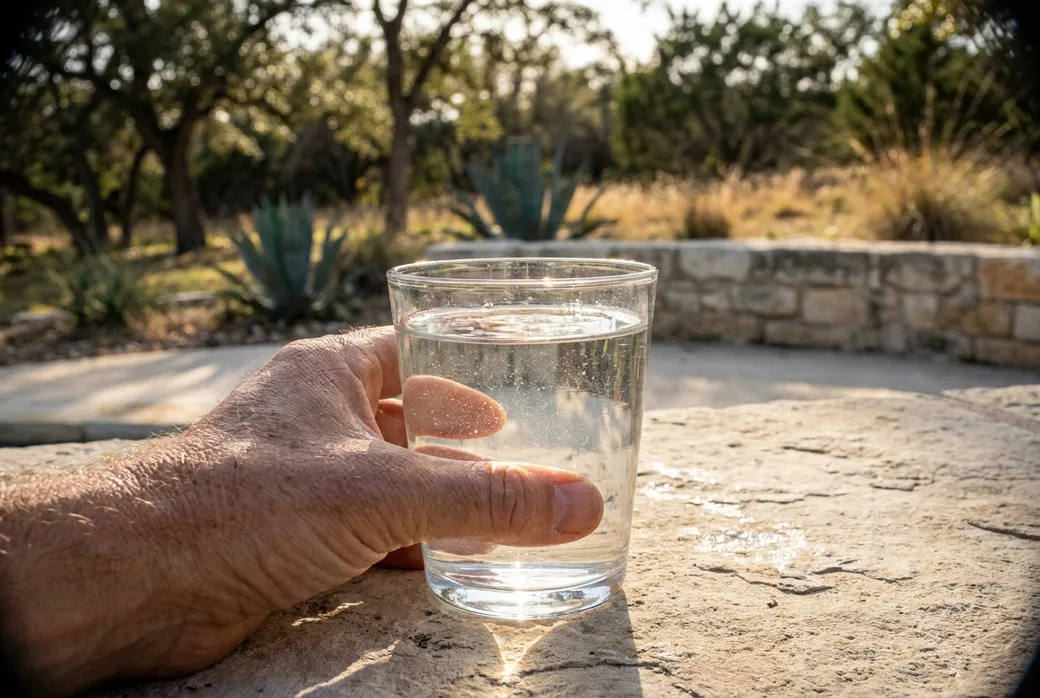
What Counts as "Dissolved Solids"
If you evaporated a gallon of pool water down to nothing, the pile of residue left behind is your dissolved solids. It's a mix of:
- Salt (sodium chloride) — huge in salt pools, present in every pool from chlorine byproducts.
- Calcium and magnesium (hardness) — from fill water and calcium-based chemicals.
- Chlorides and sulfates — the leftover "ash" from chlorine, acid, and shock.
- Cyanuric acid, bicarbonates, and metals — stabilizer, alkalinity buffers, and trace copper or iron.
Crucially, most of what makes up TDS is invisible and dissolved — not the cloudiness you can see (that's undissolved particles the filter handles). TDS is the stuff filtration can't remove.
The Ideal TDS Level for a Pool
There's no single magic number, because the baseline differs between pool types:
| Pool type | Typical healthy TDS | Act when TDS exceeds |
|---|---|---|
| Traditional chlorine pool | 300–1,500 ppm | ~1,500 ppm above startup |
| Salt water pool | 3,000–4,500 ppm (salt) | ~1,500 ppm above your salt baseline |
The rule that matters most: watch the change, not the raw number. Record your TDS right after filling/startup, then track how far it has climbed. Once TDS is roughly 1,500 ppm higher than your clean-water baseline, chemicals start losing efficiency.
Salt-pool note: your salt is dissolved solids, so a salt pool's TDS reading is naturally in the thousands. That's expected — just make sure the reading matches your target salinity plus a reasonable baseline, not runaway buildup on top of it.
Why High TDS Is a Problem
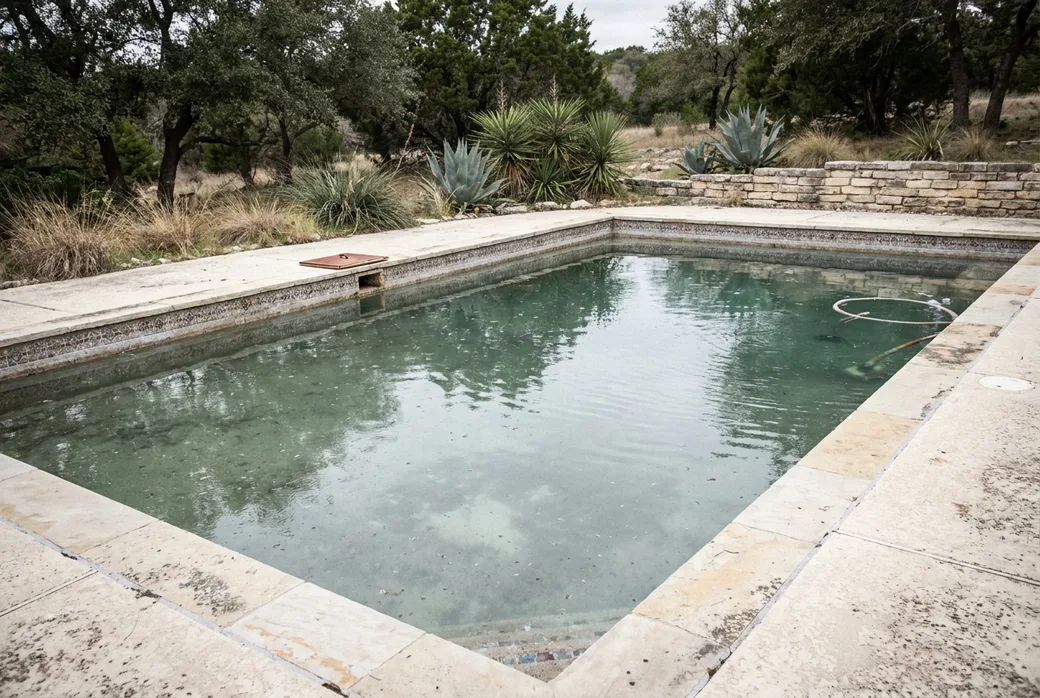
When TDS climbs too high, dissolved solids crowd the water and interfere with the reactions your chemicals rely on:
- Chlorine works harder for less. High TDS reduces sanitizing efficiency, so you burn more chlorine to hold the same ORP.
- Water looks dull and flat. Even balanced, high-TDS water loses that sparkle and takes on a hazy, grayish cast.
- Scale and staining increase. Excess dissolved minerals fall out of solution onto surfaces and equipment.
- Salty taste and skin irritation. Very high TDS makes water taste salty and can leave skin feeling filmy.
- Test readings drift. Extreme TDS can throw off other chemistry measurements, making the whole pool harder to balance.
The frustrating signature of high TDS: you're doing everything "right" on paper, but the water still won't behave.
What Causes TDS to Climb
TDS goes in one direction on its own — up. The usual drivers:
- Evaporation. Water leaves, dissolved solids stay and concentrate. Summer heat accelerates this.
- Every chemical you add. Chlorine, acid, shock, algaecide, and salt all leave dissolved residue behind.
- Hard fill water. Topping off with mineral-rich tap or well water adds calcium and salts each time.
- Salt chlorine generators. Continuously producing chlorine slowly raises overall dissolved load.
- Swimmer contributions. Sweat, sunscreen, and body oils add measurable dissolved material over a busy season.
Because these are all normal parts of owning a pool, rising TDS is inevitable — the question is only how fast and when to reset it.
How to Lower High TDS
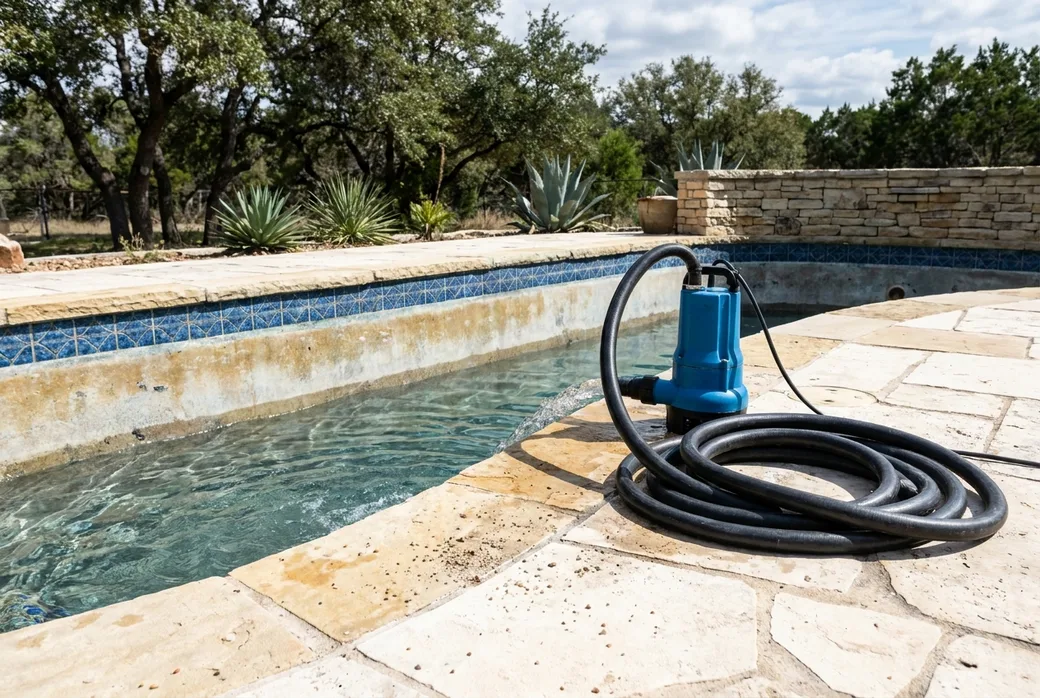
Here's the catch that surprises people: you cannot filter or chemically remove TDS. Dissolved solids don't respond to your pump, filter, or a bottle of anything. There's exactly one reliable fix:
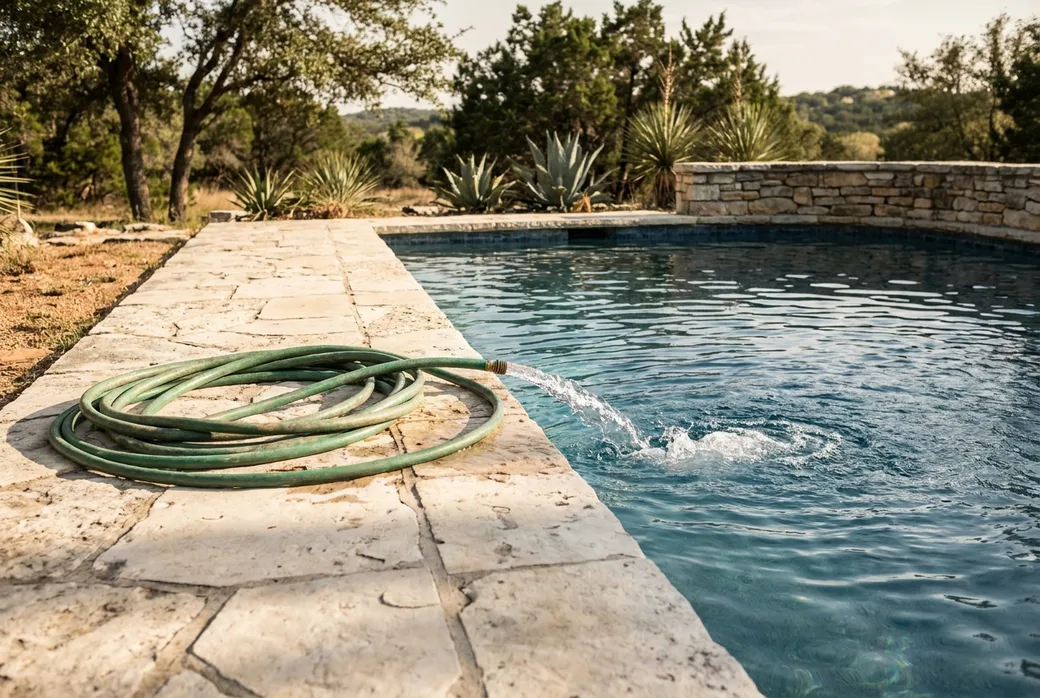
- Partial drain and refill (dilution). Drain a portion of the pool and replace it with fresh water. Diluting with lower-TDS water is the only way to bring the number down.
To do it efficiently:
- Test your fill water's TDS first — if it's already high (common with well water), you'll need to drain more to make a dent.
- Calculate the swap: to cut TDS roughly in half, you'll replace about half the water. Smaller problems need smaller swaps.
- Drain in stages in high-water-table areas to avoid "popping" the pool shell.
- Rebalance pH, alkalinity, calcium, and sanitizer afterward — fresh water resets those too.
A softer long-term strategy: use lower-TDS fill water (or pre-soften it), and don't over-dose chemicals you don't need. The less you add, the slower TDS climbs.
When You Actually Need to Worry About TDS
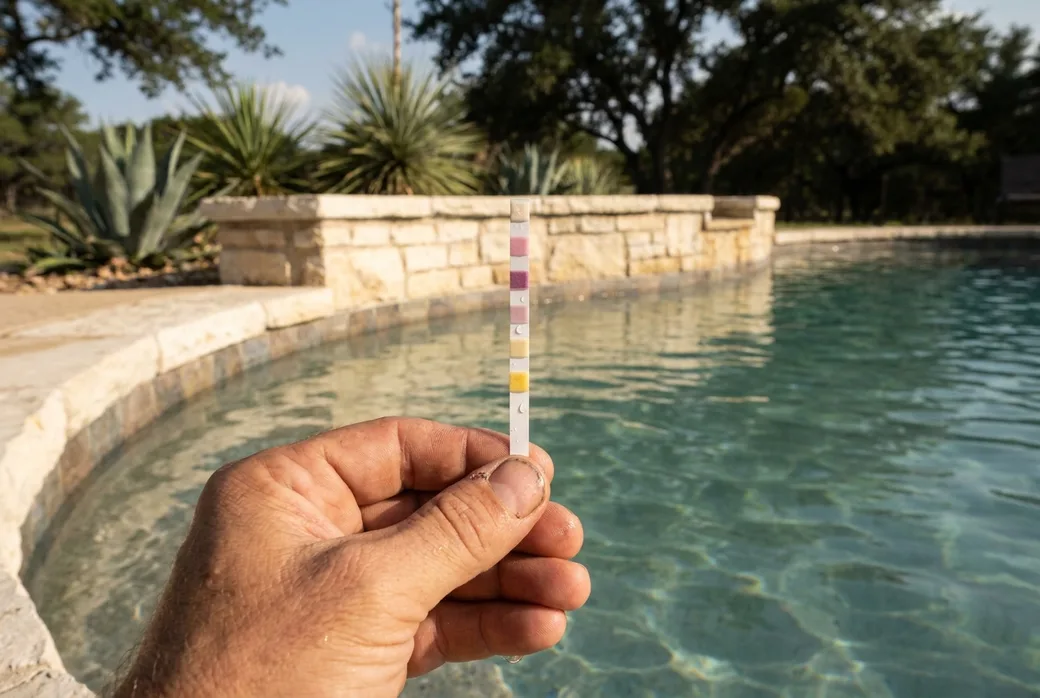
TDS is a "check it occasionally" number, not a daily one. Reach for it when:
- You're chasing chlorine demand or cloudy water and everything else tests fine.
- Your pool is late in the season and hasn't been diluted in a year or more.
- You've added a lot of chemicals during an algae fight or after a storm.
- The water tastes salty (non-salt pool) or feels filmy.
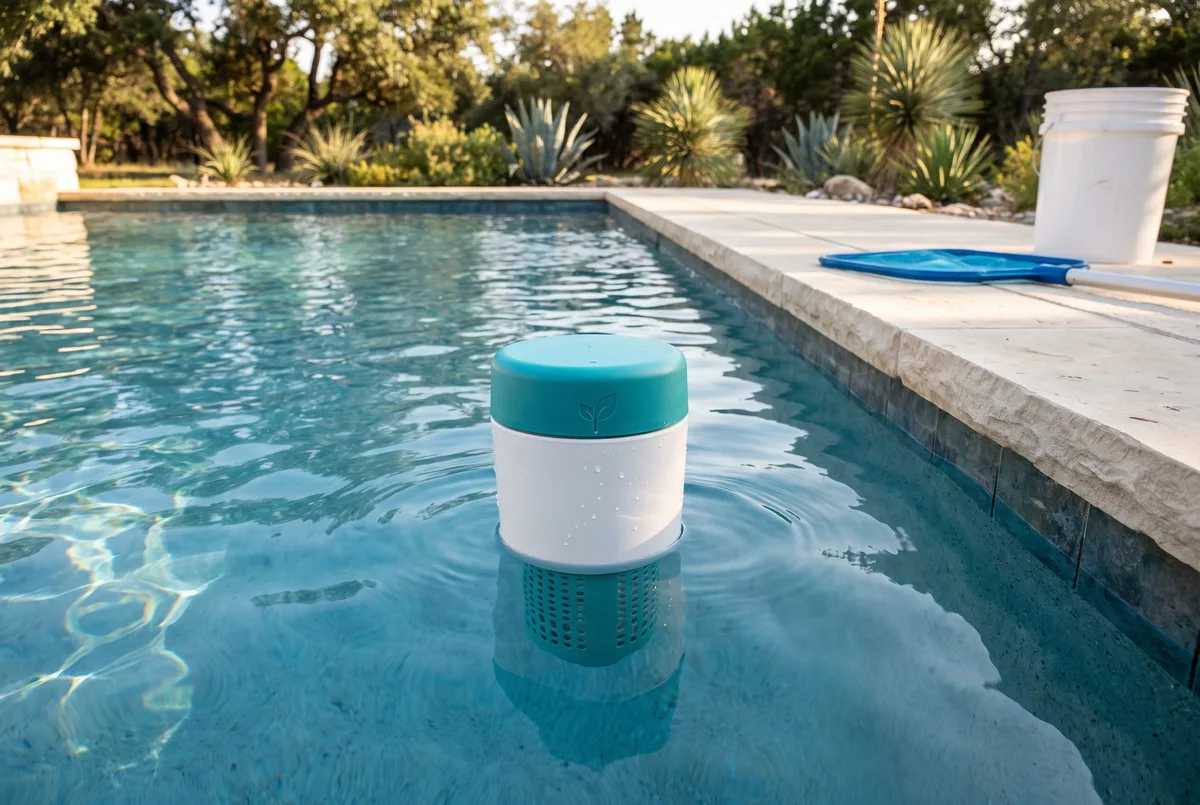
For everyday balance, pH and ORP are what move day to day — TDS is the slow-burning background number that explains why a pool that "should" be fine isn't. A smart monitor that trends TDS over months makes it obvious when a dilution is overdue, instead of leaving you guessing.
Make pool maintenance effortless
Our smart water monitors track pH, ORP, and more in real time — and tell you exactly what to add. No guessing, no test strips.
Explore Smart Water Monitors