
Your cart is empty
Cyanuric Acid (Pool Stabilizer): How Much Is Too Much?
Stabilizer is the chemical everyone forgets to test — until their chlorine mysteriously stops working. A little protects it from the sun; a lot holds it hostage.
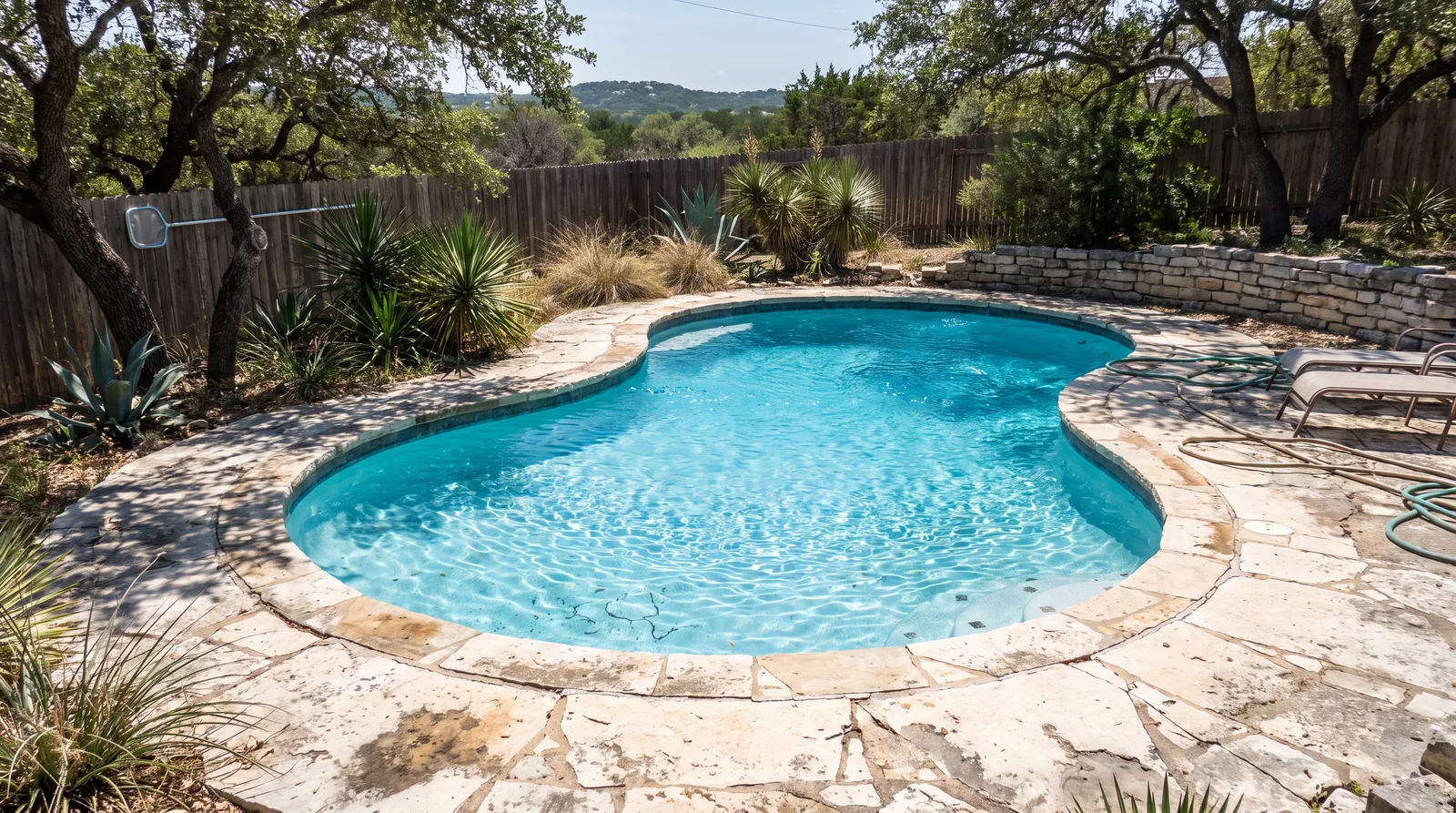
Cyanuric acid (CYA) — also called stabilizer or conditioner — is chlorine's sunscreen. Without it, UV rays from the sun destroy free chlorine within a couple of hours, and an outdoor pool would burn through sanitizer faster than you could add it. With the right amount, CYA can cut chlorine loss dramatically.
But CYA has a dark side: the same molecule that shields chlorine also holds it back. Too much stabilizer and your chlorine becomes sluggish, your ORP tanks, and you end up with algae in a pool that "has plenty of chlorine." Understanding this trade-off is one of the biggest upgrades you can make to your pool IQ.
What Cyanuric Acid Does
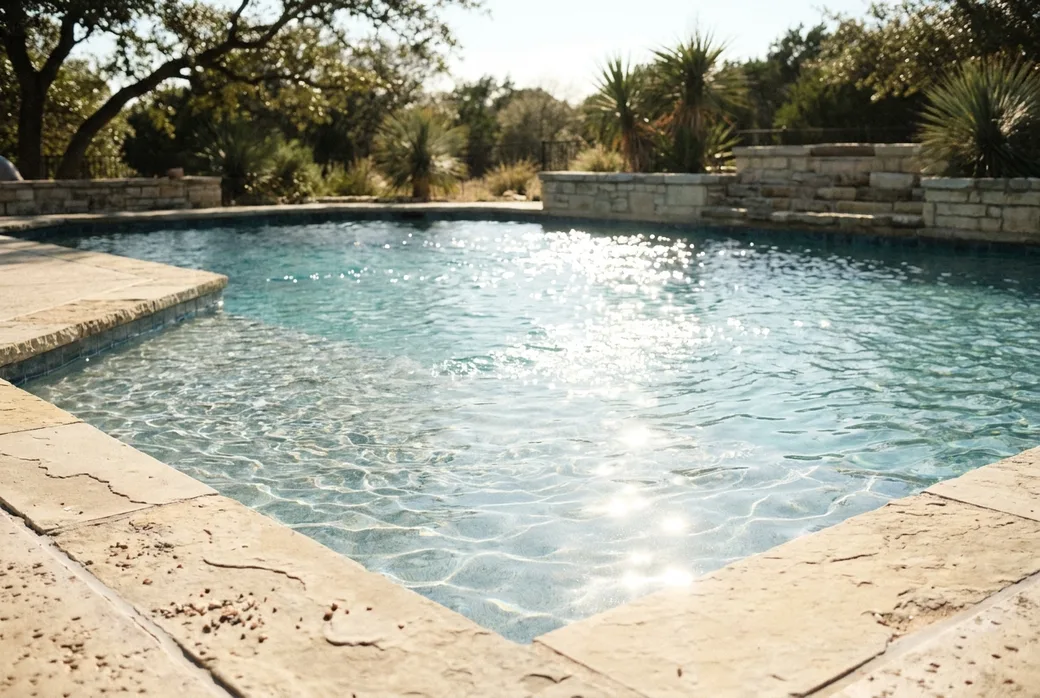
CYA bonds loosely with free chlorine, forming a reserve that's protected from sunlight. When UV would normally break chlorine down, the stabilized portion is shielded and released gradually as active chlorine gets consumed.
- In full sun with no CYA, a pool can lose 90%+ of its free chlorine in a few hours.
- With CYA around 30–50 ppm, chlorine loss slows to a manageable trickle.
The catch: bonded chlorine is less available to sanitize at any given instant. So CYA is a balance between protection (keeps chlorine around) and potency (how hard that chlorine hits). Push it too far toward protection and potency collapses.
The Ideal CYA Range
| Cyanuric acid | Effect |
|---|---|
| 0–20 ppm | Chlorine burns off fast in sun — usually too low for outdoor pools |
| 30–50 ppm | The sweet spot for most chlorine pools |
| 60–80 ppm | Salt pools often run here; chlorine efficiency starts dropping |
| Above 80–100 ppm | "Chlorine lock" territory — sanitizer struggles, algae risk rises |
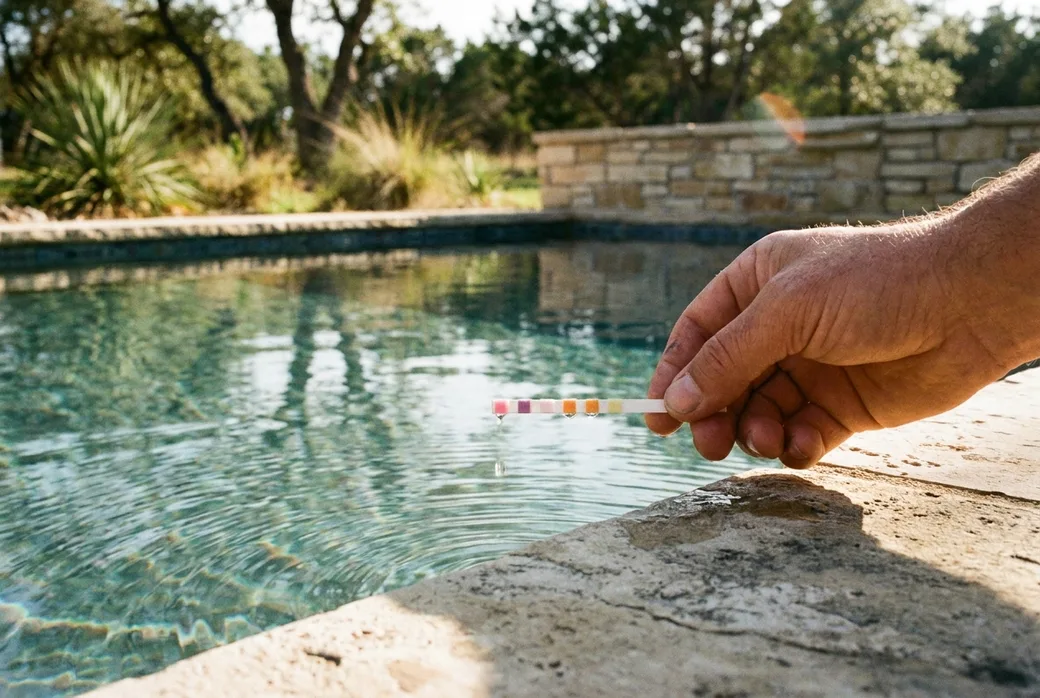
For a standard outdoor chlorine pool, target 30–50 ppm. Salt pools tolerate a bit more (often 60–80 ppm) because the generator continuously replenishes chlorine. Indoor pools may need little or none, since there's no sunlight to guard against.
The 7.5% rule: a widely used guideline is to keep free chlorine at about 7.5% of your CYA level. At 40 ppm CYA that's ~3 ppm chlorine. As CYA rises, the chlorine you must maintain rises with it — which is exactly why runaway CYA becomes unmanageable.
Why Too Much CYA Wrecks Your Chlorine
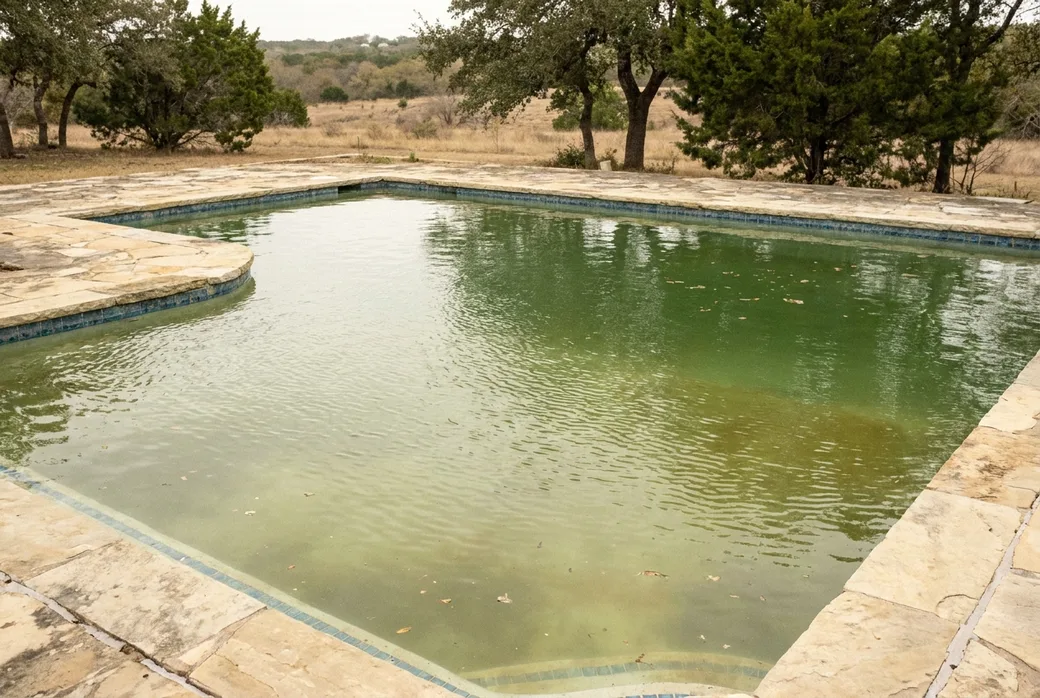
This is the part that catches people off guard. High CYA doesn't just dilute chlorine's strength — it drags down ORP, the true measure of sanitizing power. You can dose to 3 ppm free chlorine and still have water that barely oxidizes, because most of that chlorine is locked in the stabilizer reserve.
The symptoms of over-stabilization:
- Algae or cloudy water despite "normal" chlorine readings.
- ORP stuck below 650 mV no matter how much chlorine you add.
- Constantly needing to shock, with results that don't last.
If that sounds familiar, test your CYA before adding one more ounce of chlorine. Learn more about why ORP — not the chlorine number — tells the real story in our guide to ORP in pool water.
What Raises CYA (Often Without You Noticing)
The most common cause of high CYA is completely accidental:
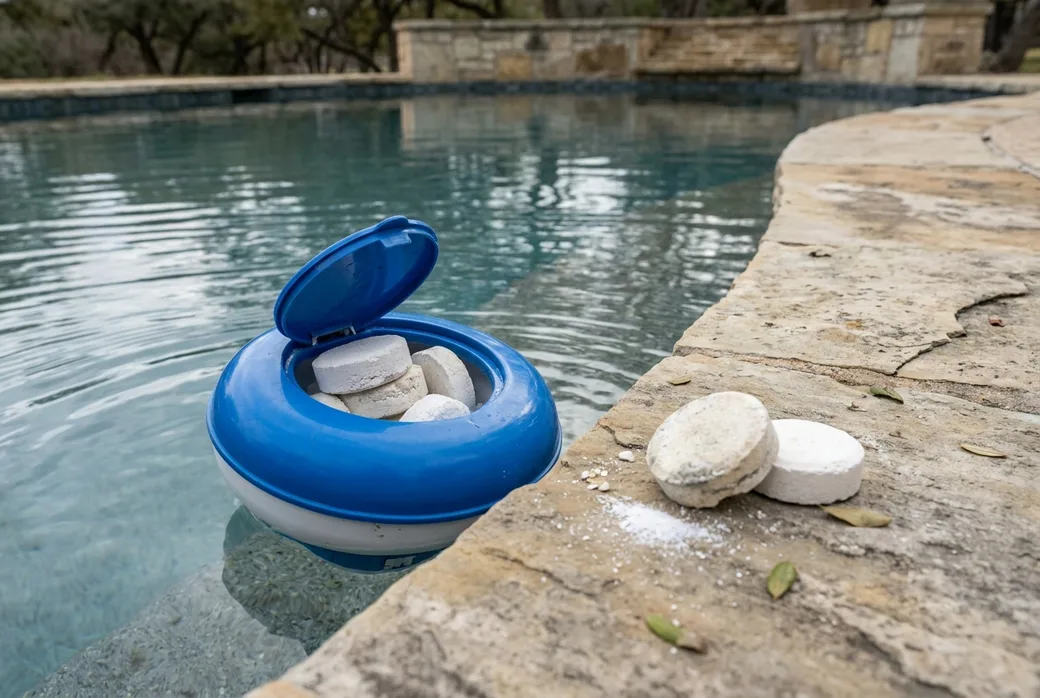
- Trichlor tablets and dichlor shock. These are stabilized chlorine — they add CYA every single time you use them. Rely on pucks all season and CYA creeps up relentlessly.
- Adding stabilizer directly and over-estimating the dose.
- Low water turnover. CYA doesn't evaporate or break down quickly, so it accumulates unless you dilute.
That first point is the big one: if your only sanitizer is trichlor tablets, your CYA will climb into problem territory over a season almost guaranteed. Switching some or all of your chlorination to an unstabilized source (liquid chlorine, cal-hypo, or a salt system) keeps CYA in check.
How to Lower Cyanuric Acid
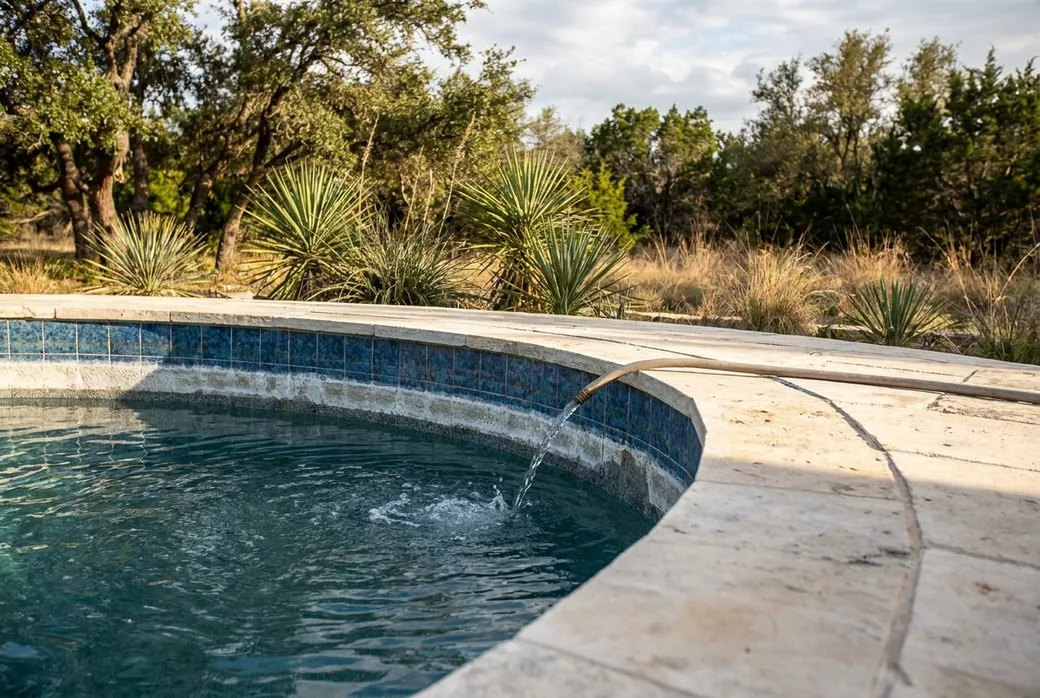
Like TDS, CYA can't be filtered or neutralized by a chemical — the practical fix is dilution:
- Partial drain and refill. Replace a portion of the water with fresh, CYA-free water. To roughly halve CYA, replace about half the volume.
- Test your fill water first (it's normally CYA-free) so you know the dilution will actually work.
- Rebalance afterward — draining resets pH, alkalinity, and hardness too.
There are CYA-reducing products on the market, but results are inconsistent; dilution remains the reliable standard. The better long-term move is prevention: stop adding stabilized chlorine once CYA hits your target.
How Often to Check CYA
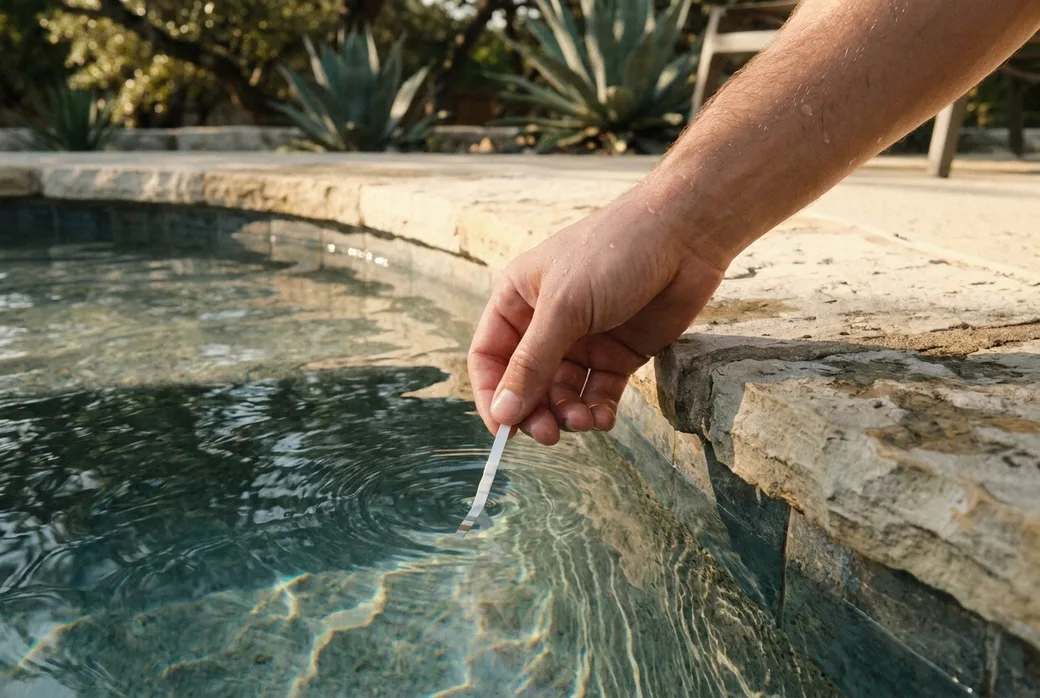
CYA is a slow mover, so it doesn't need daily attention — but it's the number most people neglect entirely, which is how it sneaks up on them:
- Monthly for pools using trichlor/dichlor (it climbs steadily).
- At startup and mid-season for salt or liquid-chlorine pools.
- Anytime chlorine stops behaving — before you shock, check CYA and ORP first.
CYA is the perfect example of why continuous water intelligence beats spot testing: the pools that get in trouble aren't the ones with occasional bad readings — they're the ones where a slow, invisible drift went unwatched until the water turned. Keep an eye on the trend and stabilizer stays your friend instead of your problem.
Make pool maintenance effortless
Our smart water monitors track pH, ORP, and more in real time — and tell you exactly what to add. No guessing, no test strips.
Explore Smart Water Monitors