
Your cart is empty
How to Open Your Pool for the Season (Step-by-Step)
A smooth pool opening is the difference between swimming next weekend and fighting a green pool for three. Here's how to do it right the first time.
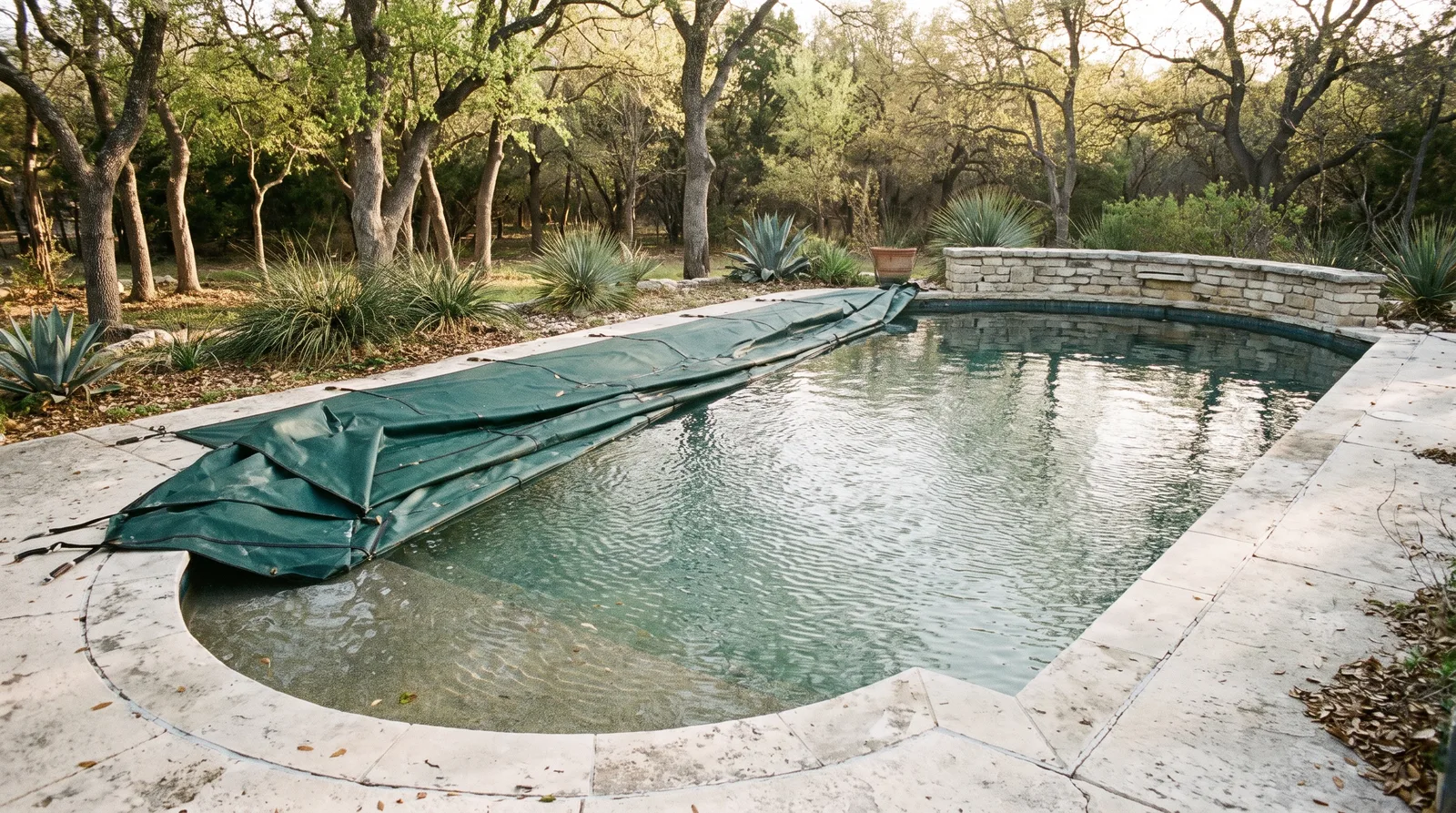
In much of Texas the "off-season" is short, but even a few months closed means opening day takes a little care. Do it methodically and your water will be swim-ready within days, with balanced chemistry that holds all summer. Rush it and you'll spend weeks chasing cloudy or green water. Here's the sequence that works.

When to Open Your Pool
Open earlier than you think. The temptation is to wait until it's hot, but the best time to open is when water temperatures are still cool — consistently in the 60s °F. Opening early, while the water is cold, means algae hasn't had a chance to bloom under the cover. Wait until the water is warm and you're essentially opening into an algae head start. If you can, aim for spring before the first real warm spell rather than the first pool party.
Step 1: Remove and Clean the Cover
Start with the cover, and take your time here — this is where most opening messes happen:
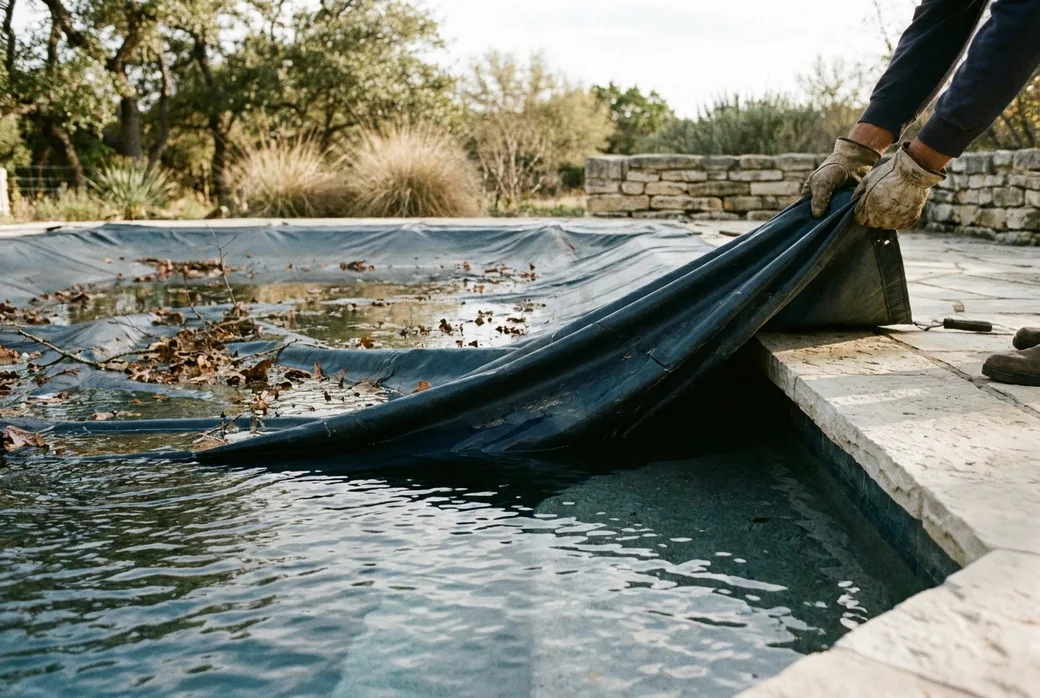
- Pump off standing water and sweep debris off the top before you pull it.
- Peel the cover back carefully so leaves and dirty rainwater don't dump into the pool.
- Clean and dry the cover before storing it, so it's in good shape next fall.
A little patience with the cover saves you hours of fishing debris out of the water later.
Step 2: Top Off and Reconnect Equipment
Over the winter the water level usually drops. Top it back up to the middle of the skimmer, then reassemble the system:
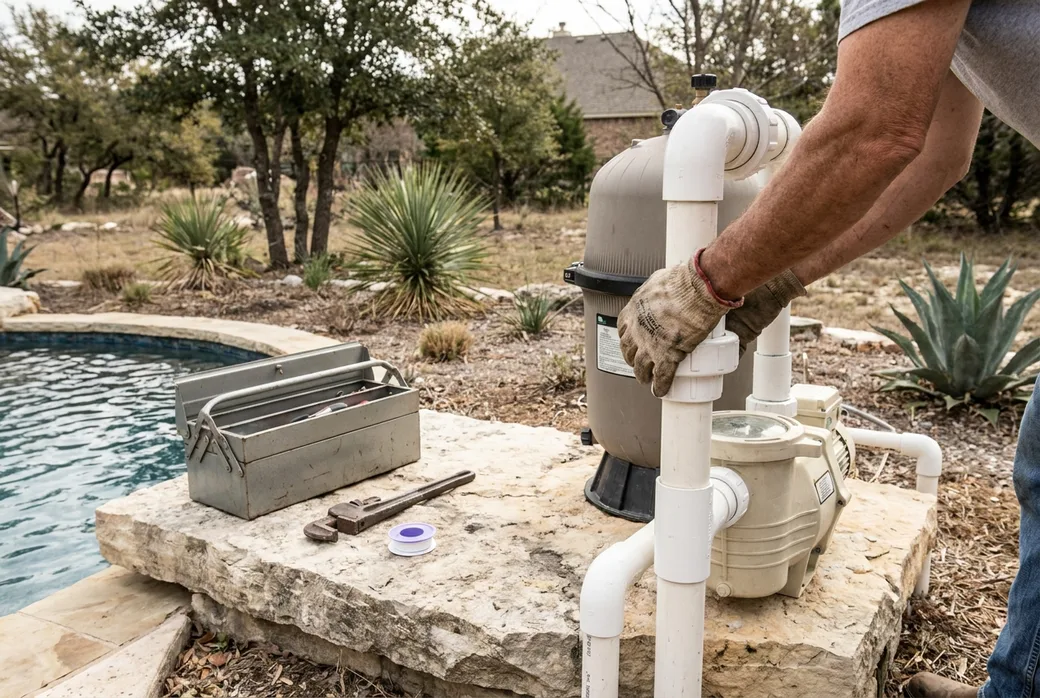
- Reinstall drain plugs, gauges, baskets, and return fittings you removed for winter.
- Reconnect the pump, filter, heater, and any salt cell or automation.
- Prime and start the pump, then check for leaks and confirm good flow at the returns.
Let the system run and circulate while you move on to chemistry.
Step 3: Test, Balance, and Shock
With water moving, get it chemically right:
- Test pH, alkalinity, calcium hardness, cyanuric acid, and sanitizer.
- Balance alkalinity first (80–120 ppm), then pH (7.4–7.6), then calcium and stabilizer. See the order of operations.
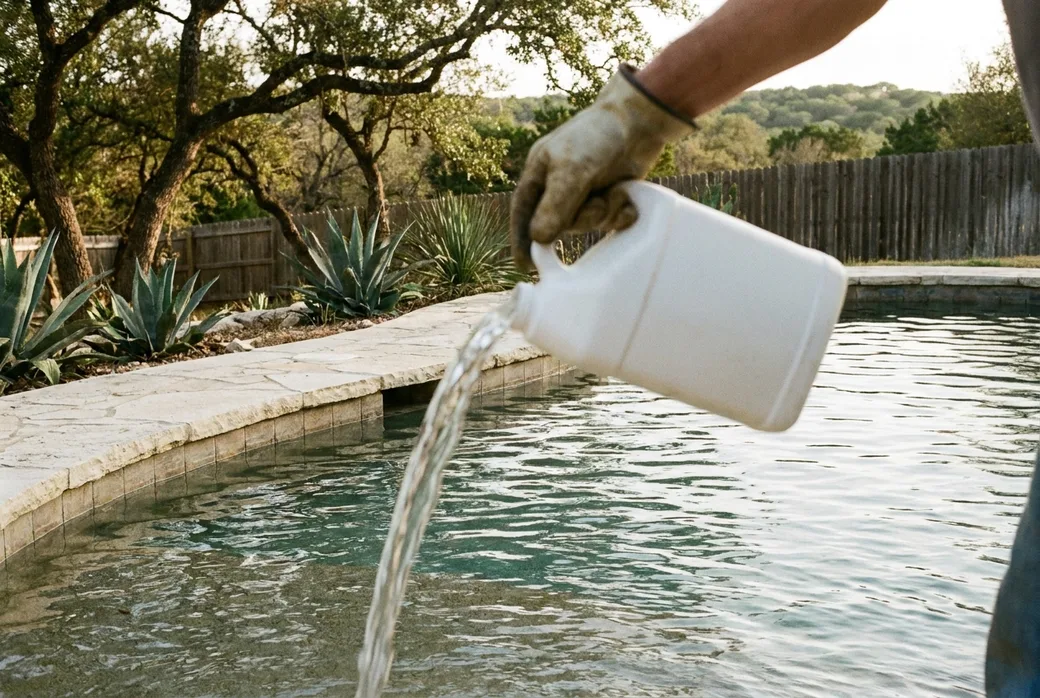
- Shock the pool to knock out anything that grew over winter and establish sanitizer.
Balancing before you shock makes the shock far more effective.
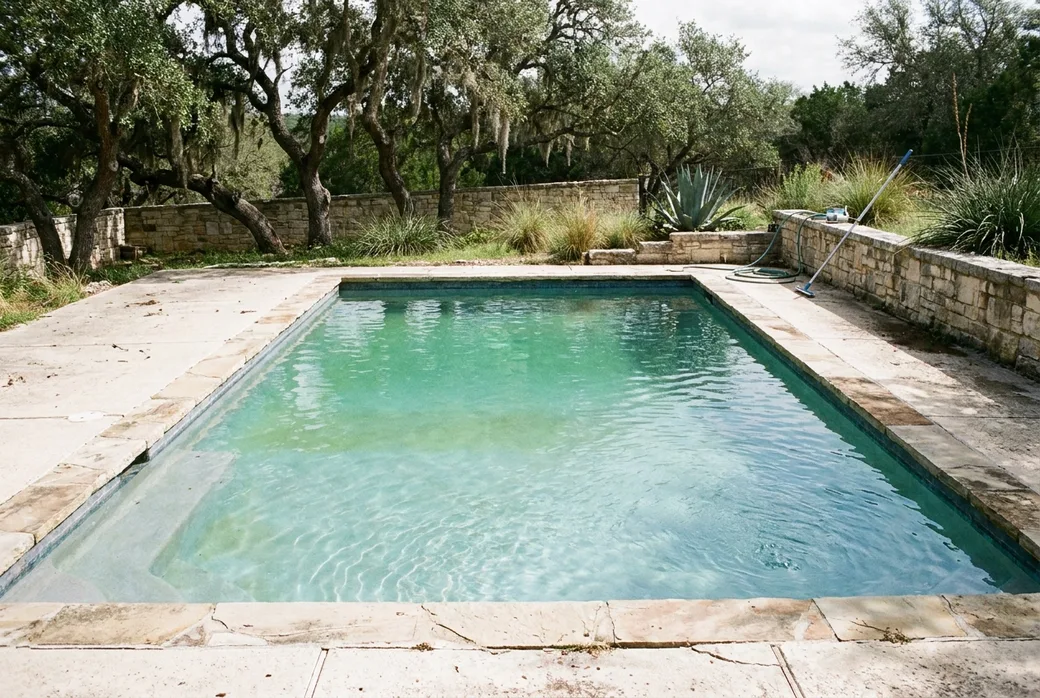
Step 4: Run, Filter, and Clear
Now let circulation do the work. Run the pump around the clock for the first few days, cleaning or backwashing the filter as it pulls out winter debris. Brush the walls and floor, vacuum anything that settles, and keep sanitizer up until the water goes from cloudy to clear and chlorine holds steady overnight. Within a few days you'll have a balanced, sparkling pool ready for the season.
Start the Season Off Right
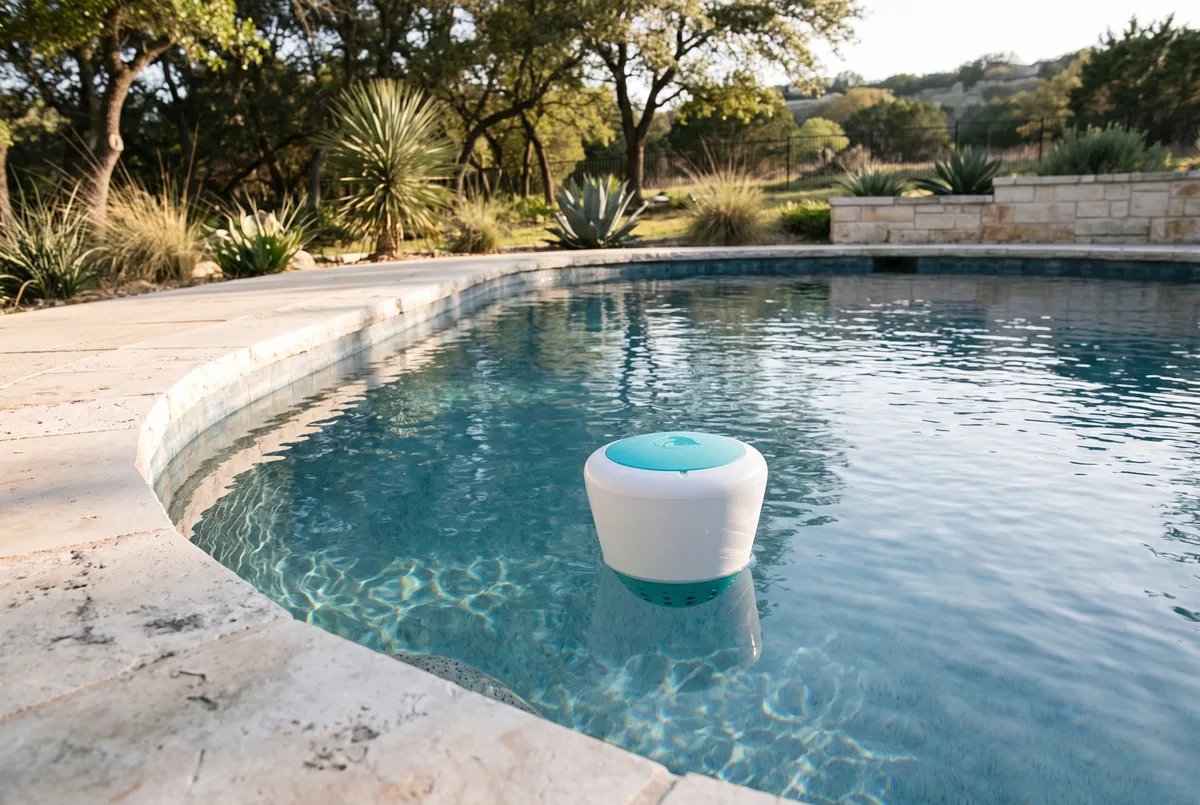
The way you open sets the tone for the whole summer. A pool that opens balanced and monitored rarely turns into a mid-July crisis. Instead of testing by hand and hoping, start the season by letting a smart monitor learn your pool and flag drift early — so the small corrections happen automatically in your awareness, long before they become weekend-eating problems.
Make pool maintenance effortless
Our smart water monitors track pH, ORP, and more in real time — and tell you exactly what to add. No guessing, no test strips.
Explore Smart Water Monitors