
Your cart is empty
How to Balance Pool Water: The Complete Order of Operations
Balanced water isn't about adding more chemicals — it's about adding the right ones in the right order. Get the sequence right and everything else falls into place.

Most pool frustration comes from fighting the symptoms instead of fixing the foundation. You chase cloudy water with more chlorine, chase pH with more acid, and never seem to catch up. The secret isn't more product — it's sequence. Balance the water in the correct order and each step makes the next one easy.
This is the master checklist that ties together every other topic on this site. Work through it top to bottom and your water will be safe, clear, comfortable, and — most importantly — stable.
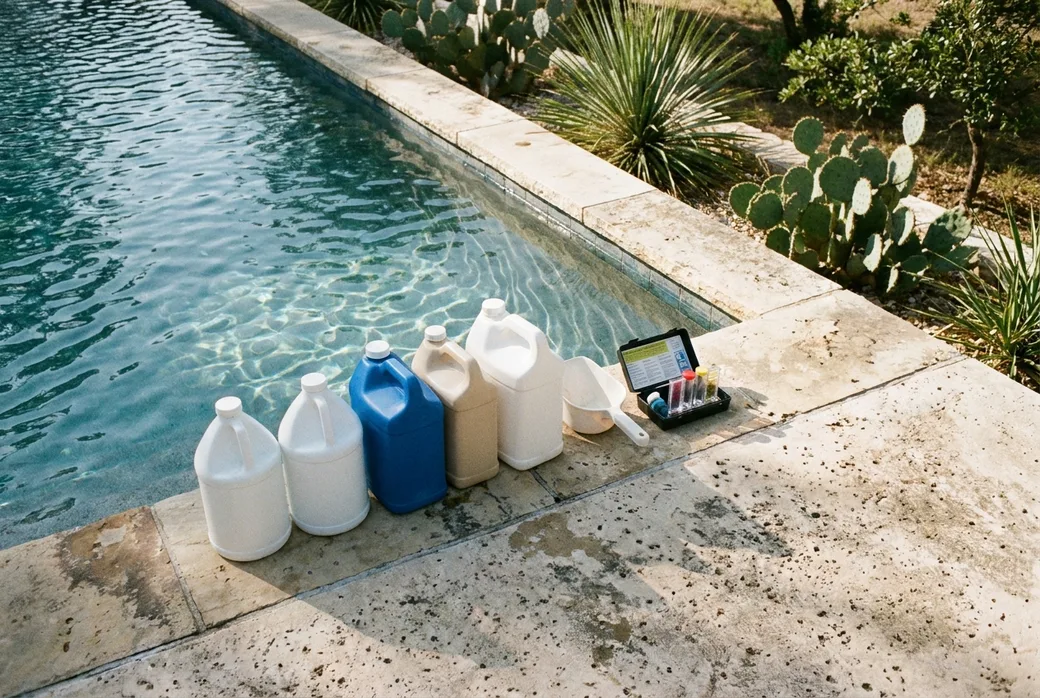
Why Order of Operations Matters
Pool chemistry is a chain of dependencies. Each number affects the ones below it:
- Alkalinity stabilizes pH.
- pH controls how effective your chlorine is.
- Cyanuric acid governs how much chlorine you need to hold.
- Temperature and TDS quietly shift the demand for all of the above.
Adjust them out of order and you'll undo your own work — set pH before alkalinity and the pH won't hold; add chlorine before fixing pH and CYA and it barely sanitizes. Following the sequence means you fix each number once.

Know Your Target Ranges
Before touching anything, here are the numbers you're aiming for:
| Measurement | Ideal range |
|---|---|
| Total alkalinity | 80–120 ppm |
| pH | 7.4–7.6 |
| Calcium hardness | 200–400 ppm |
| Cyanuric acid (stabilizer) | 30–50 ppm (60–80 for salt) |
| Free chlorine | ~7.5% of CYA (≈2–4 ppm typical) |
| ORP | 650–750 mV |
| TDS | Within ~1,500 ppm of startup baseline |
Print these, save them, or — easier — let a monitor hold them for you. Everything below walks through them in the order you should adjust.
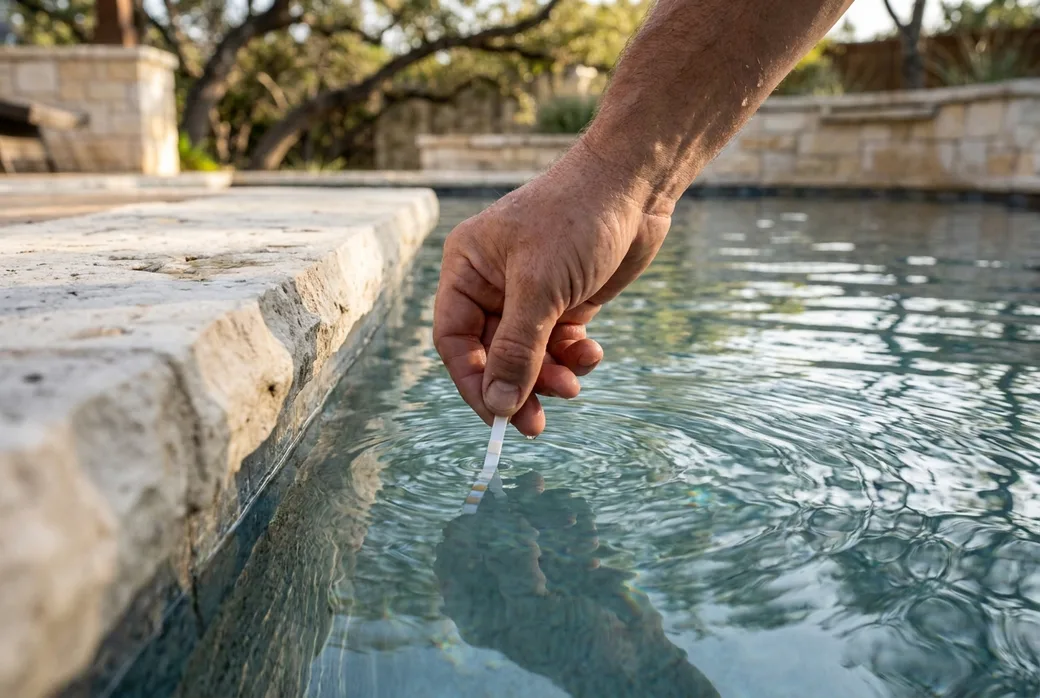
Step 1: Test Everything First
Never dose blind. Get a full reading of pH, alkalinity, calcium, CYA, and sanitizer before adding anything. Test strips work for a quick look; a drop kit or digital tester is better for dosing decisions; a continuous smart monitor is best of all because it captures how the water trends, not just one moment. Write the numbers down — you'll need them to calculate doses and to confirm your corrections worked.

Step 2: Balance Total Alkalinity
Alkalinity comes first because it's the buffer that keeps pH stable. If TA is off, pH will never hold no matter how carefully you set it.
- Too low (below 80 ppm): add sodium bicarbonate (baking soda) gradually — about 1.5 lbs per 10,000 gallons raises TA ~10 ppm.
- Too high (above 120 ppm): use the acid-and-aerate method to bring it down without stranding pH.
Get TA into the 80–120 ppm band and retest before moving on. Full detail in our total alkalinity guide.
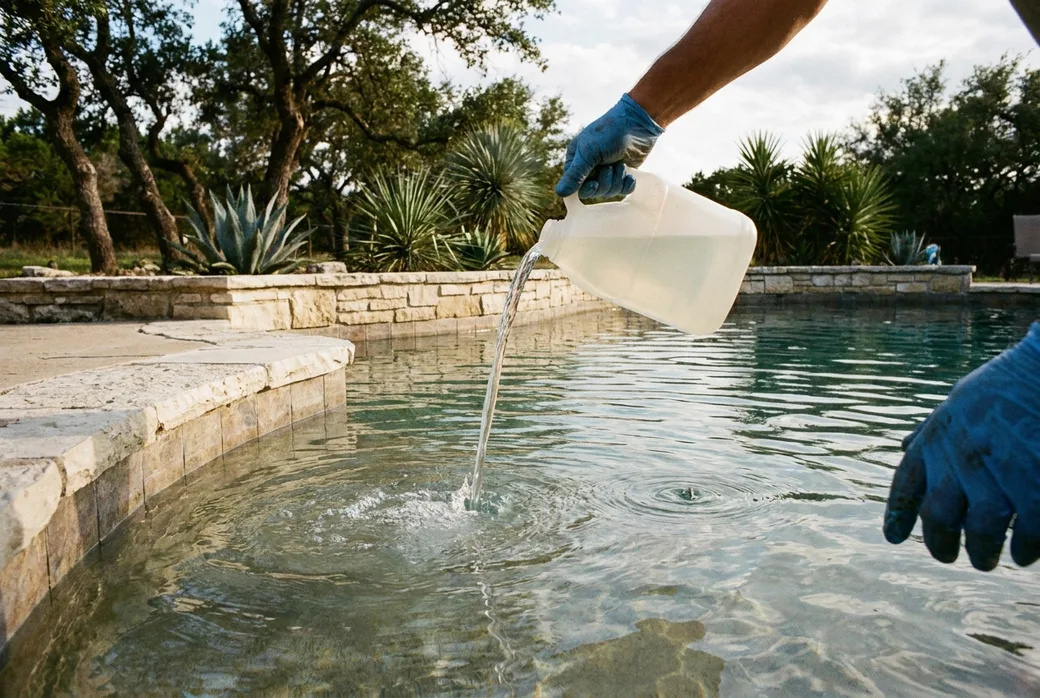
Step 3: Set pH
With alkalinity buffered, pH becomes easy to set and it stays set. Target 7.4–7.6:
- Too low: add soda ash (or let corrected alkalinity carry it up). See how to raise pool pH.
- Too high: add muriatic acid or dry acid slowly. See how to lower pool pH.
Add slowly, circulate, and sneak up on the target — overshooting just means undoing your own work.
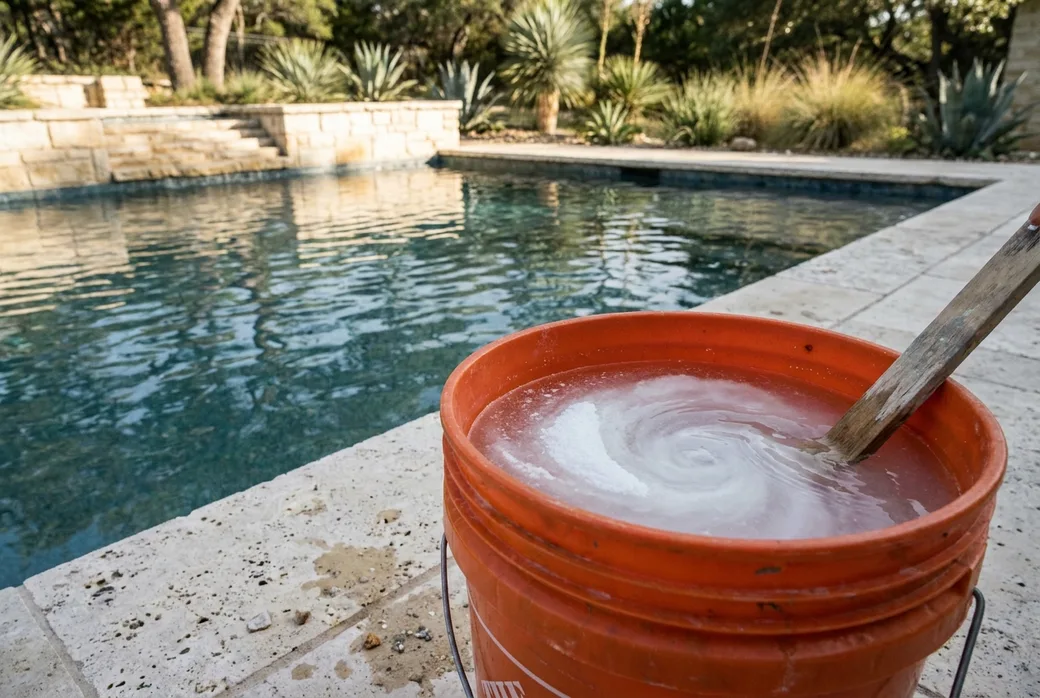
Step 4: Adjust Calcium Hardness
Calcium hardness keeps water from being either aggressive (too soft, which corrodes surfaces) or scaling (too hard, which crusts equipment). Aim for 200–400 ppm:
- Too low: add a calcium hardness increaser.
- Too high: dilute with fresh water — the only real fix, same as TDS and CYA.
Vinyl and fiberglass pools tolerate the lower end; plaster and concrete pools prefer the middle to protect the finish.
Step 5: Dial In Cyanuric Acid
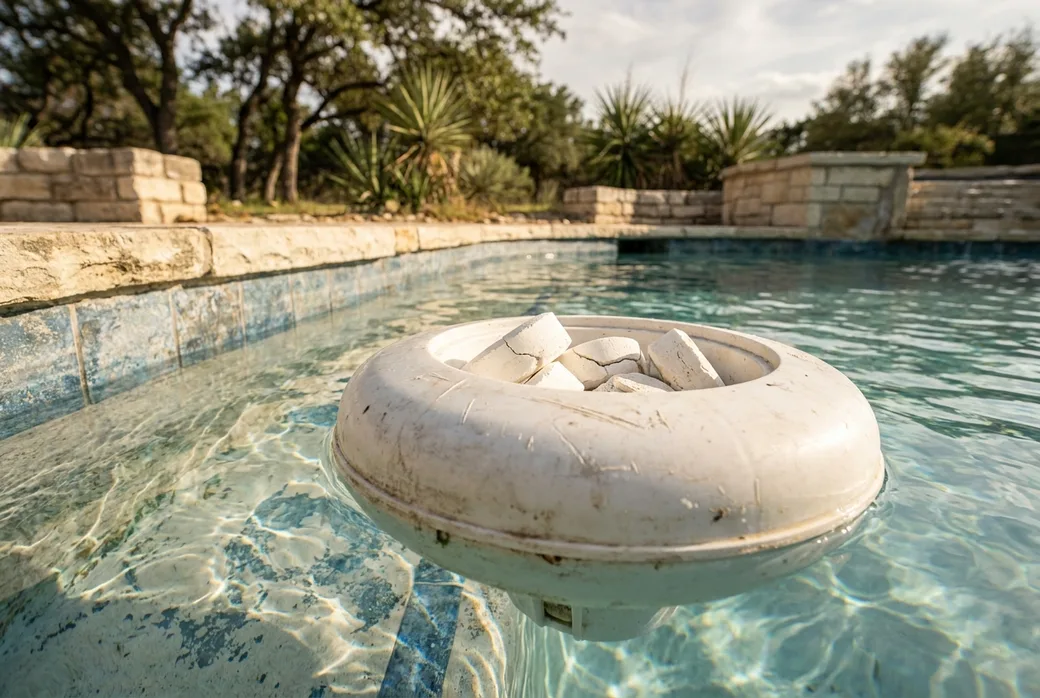
Stabilizer protects chlorine from sunlight, but too much throttles sanitizing power. Target 30–50 ppm (or 60–80 ppm for salt pools):
- Too low: add stabilizer, or use some stabilized chlorine (trichlor/dichlor).
- Too high: dilute with fresh water, and switch away from stabilized chlorine to stop the climb.
This step is why so many pools mysteriously "stop responding to chlorine." Read the full breakdown in our cyanuric acid guide.
Step 6: Sanitize and Confirm with ORP
Only now — with alkalinity, pH, calcium, and CYA in range — does sanitizer work efficiently. Add chlorine to roughly 7.5% of your CYA level, then confirm the water is actually sanitizing by checking ORP (650–750 mV). This is the crucial final check: ORP tells you the water is truly safe, where a chlorine number alone can lie to you. If ORP is low despite adequate chlorine, revisit pH and CYA. Learn why in our ORP guide.

Keeping It Balanced (The Easy Part)
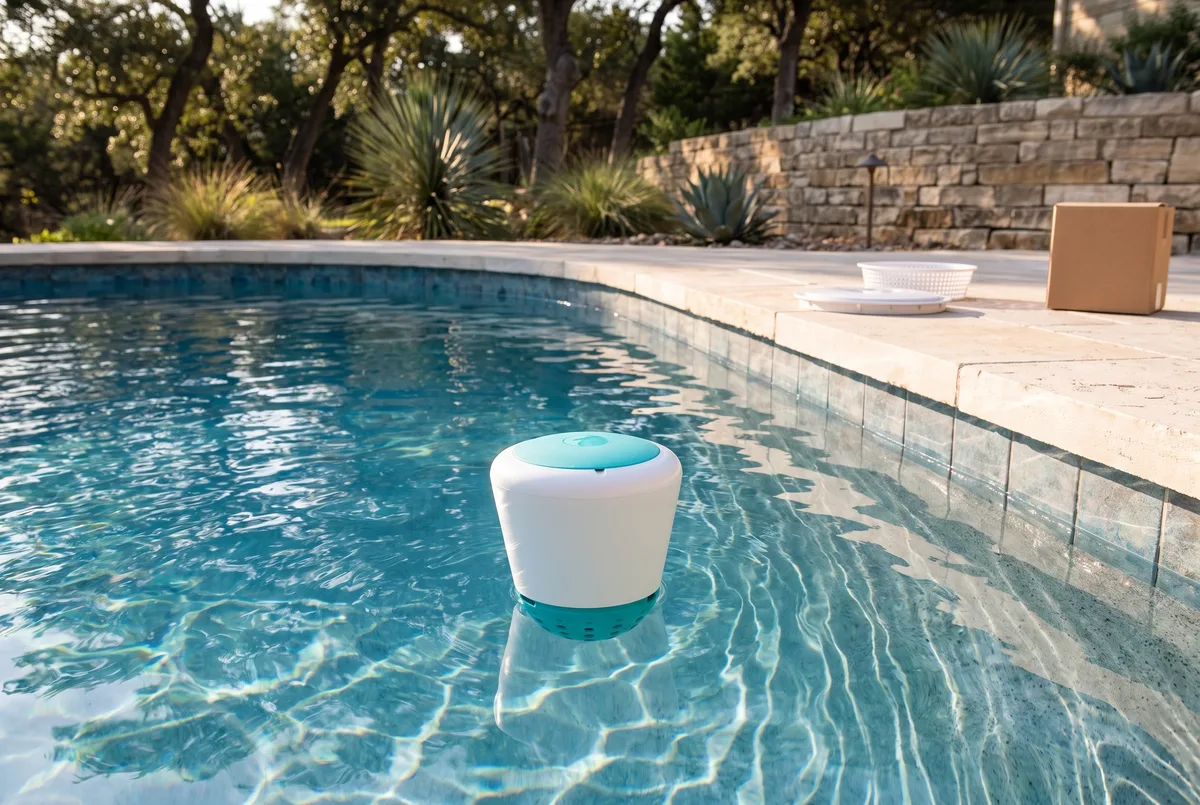
Balancing once is satisfying; keeping it balanced is where a system pays off. Water chemistry drifts every single day — rain, heat, swimmers, and sunlight all nudge your numbers. A weekly manual routine works if you're disciplined. But the pools that stay effortlessly clear are the ones where something is always watching, catching drift days before it becomes a visible problem.
That's the whole point of continuous monitoring: you do the thinking once, learn what your numbers mean, and then let a monitor handle the daily vigilance — flagging the one small correction that keeps everything in line. Balance the water, set up the watch, and get back to enjoying the pool.
Make pool maintenance effortless
Our smart water monitors track pH, ORP, and more in real time — and tell you exactly what to add. No guessing, no test strips.
Explore Smart Water Monitors