
Your cart is empty
How to Raise Pool pH (Fast, Safe, and Without Overshooting)
Low pH eats heaters, irritates skin, and trashes liners — but raising it is one of the simplest pool fixes once you know which chemical to reach for.
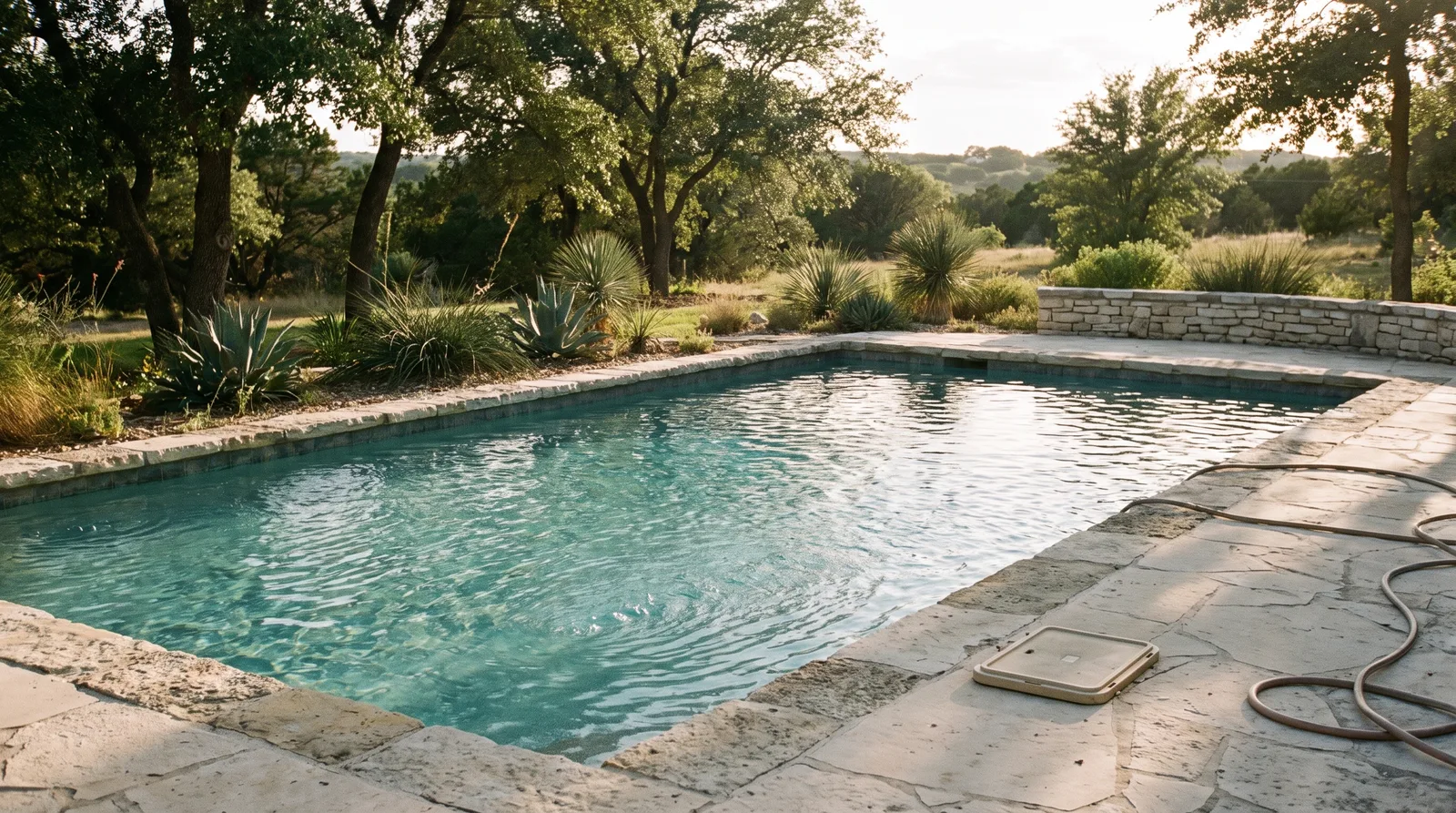
Pool pH measures how acidic or basic the water is on a scale from 0 to 14. The ideal range for swimming pools is 7.4 to 7.6 — comfortable for swimmers, gentle on equipment, and the sweet spot where chlorine works most efficiently. When pH drops below 7.2, water becomes acidic and starts eating away at everything it touches: heaters, ladders, vinyl liners, plaster, and even swimmers' eyes and skin.
The fix is straightforward — most low-pH issues clear up in 30 minutes with the right chemical and a careful pour.
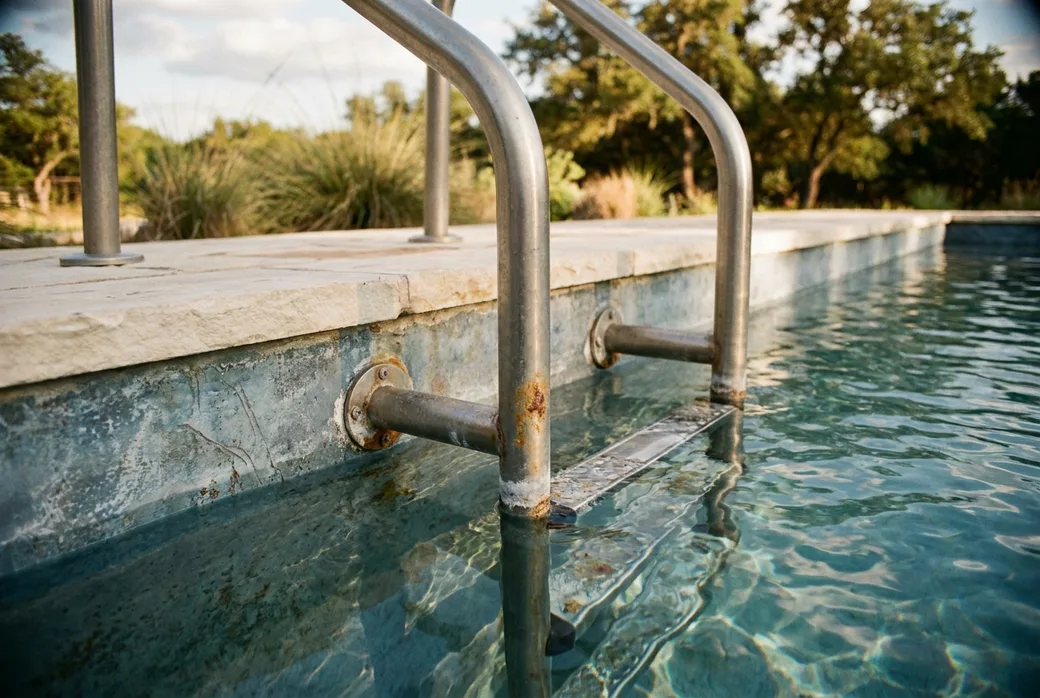
Why Low Pool pH Is a Problem
Low pH may sound less serious than high pH, but it's often more damaging:
- Equipment corrosion. Acidic water dissolves metal — heat exchangers, pump impellers, light niches, ladders, and salt cells all degrade fast at pH below 7.0.
- Plaster etching. New and older plaster surfaces become rough and pitted, ruining the finish permanently.
- Vinyl liners wrinkle. Low pH can cause vinyl liners to stretch, wrinkle, and lose their seal at the coping.
- Chlorine burns off too fast. At pH 6.8, free chlorine is hyperactive and dissipates quickly, especially in sunlight — burning through your supply.
- Swimmers feel it. Stinging eyes, dry skin, and faded swimsuits are classic low-pH symptoms.
If your test kit ever shows a reading below 7.0, treat it as a small emergency — every day at low pH is shaving years off your equipment.
What Causes Low pH in a Pool?
The usual suspects:
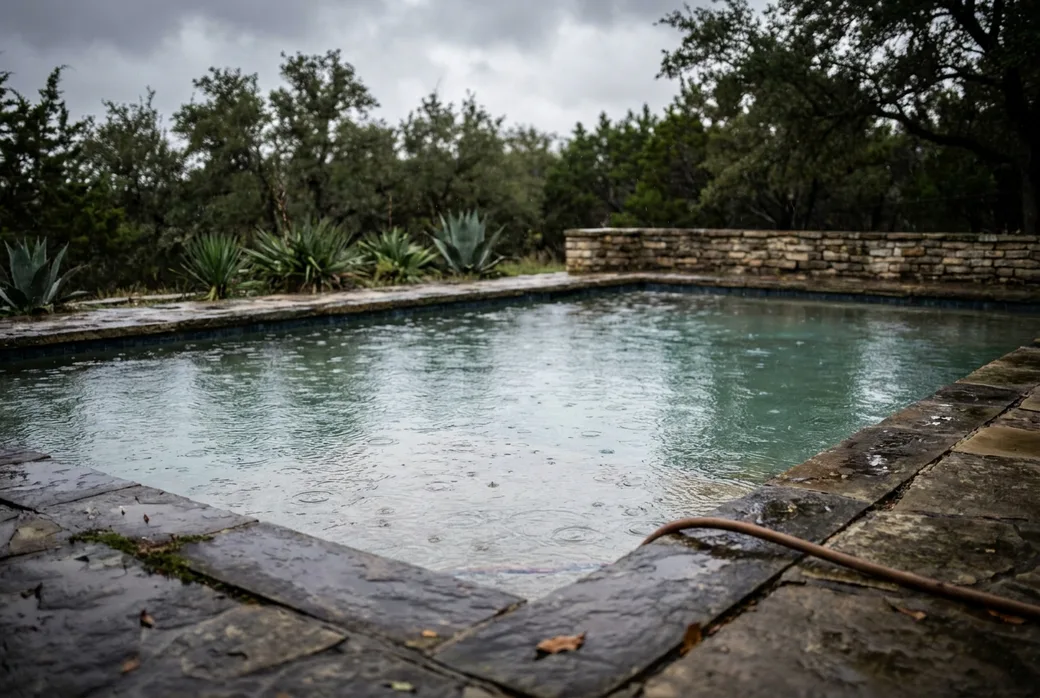
- Heavy rainfall. Rainwater is naturally acidic (around pH 5.5) and large storms can dump enough water to drop pool pH noticeably.
- Acid rain or polluted runoff. In some regions, this drives down pH and alkalinity together.
- Trichlor tablets or dichlor shock. Both are acidic. Heavy use of stabilized chlorine pucks lowers pH over time.
- Over-correcting high pH. Adding too much muriatic acid in one dose easily undershoots.
- Low total alkalinity. When TA drops below 80 ppm, pH becomes unstable and tends to bounce low.
- High bather load with sweat and oils. Organic matter is mildly acidic and shifts pH down over time.
If pH is chronically low, check total alkalinity first — that's almost always the underlying cause.
How to Raise Pool pH: Step-by-Step
Step 1: Test pH and total alkalinity
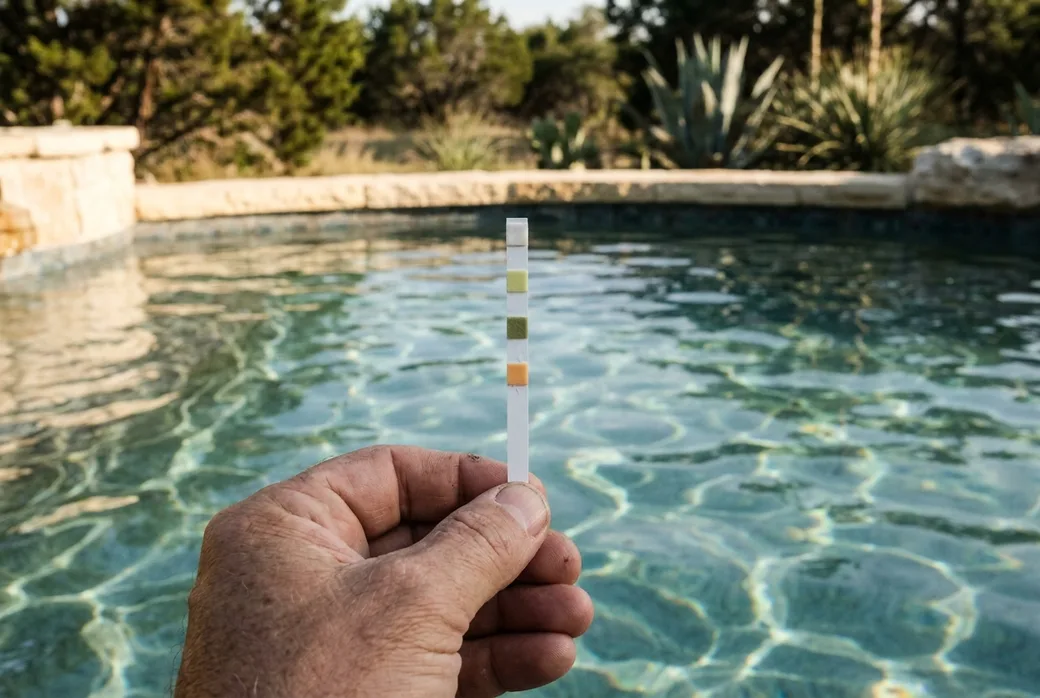
Don't add anything until you have real numbers. Use a digital reader, drop test, or — best — a smart pool water monitor for continuous readings. You need both pH and total alkalinity (TA).
Target ranges: pH 7.4–7.6, total alkalinity 80–120 ppm.
If TA is below 80 ppm, raise alkalinity first — pH will follow it up naturally. If TA is in range and only pH is low, target pH directly.
Step 2: Pick your chemical
Two options, each with a job:
- Sodium carbonate (soda ash, "pH Up") — strong, fast-acting, and the right choice when pH is low but alkalinity is in range. Raises pH significantly with a small bump to alkalinity.
- Sodium bicarbonate (baking soda, "Alkalinity Increaser") — milder, mostly raises alkalinity with a smaller pH bump. The right choice when both pH and alkalinity are low.
Rule of thumb: low pH + normal TA → soda ash. Low pH + low TA → baking soda first, then re-test.
Step 3: Calculate the dose
A typical starting dose for a 20,000-gallon pool:
| Goal | Chemical | Amount |
|---|---|---|
| Raise pH from 7.0 → 7.5 (TA in range) | Soda ash | ~12 oz by weight |
| Raise TA by 10 ppm | Baking soda | ~24 oz by weight |
| Raise pH from 7.2 → 7.5 (gentle bump) | Baking soda | ~3 lbs |
Start on the low end of the dose. Soda ash is potent, and overshooting will leave you scrambling for muriatic acid an hour later.
Step 4: Add the chemical the right way
- Turn the pump on so water is circulating.
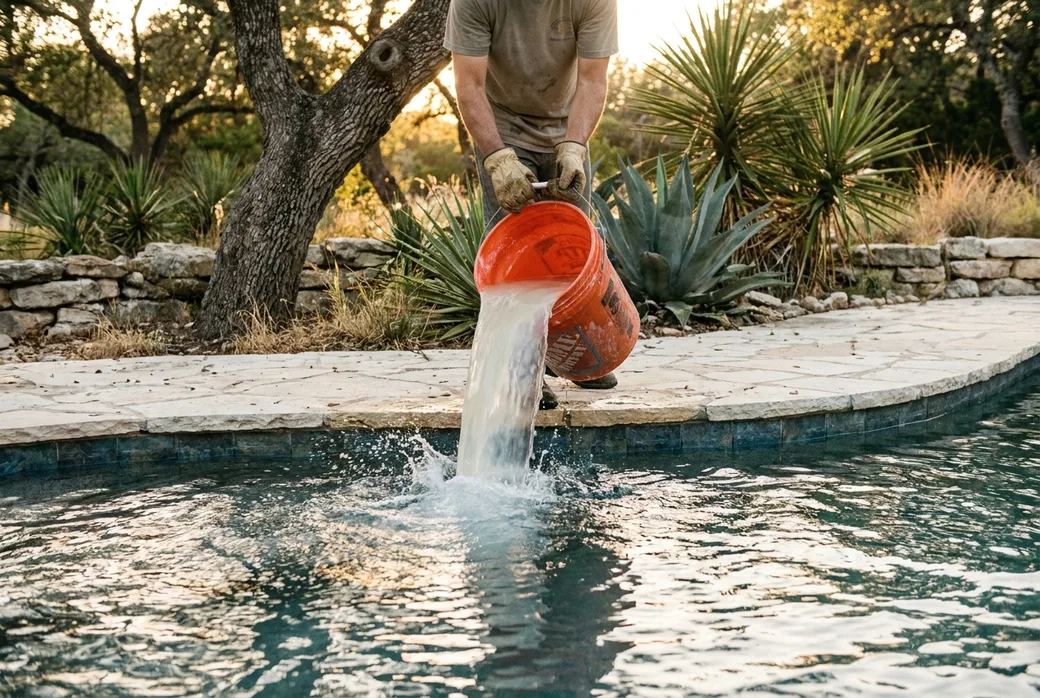
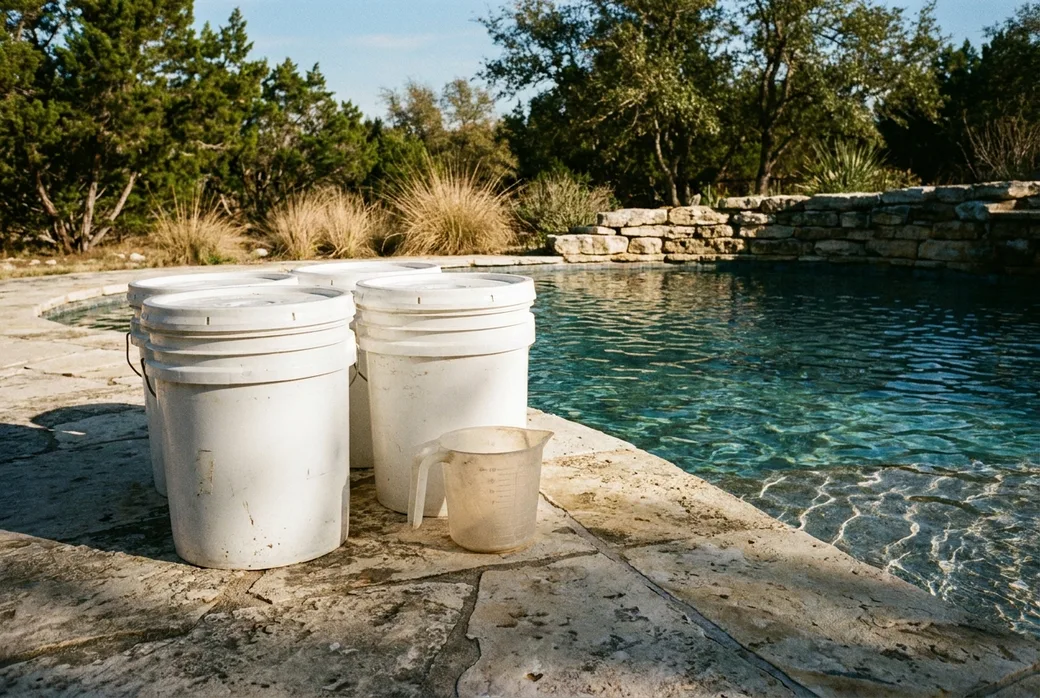
- Pre-dissolve soda ash in a clean 5-gallon bucket of pool water — it disperses much more evenly that way.
- Walk to the deep end, downwind.
- Pour slowly over a return jet, into the moving water.
- For baking soda, you can broadcast the granules directly across the deep end — it dissolves easily.
- Run the pump for at least 2–4 hours to fully circulate.
Heads up: soda ash can cloud the water for an hour or two as it dissolves. That's normal — the haze will clear once it fully dissolves and circulates.
Step 5: Retest after 4–6 hours
Give the chemicals time to react and circulate before retesting. After 4–6 hours, measure pH and TA again. If pH is still under 7.4, repeat with a smaller dose. Sneak up on the target range — don't try to nail it in one shot.
How to Keep pH from Dropping Again
Lifting pH once is easy. Keeping it stable is what saves your equipment long-term:
- Get total alkalinity to 80–120 ppm. Low TA is the #1 reason pH keeps dropping. Use baking soda to nudge alkalinity into range and pH stops bouncing.
- Test more often after rain. A heavy storm can drop pH overnight. Re-test the morning after any major rain event.
- Cut back on trichlor and dichlor. If you rely on stabilized chlorine pucks or shock, expect pH to drift down weekly. Switch to liquid chlorine, cal-hypo, or — better yet — a UV pool system to reduce chlorine demand.
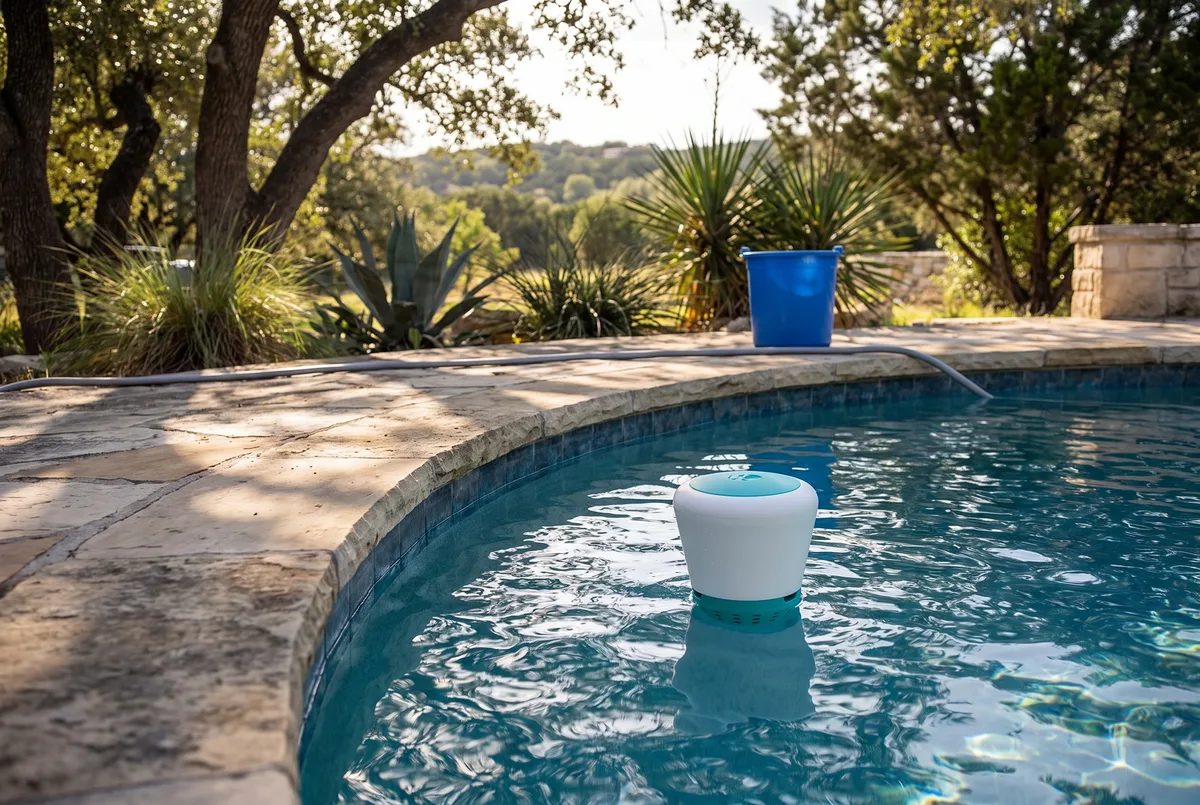
- Use a smart water monitor. Continuous pH and ORP readings catch downward drift days before damage starts. Browse our smart pool water monitors.
- Pair with lowering high pH skills. Knowing both directions means you can dial in pH with confidence.
How Often Should You Check pH?
| Pool type | Recommended frequency |
|---|---|
| Standard chlorine pool | 2–3 times per week |
| Trichlor / dichlor pool | 3+ times per week (pH drops faster) |
| After a heavy rain or storm | Same day or next morning |
| Smart-monitored pool | Continuously (hourly readings, automatic) |
Equipment damage from low pH is silent and cumulative. The cheapest way to protect a $3,000 heater is the $0.30 of soda ash and 5 minutes of testing it takes to keep pH in range.
Common Mistakes to Avoid
- Dumping soda ash without dissolving. Undissolved soda ash can settle on plaster and cause staining or scaling. Pre-dissolve in a bucket of water first.
- Adding chemicals with the pump off. This creates highly concentrated zones that damage liners and plaster.
- Confusing soda ash and baking soda. They sound similar but behave differently. Soda ash = strong pH bump. Baking soda = mostly alkalinity.
- Chasing pH while ignoring TA. If alkalinity is below 60 ppm, pH will keep dropping no matter how much soda ash you throw at it.
- Overshooting. It's much easier to add a second small dose later than to add muriatic acid to undo an overshoot.
- Mixing chemicals. Never combine soda ash, baking soda, chlorine, or shock together. Always one chemical at a time, with circulation in between.
When to Call a Pro
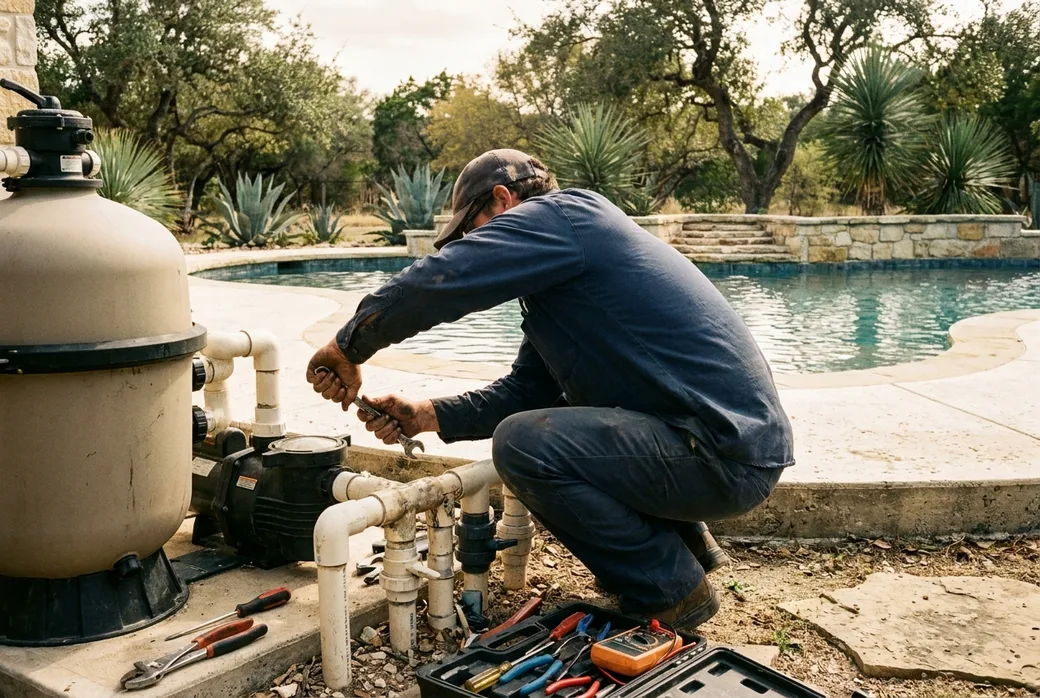
Most low-pH situations are 10-minute DIY fixes. But call a pro if:
- pH is stuck below 7.0 even after multiple soda ash doses.
- Alkalinity won't rise above 60 ppm despite repeated baking soda treatments.
- You see signs of plaster etching, metal corrosion, or vinyl liner damage.
- pH and alkalinity readings keep contradicting each other (often a calibration or test-kit issue).
For everything else: a small bag of soda ash, a clean bucket, an accurate test kit, and a slow pour are all you need.
Bottom line: keep pH at 7.4–7.6 and total alkalinity at 80–120 ppm, and your heater, plaster, liner, and swimmers will all last longer. For the easiest possible pool care, pair good chemistry habits with a smart pool water monitor — it watches pH around the clock so you don't have to.
Make pool maintenance effortless
Our smart water monitors track pH, ORP, and more in real time — and tell you exactly what to add. No guessing, no test strips.
Explore Smart Water Monitors