
Your cart is empty
Total Alkalinity in a Pool: The Buffer That Keeps pH Stable
If your pH won't hold still no matter what you do, alkalinity is almost always the reason. It's the quiet buffer that decides whether balancing your pool is easy or a daily fight.

Total alkalinity (TA) is the most misunderstood number in pool care — and the most important one to get right first. It measures the water's ability to resist changes in pH, acting as a chemical shock absorber. Get it right and your pH practically manages itself. Get it wrong and you'll chase pH up and down forever.
The ideal range is 80–120 ppm. Within that band, pH stays put. Outside it, pH either bounces around unpredictably (TA too low) or gets stubborn and hard to move (TA too high). Almost every "my pH won't cooperate" problem traces back to alkalinity.
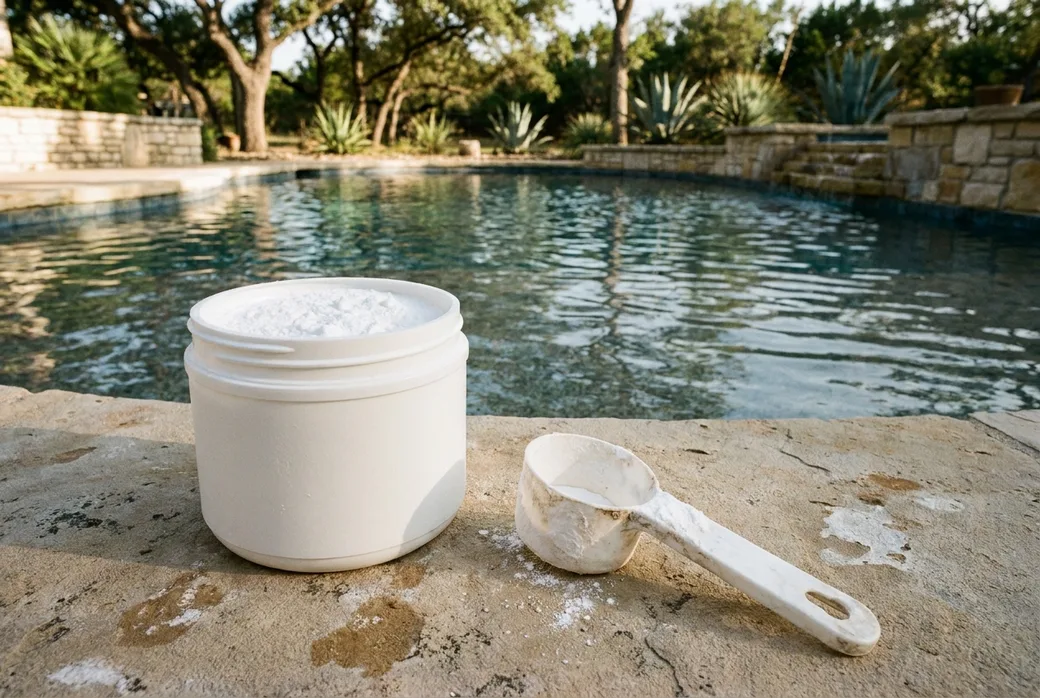
What Total Alkalinity Actually Does
Alkalinity is made up of dissolved bicarbonates, carbonates, and hydroxides that neutralize acids before they can swing your pH. Think of it as a buffer — a reservoir that absorbs acid and base additions so the pH needle barely moves.
- With healthy alkalinity, add a bit of acid and pH dips slightly, then holds.
- With low alkalinity, that same acid sends pH plummeting — and a little base sends it soaring. This is called "pH bounce," and it makes balancing feel impossible.
This is why alkalinity is the foundation. pH is the number you feel, but alkalinity is the number that controls how stable that pH is.
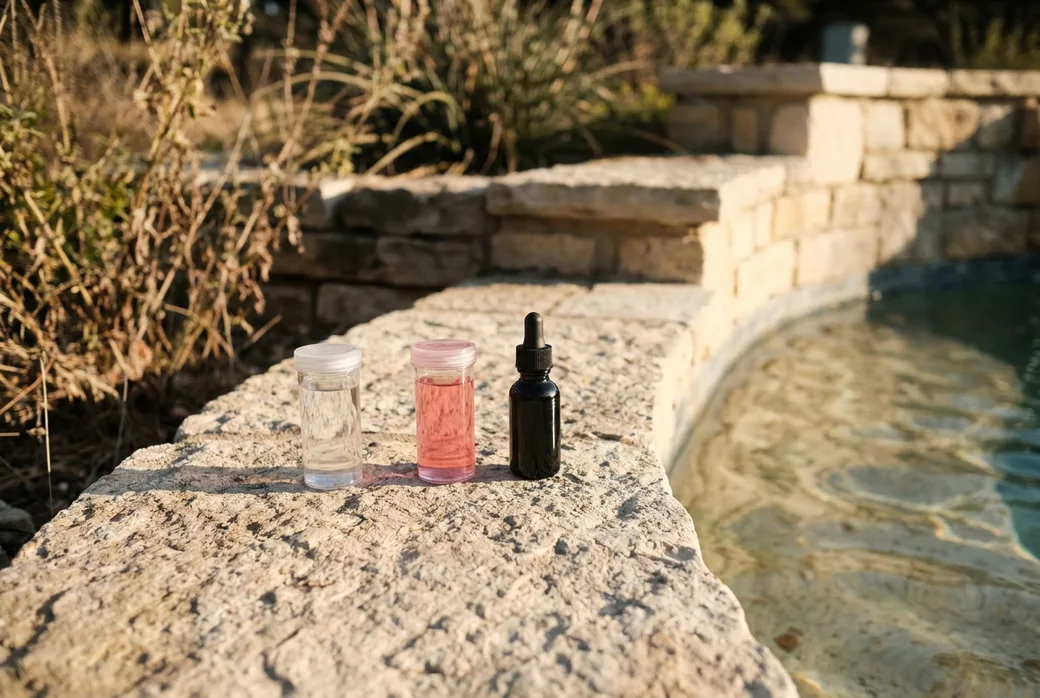
The Ideal Alkalinity Range
| Total alkalinity | What happens |
|---|---|
| Below 60 ppm | Severe pH bounce, corrosive water, unstable readings |
| 60–80 ppm | Slightly low — pH drifts down easily |
| 80–120 ppm | The target — stable, buffered, easy to balance |
| 120–180 ppm | Slightly high — pH creeps up, mild cloudiness |
| Above 180 ppm | pH gets stubborn, scaling and haze become common |
Salt pools and pools with high-pH sanitizers often do best near the lower end (80–100 ppm), since those systems naturally push pH up. Plaster and vinyl pools on trichlor tabs may prefer the higher end. But 80–120 is safe for everyone.
Rule of thumb: always bring alkalinity into range before you fine-tune pH. Fixing pH first is like painting a wall before patching the hole.
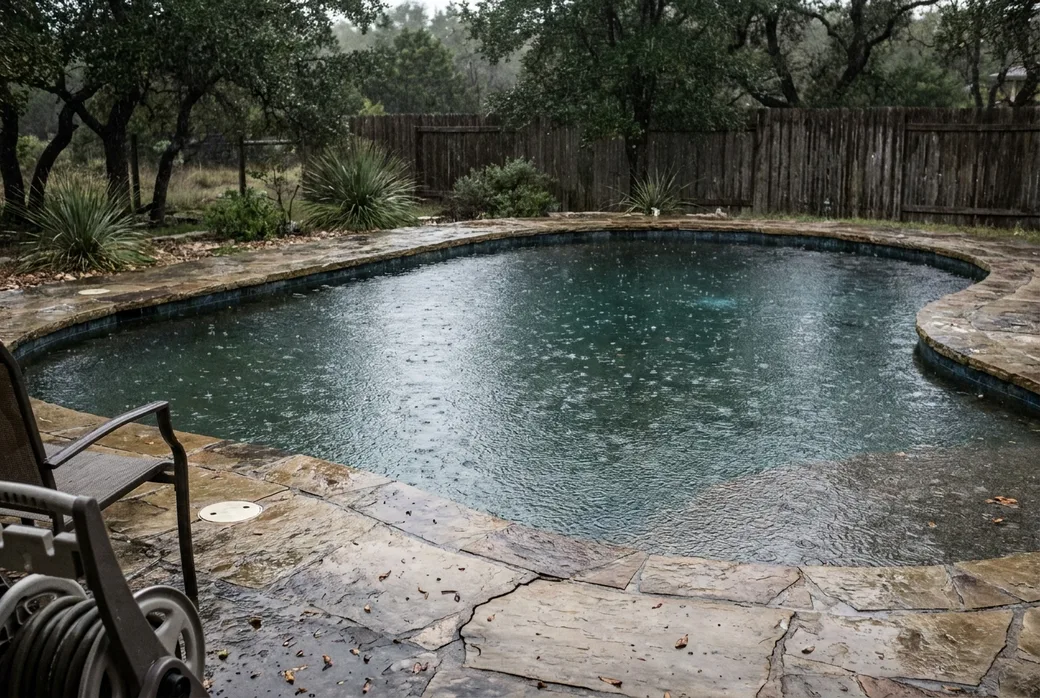
What Causes Low or High Alkalinity
Alkalinity drops when:
- Heavy rain (naturally acidic) dilutes and neutralizes the buffer.
- You use acidic sanitizers like trichlor tablets or dichlor shock.
- You add too much acid correcting a high-pH reading.
Alkalinity climbs when:
- Your fill water is naturally hard and alkaline (common with well water).
- You add too much sodium bicarbonate (baking soda).
- You use high-alkalinity shock or liquid chlorine heavily.
Because alkalinity and pH are linked, chronic pH problems in one direction usually mean alkalinity is off in the same direction. Fix the buffer and the swings stop.
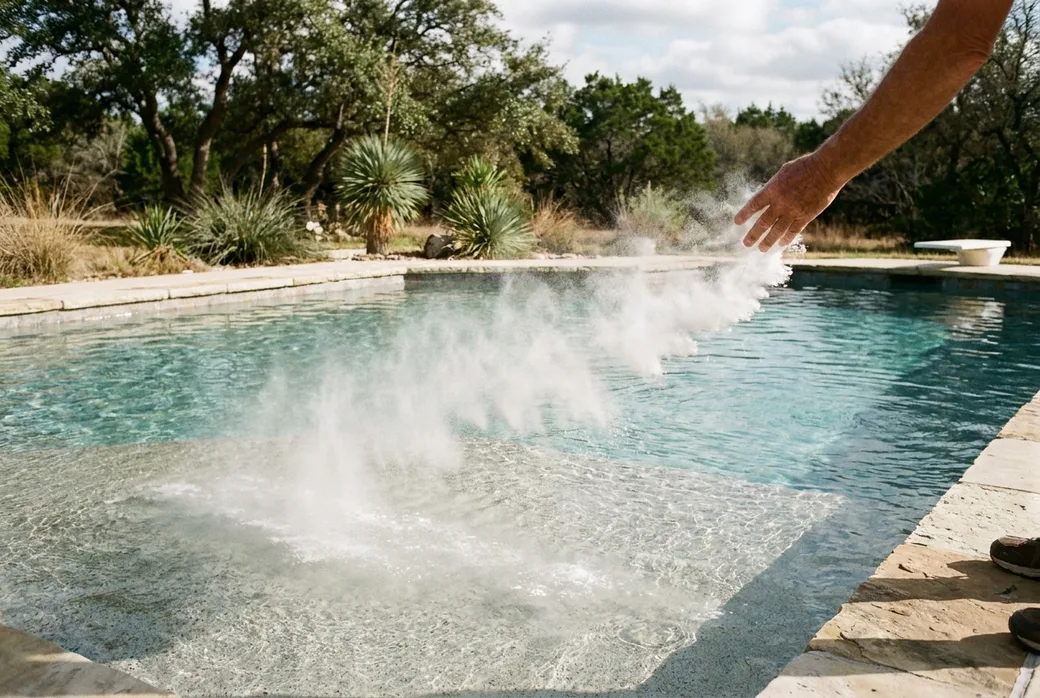
How to Raise Low Alkalinity
Low alkalinity is the more common (and more damaging) problem. The fix is simple and forgiving:
- Test both pH and TA. You need both numbers to dose correctly.
- Use sodium bicarbonate (baking soda / "Alkalinity Increaser"). It raises alkalinity strongly with only a gentle bump to pH.
- Dose gradually. Roughly 1.5 lbs of baking soda per 10,000 gallons raises TA about 10 ppm. Start there.
- Broadcast across the deep end with the pump running, then wait.
- Retest after 6 hours and repeat until you're in the 80–120 ppm band.
Baking soda is safe to build up in stages, so there's no risk of a dramatic overshoot. This ties directly into raising pool pH — fix alkalinity and low pH often corrects itself.
How to Lower High Alkalinity
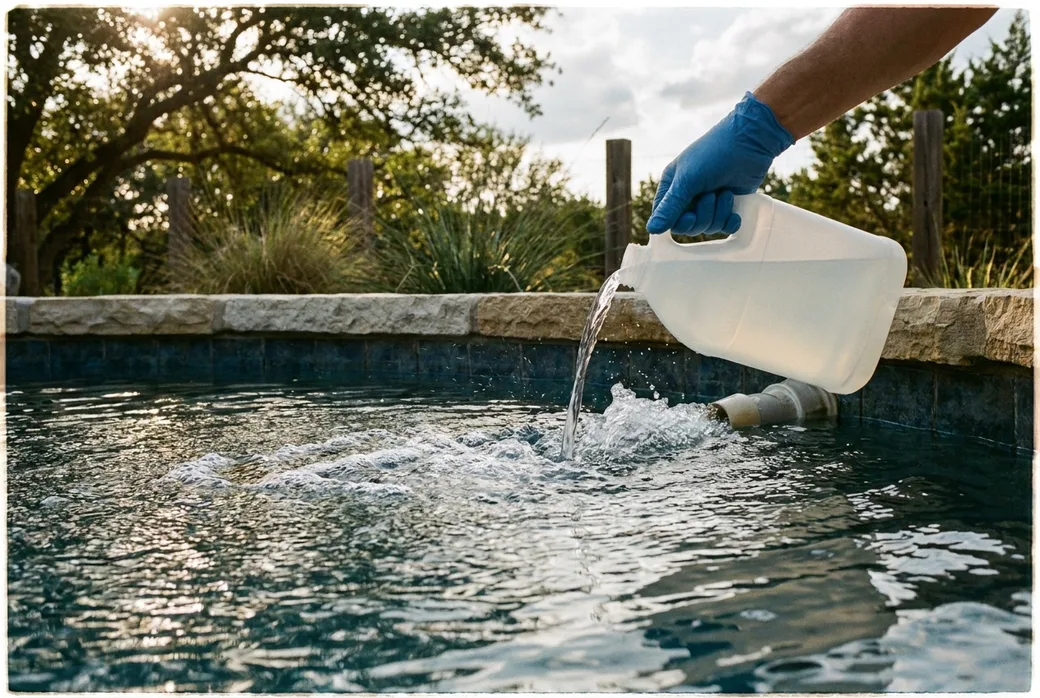
Lowering alkalinity is trickier because the only tool is acid — and acid lowers pH too. The trusted method is the acid column technique:
- Add muriatic acid (or dry acid) to bring both pH and TA down together.
- Let pH fall to around 7.0–7.2 — lower than your normal target, on purpose.
- Aerate the water (run features, fountains, or return jets angled up). Aeration raises pH back toward 7.4 without raising alkalinity.
- Repeat the acid-then-aerate cycle until TA lands in range while pH recovers.
It takes patience, but it's the only way to drop alkalinity without leaving pH stranded. Our lowering pool pH guide covers safe acid handling in detail.
Alkalinity, pH, and the Order of Operations
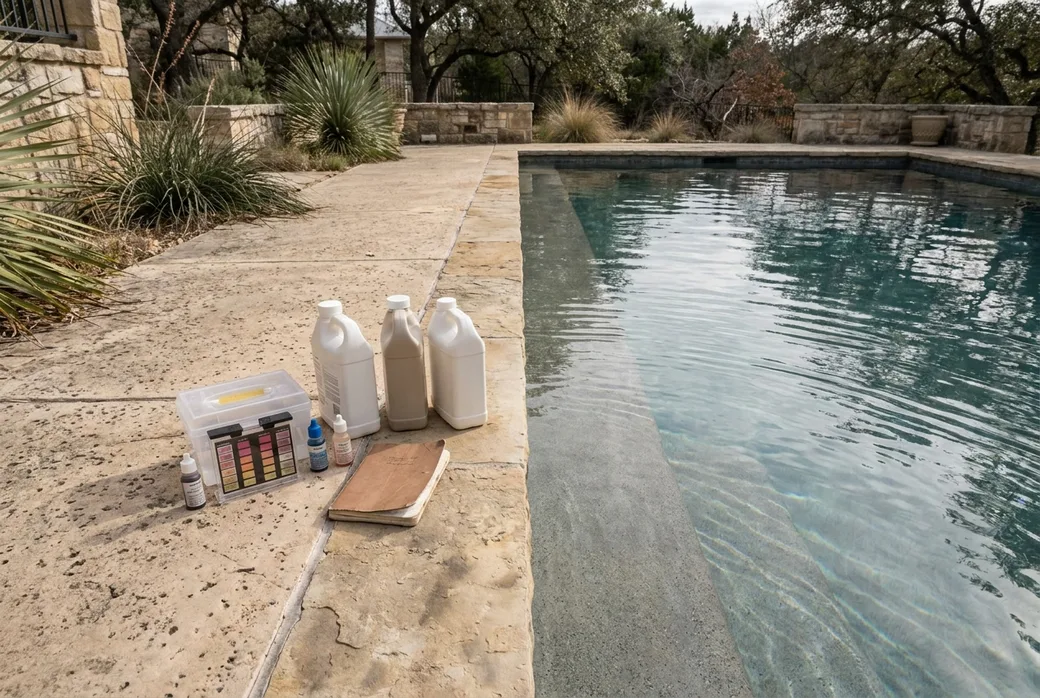
Here's the sequence that saves you the most frustration:
- Total alkalinity first — get it to 80–120 ppm.
- pH second — now it's easy to set and it holds at 7.4–7.6.
- Calcium hardness and stabilizer — round out the balance.
- Sanitizer and ORP last — with balanced water, chlorine finally works efficiently.
Skipping straight to pH or chlorine while alkalinity is off is the single most common reason pool owners feel like they're "always adding chemicals." Nail the buffer and the whole system settles down — which is exactly what a continuous monitor is built to help you do.
Make pool maintenance effortless
Our smart water monitors track pH, ORP, and more in real time — and tell you exactly what to add. No guessing, no test strips.
Explore Smart Water Monitors