
Your cart is empty
Pool Calcium Hardness: Ideal Levels & How to Adjust It
Calcium hardness is the balance number that protects your pool's surfaces and equipment — too little eats them, too much crusts them. Here's how to keep it right.

Calcium hardness is the quiet member of pool chemistry's core four (pH, alkalinity, calcium, stabilizer). It doesn't swing daily like pH, so it's easy to ignore — until soft water starts etching your plaster or hard water crusts your heater. Getting it right protects the two most expensive things about your pool: the surface and the equipment.
Here's what calcium hardness is, the range to aim for, and how to move it in either direction.
What Calcium Hardness Is
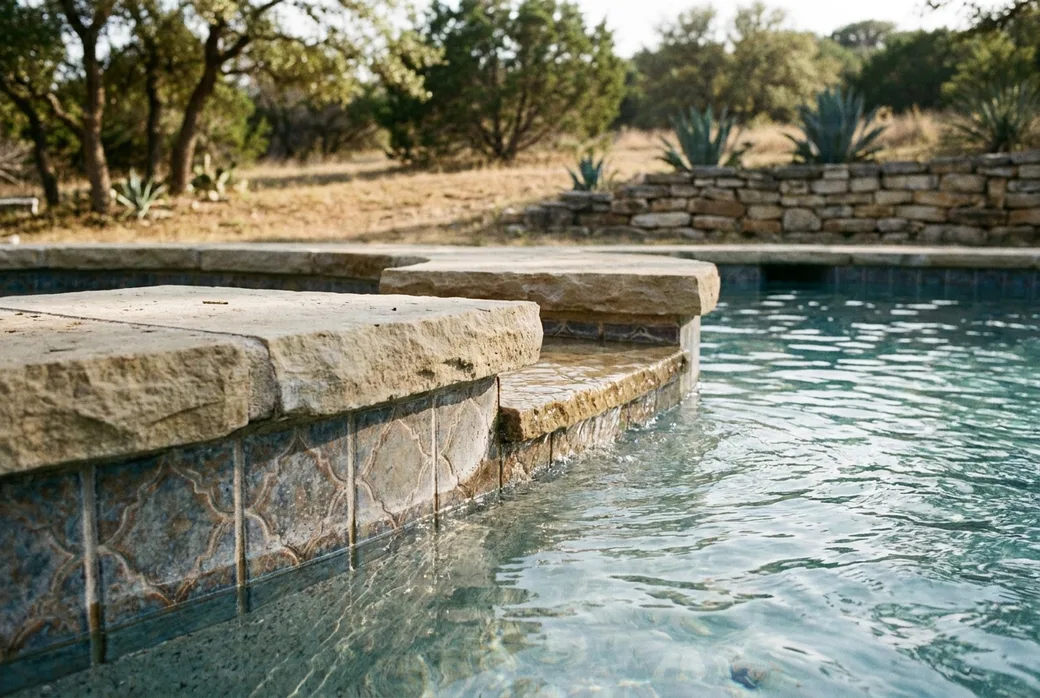
Calcium hardness measures how much dissolved calcium is in your water, in parts per million (ppm). Water is naturally "hungry" — if it doesn't have enough calcium, it pulls it out of whatever it touches: plaster, grout, tile, and even metal. If it has too much, the excess falls out of solution as scale.
Balanced calcium keeps water chemically "satisfied," so it neither dissolves your surfaces nor deposits on them. In hard-water regions like much of Texas, high calcium in the fill water is the more common starting point — but pools resurfaced or topped with softened water can swing the other way.
The Ideal Calcium Hardness Range
For most pools, aim for:
| Calcium hardness | Result |
|---|---|
| Below 150 ppm | Corrosive, aggressive water — surfaces and metal at risk |
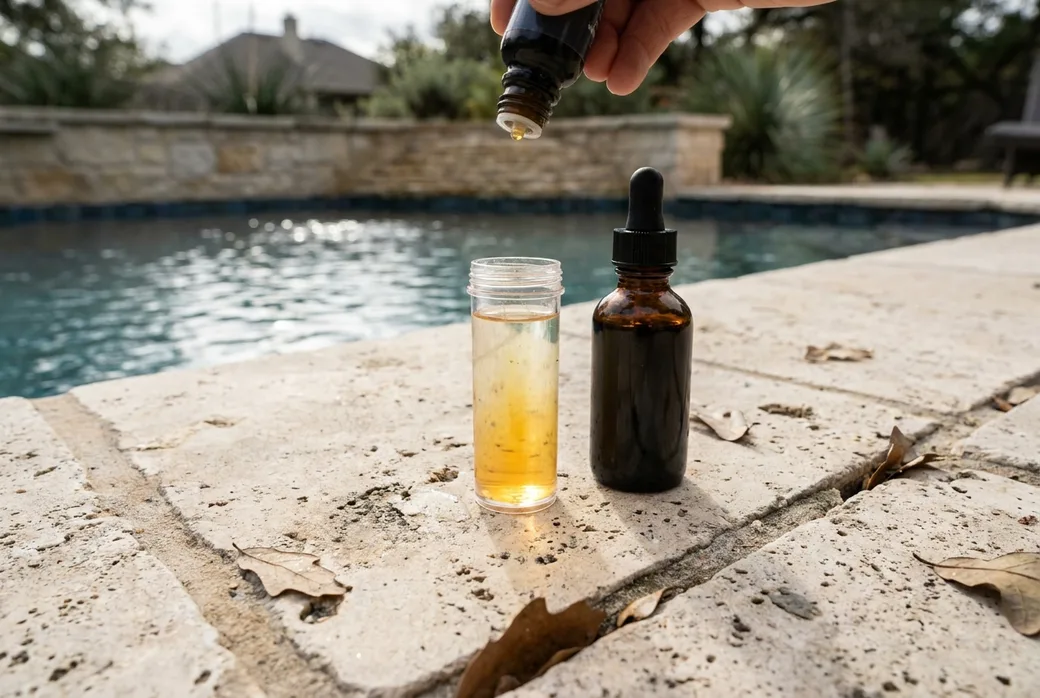
| 200–400 ppm | The target range — balanced and protective |
| 400–600 ppm | Getting hard — scale and cloudiness risk rises |
| Above 600 ppm | Scaling water — buildup on tile, equipment, and salt cells |
Target 200–400 ppm. Plaster and concrete pools do best in the middle-to-upper part of that range to protect the finish; vinyl and fiberglass pools tolerate the lower end since they have no plaster to protect.
Low Calcium: Corrosive, Aggressive Water
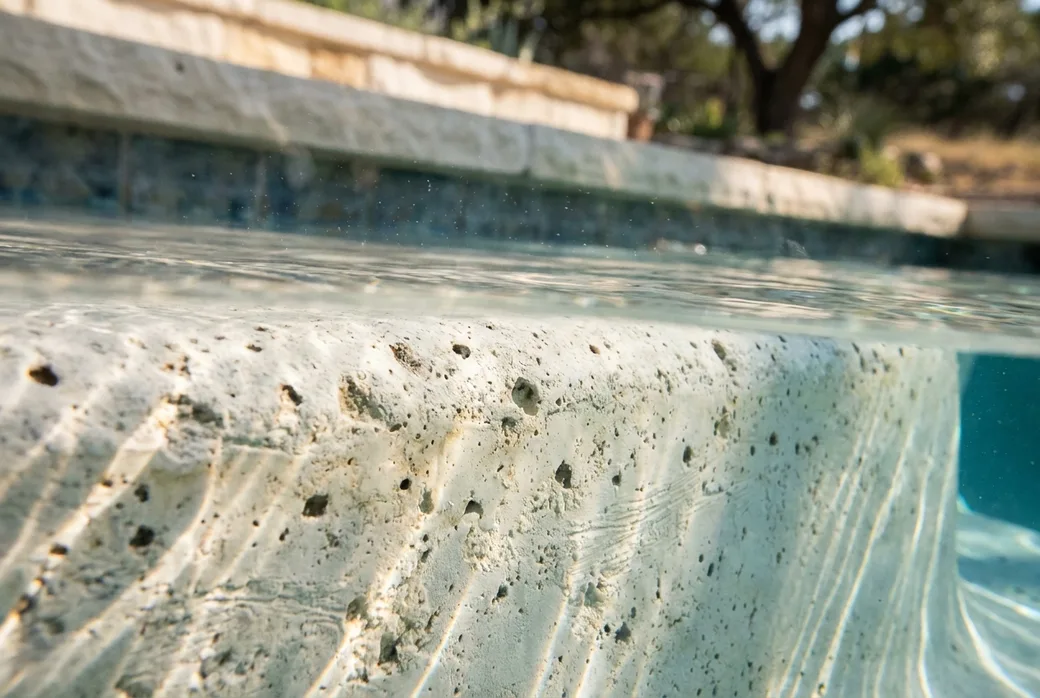
When calcium hardness drops below ~150 ppm, water goes on the hunt for calcium it's missing:
- Plaster etching and pitting — the finish turns rough and deteriorates.
- Grout erosion — tile grout washes out over time.
- Metal corrosion — combined with low pH, soft water attacks heaters, rails, and fittings.
Low calcium is especially common right after refilling with soft or reverse-osmosis water. If your plaster feels rough or you see etching, test calcium hardness — it's a prime suspect.
High Calcium: Scale and Cloudiness
At the other extreme, too much calcium falls out of solution:
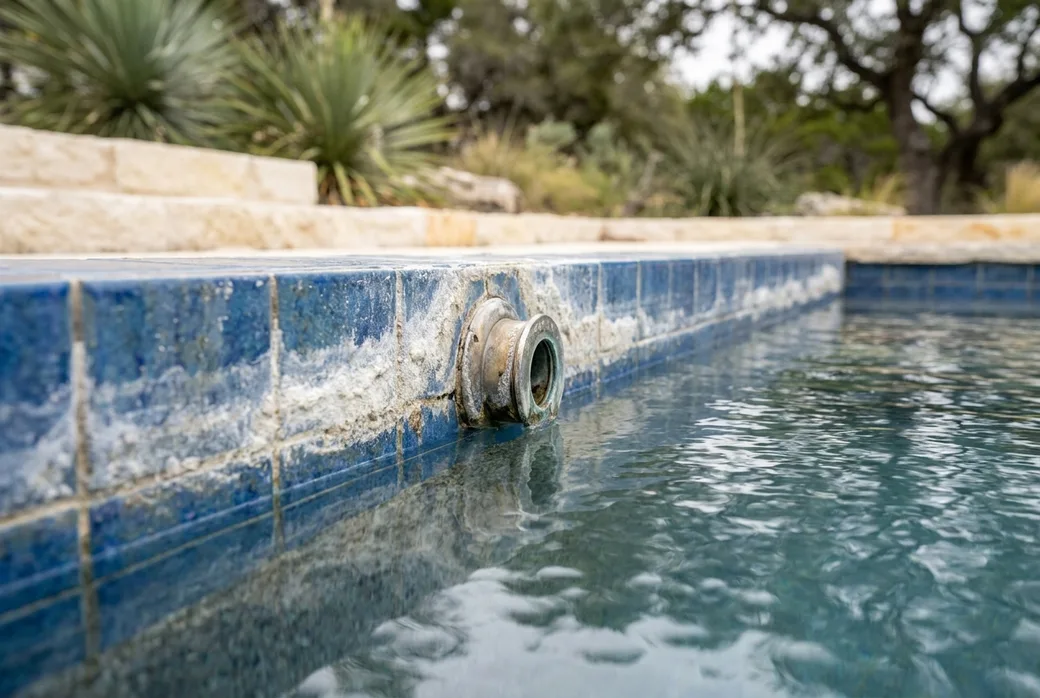
- Scale — chalky white crust on tile, waterline, plumbing, heaters, and salt cells.
- Cloudy water — fine calcium precipitate hazes the water, especially when warm or when pH is high.
- Reduced equipment life — scale insulates heater elements and clogs salt cells.
High calcium is worsened by high pH and high alkalinity, so keeping those in range helps hold calcium in solution longer.
How to Raise or Lower Calcium Hardness
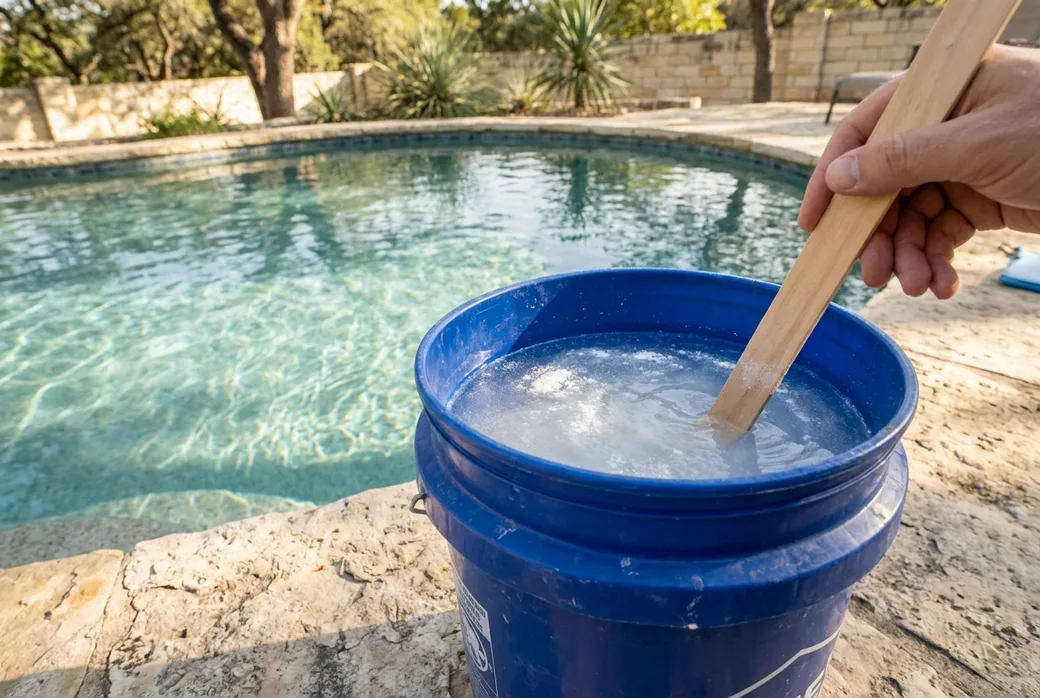
To raise calcium (too low): add a calcium chloride hardness increaser. Pre-dissolve it in a bucket of water, add with the pump running, and re-test after it circulates. Add gradually — it's easy to overshoot.
To lower calcium (too high): there's no chemical that removes it. The only real fix is dilution — partial drain and refill with lower-calcium water. If your fill water is also hard, you may need a larger swap or pre-softened fill water. Keeping pH and alkalinity in range also helps prevent existing calcium from scaling out.
Keeping Hardness in Check
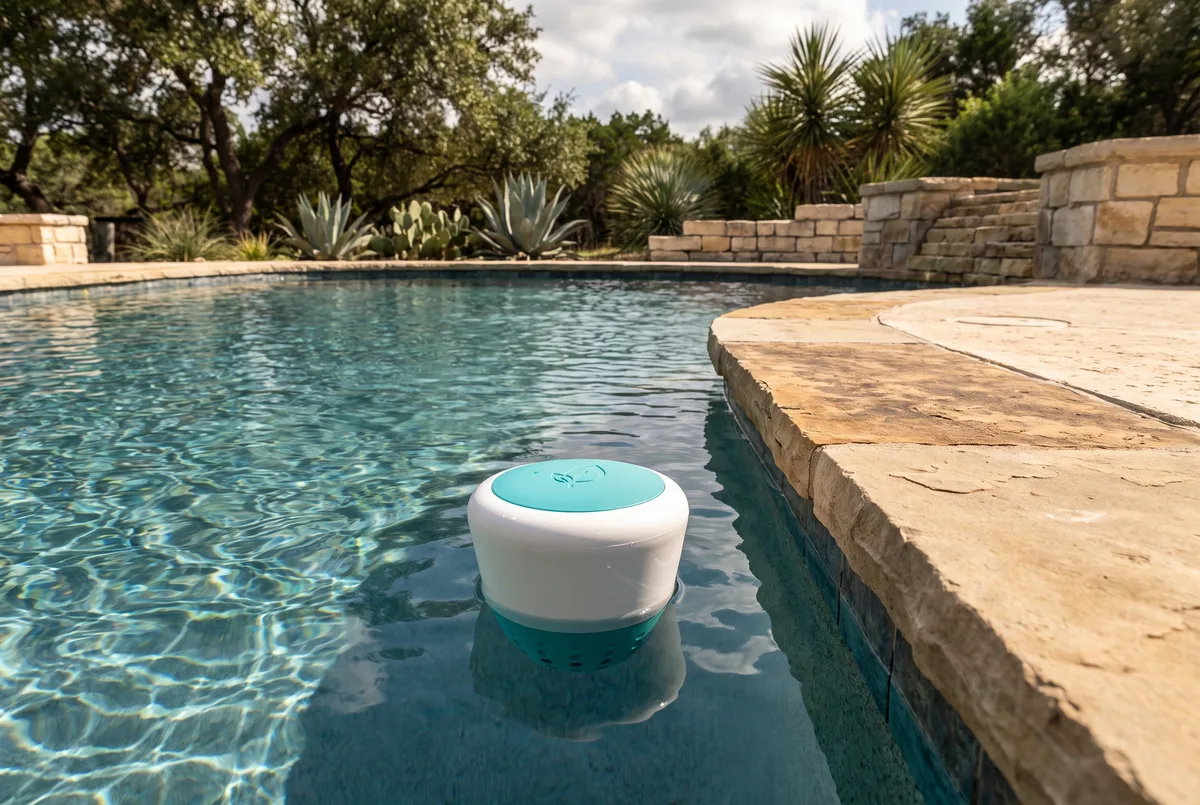
Calcium moves slowly, so it's a "test monthly and after refills" number rather than a daily one. But it doesn't live in isolation — high pH and alkalinity push calcium to scale, while low pH lets soft water turn corrosive. Keeping your day-to-day chemistry stable is what keeps calcium behaving. That's where continuous monitoring earns its place: by holding pH and overall balance steady around the clock, you prevent the swings that turn a borderline calcium level into scale or etching.
For the full picture of how calcium fits with the other core numbers, see our complete water balancing guide.
Make pool maintenance effortless
Our smart water monitors track pH, ORP, and more in real time — and tell you exactly what to add. No guessing, no test strips.
Explore Smart Water Monitors