
Your cart is empty
Free vs Combined vs Total Chlorine (and Chloramines)
That strong 'chlorine smell' actually means your pool needs more chlorine, not less. Understanding the three chlorine readings is the key to why.

Chlorine isn't a single number. Your test kit reports up to three — free, combined, and total — and confusing them leads to some of the most common pool mistakes, including the classic "the pool reeks of chlorine, so I'll wait before adding more." That instinct is exactly backwards. Here's what each reading means and how to act on it.

Free, Combined, and Total Chlorine
Three terms, one simple relationship:
- Free chlorine (FC) — the chlorine still available to sanitize and oxidize. This is the number that protects your pool. You want it in range at all times.
- Combined chlorine (CC) — chlorine that has already reacted with contaminants (sweat, oils, urine, nitrogen) and is now mostly spent. These are the chloramines. You want this near zero (below ~0.2 ppm).
- Total chlorine (TC) — simply free + combined. It's the sum, not a separate thing.
The math that matters: Total − Free = Combined. If total is meaningfully higher than free, you have combined chlorine building up — and that's a problem.

What Chloramines Are (That "Chlorine Smell")
Here's the counterintuitive truth every pool owner should know: the sharp "chlorine smell" isn't free chlorine — it's chloramines (combined chlorine). Chloramines form when chlorine binds with organic contaminants but doesn't fully break them down. They're weak sanitizers, they irritate eyes and skin, and they're what gives indoor pools that harsh odor.
So when a pool smells strongly of "chlorine," it usually means there's too much combined chlorine and not enough free chlorine — the opposite of "add less." The fix is more oxidation, not less.
How to Measure Each Type
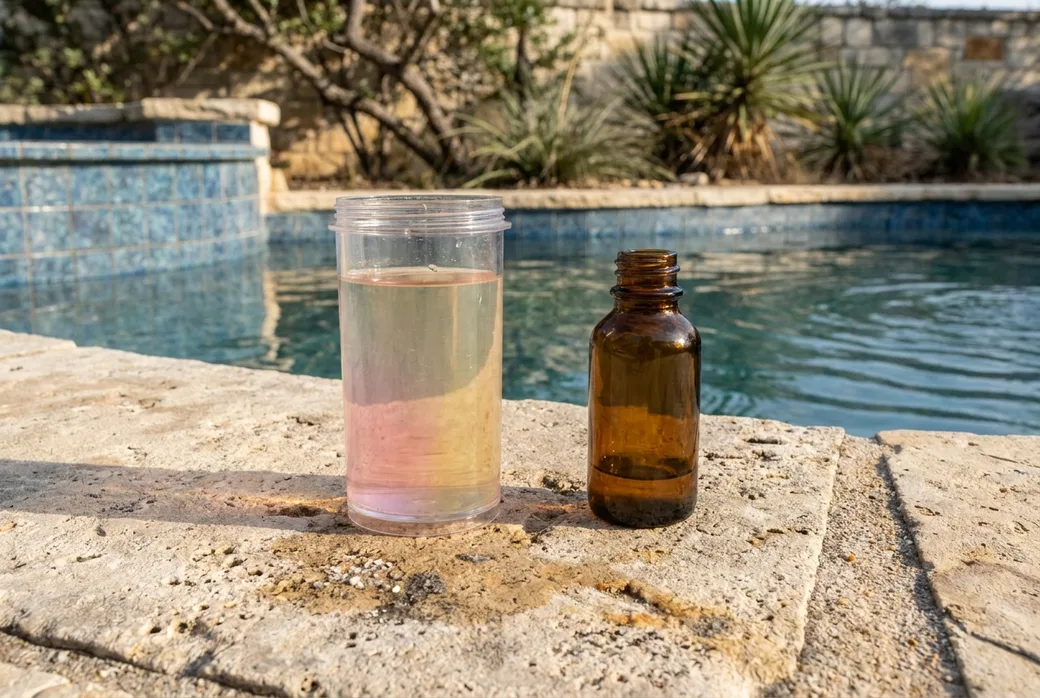
To act correctly you need to see free and total separately:
- Test strips typically show total (and sometimes free) — fine for a quick look.
- Liquid drop kits (DPD) measure free and total separately, so you can calculate combined — the gold standard for diagnosing chloramines.
- Digital testers do the same electronically.
Always compare free to total. If they're nearly equal, you're in great shape. If total is well above free, chloramines are building and it's time to act.
Breakpoint Chlorination: Clearing Chloramines
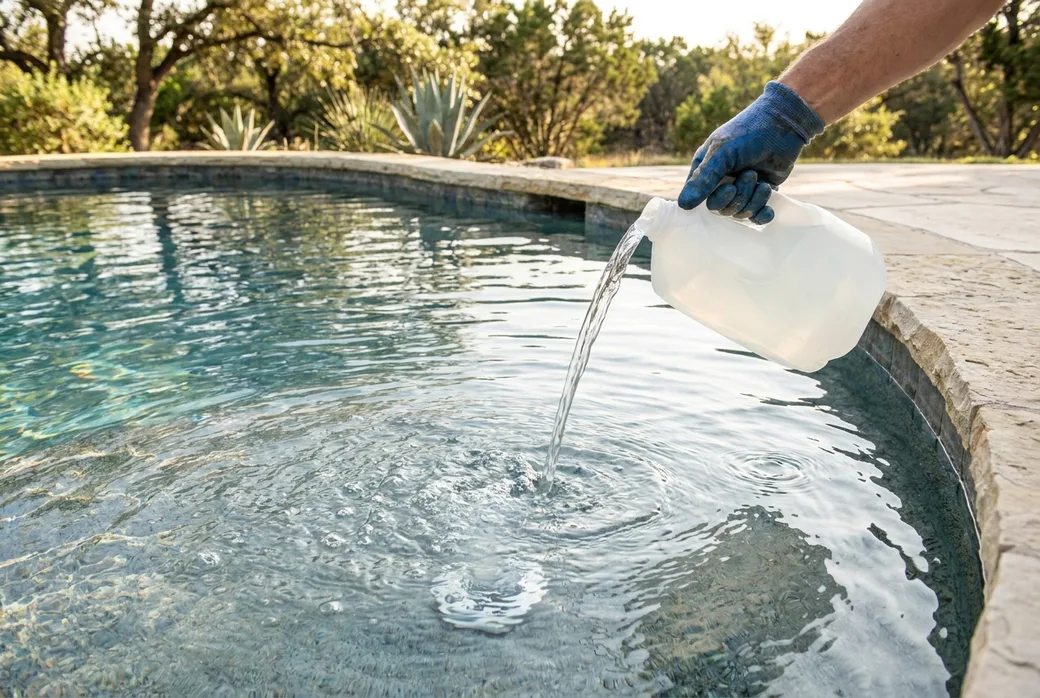
The cure for combined chlorine is breakpoint chlorination — adding enough chlorine to blast past the point where chloramines are destroyed rather than just added to. The rule of thumb is to raise free chlorine to roughly 10x your combined chlorine level in a single dose (a proper shock). Anything less can actually create more chloramines instead of destroying them, which is why a timid dose makes the smell worse. Shock hard, run the pump, and combined chlorine should drop back toward zero. Our pool shock guide walks through the how-to.
Chlorine, ORP, and Real Sanitizing Power
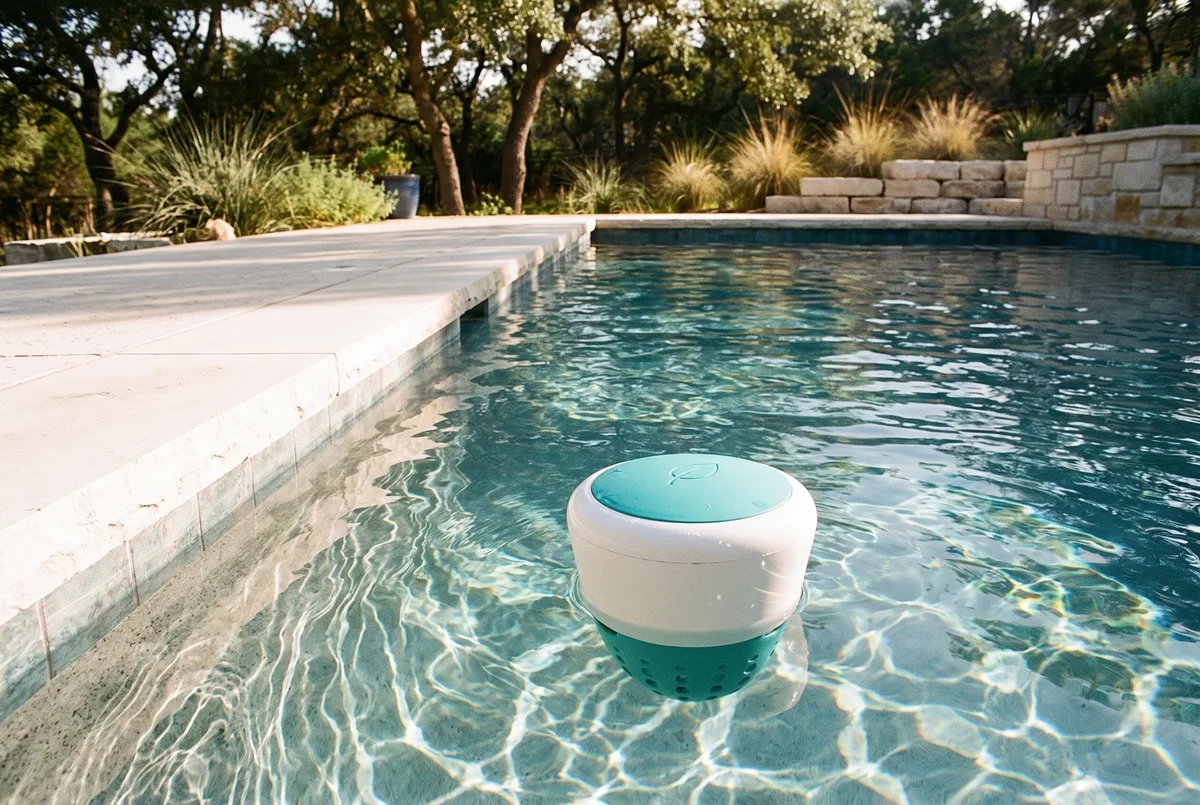
Even free chlorine has a catch: its effectiveness depends on pH and cyanuric acid. Two pools at 3 ppm free chlorine can sanitize completely differently. That's why the most reliable single indicator isn't any chlorine number at all — it's ORP, which measures the water's actual oxidizing power in real time. A pool with healthy free chlorine, low combined chlorine, and ORP in the 650–750 mV band is genuinely, verifiably sanitized. Learn why ORP tells the real story in our ORP guide.
Understanding these three numbers turns chlorine from a guessing game into a system you can actually read — and paired with continuous ORP, into one you barely have to think about.
Make pool maintenance effortless
Our smart water monitors track pH, ORP, and more in real time — and tell you exactly what to add. No guessing, no test strips.
Explore Smart Water Monitors