
Your cart is empty
See trends instead of snapshots
Hourly history can reveal recurring pH rise, sanitizer demand after swimming, or a salt reading that changes over several days. The trend helps distinguish a real pattern from one questionable test.
Your cart is empty
The best monitor is the one matched to your sanitation system. Both ICO Pool models track water around the clock, send treatment guidance to the free app, and use individually replaceable probes. The Salt version adds the sensor required to follow dissolved solids and salt concentration.
 Complete lineup guide
A connected water monitor is most valuable as an early-warning and trend tool, not as permission to retire your test kit. ICO Pool is the strongest fit here because it combines hourly pH, ORP, and temperature readings with a rechargeable battery, replaceable probes, and no app subscription. Choose the Chlorine / Bromine version for manually dosed or feeder-based pools; choose Salt only when a salt-chlorine generator makes your sanitizer and you need the added conductivity / TDS probe.
Choose Chlorine / Bromine for a traditionally sanitized pool. Choose Salt for a salt-chlorine generator. Everything else—the app, long battery life, hourly analysis, and subscription-free ownership—is shared.
Pool chemistry changes between the moments when most owners remember to test it. A connected monitor fills those gaps by recording the direction of change and alerting you before a small drift becomes cloudy water, scale, corrosion, or an ineffective sanitizer.
Manual water testing remains the reference point for home-pool decisions, but it is a snapshot. You may test on Saturday morning, balance the pool, and still miss the effects of a hot afternoon, heavy rain, a pool party, a new cover, or a failing chlorinator several days later. An hourly monitor creates a history. That history is often more useful than a single number because it shows whether pH is stable, climbing slowly, or moving sharply after an event.
The best monitors also reduce the mental load of pool care. Instead of asking whether you should test today, you can open the app and look for a meaningful change. Recommendations based on pool volume and treatment type can help a newer owner understand which adjustment to investigate. Remote access is useful for vacation homes and for owners who share maintenance with a family member or service professional.
That convenience has limits. CDC guidance still recommends routinely testing disinfectant concentration and pH, with a DPD kit providing the most accurate home result. A connected monitor cannot see every parameter that matters: total alkalinity, calcium hardness, cyanuric acid, combined chlorine, metals, phosphates, and water clarity may still require separate testing. Think of the monitor as continuous instrumentation layered on top of a sound testing routine—not a replacement for one.
Hourly history can reveal recurring pH rise, sanitizer demand after swimming, or a salt reading that changes over several days. The trend helps distinguish a real pattern from one questionable test.
An alert can prompt you to verify the water before a low-sanitizer condition or pH drift has had days to develop. Earlier awareness usually gives you more measured options than emergency treatment.
When Wi-Fi reaches the device, app access can show whether an unattended pool is behaving normally. That is especially useful for second homes, travel, and shared maintenance.
A good app turns readings into reminders and documented actions. Over time, the owner learns how weather, swimmers, filtration, and chemical additions affect that specific pool.
Swipe the table on a phone. Prices and stock are shown in the detailed cards below.
| Product | Best for | Measurements | Battery | Ongoing app fee |
|---|---|---|---|---|
| ICO Pool — Chlorine / Bromine Best for chlorine & bromine | Chlorine or bromine pools | pH, ORP, temperature | 6+ months per charge | $0 |
| ICO Pool — Salt Best for saltwater pools | Saltwater pools | pH, ORP, TDS / salt, temperature | 6+ months per charge | $0 |
Start with the measurements and maintenance model, then evaluate connectivity and software. A long feature list matters less than probes you can trust, care for, and replace.
For a chlorine or bromine pool, pH, ORP, and temperature provide the useful continuous core. A saltwater pool also benefits from conductivity / TDS information. Do not pay for a salt-specific sensor unless the pool actually uses salt electrolysis.
Practical check: Write down the sanitizer type and the readings you still plan to verify manually. If the product description cannot explain each sensor, keep looking.
ORP is measured in millivolts and reflects the water's capacity to oxidize contaminants. It responds to pH, sanitizer activity, stabilizer, temperature, and other conditions. It is valuable for trends, but it is not a substitute label for free chlorine ppm.
Practical check: Be cautious of any monitor that displays an ORP value but markets it as a direct chlorine reading without explaining the relationship.
pH and ORP probes are consumable electrochemical parts. Look for individual replacement availability, a documented calibration process, and clear storage instructions. A lower device price can become expensive if the whole unit must be replaced when one probe ages.
Practical check: Price the likely replacement probe and calibration supplies before comparing ownership cost.
Long battery life matters because every charge removes the monitor from service and exposes charging seals. ICO's official guidance calls for charging at seasonal startup or about every six months for year-round use, after the device has dried fully.
Practical check: Check how the charging port is opened, required drying time, charge duration, and whether the probes must be capped while the monitor is out of water.
A router can show a strong signal indoors while the pool sits behind masonry, low-e glass, landscaping, or a detached equipment wall. The useful test is 2.4 GHz Wi-Fi coverage at the exact floating or skimmer location.
Practical check: Stand at the pool with a phone on 2.4 GHz before purchase. Plan for an outdoor access point, extender, or powerline solution if the signal is weak.
Confirm whether alerts, charts, recommendations, multi-user sharing, and historical data require a subscription or proprietary refill. Free basic readings are less useful if the features you bought the device for sit behind an annual fee.
Practical check: Compare the five-year cost, not only checkout price: app fees, cassettes, batteries, calibration fluids, and replacement probes all count.
Each option is matched to the pool, task, and ownership priorities it handles best, with clear tradeoffs before you choose.
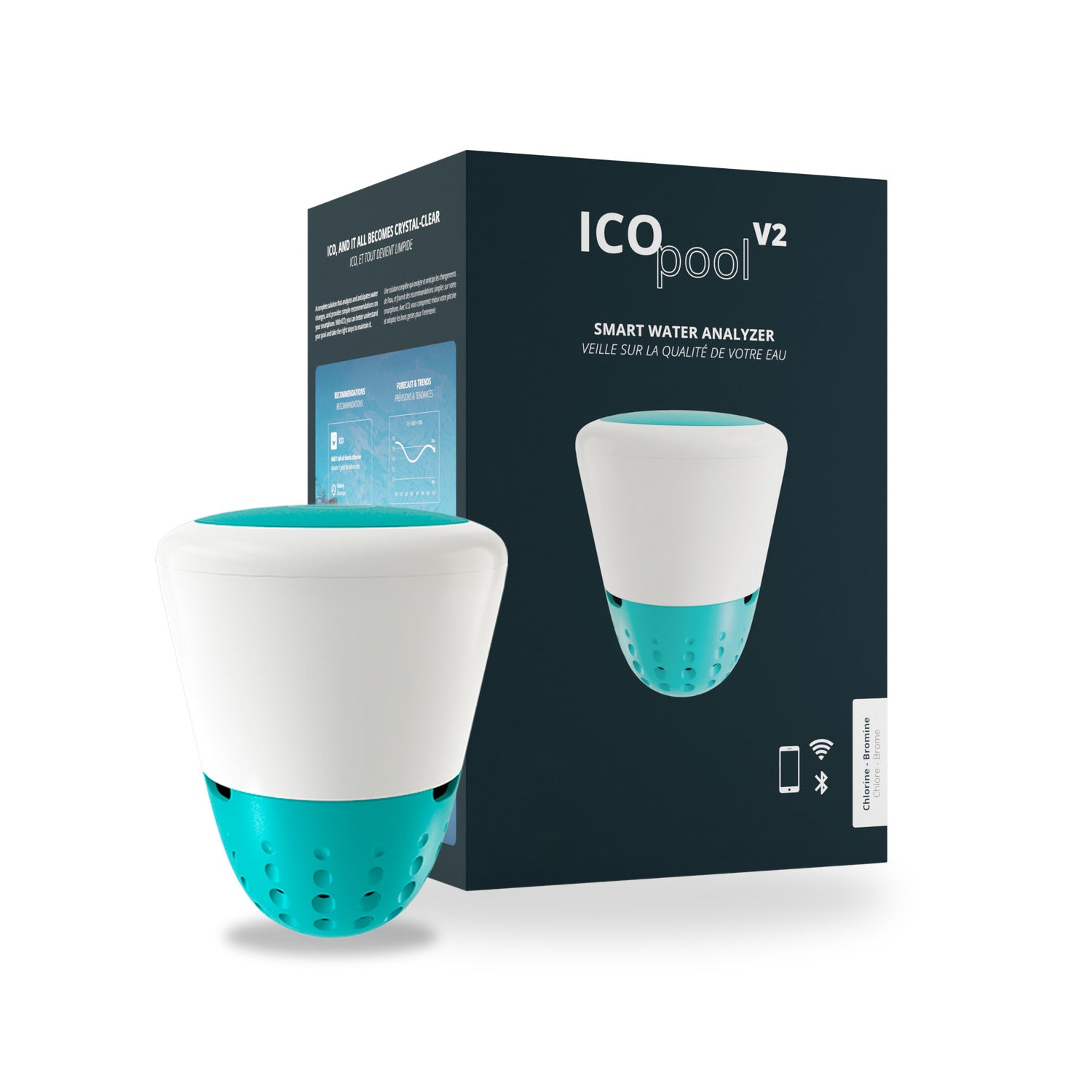
Best forPools sanitized with chlorine tablets, liquid chlorine, or bromine
The right-value ICO for most traditionally sanitized pools. It continuously follows the chemistry that determines water balance and sanitizer effectiveness, then turns the readings into clear treatment steps.
Bottom line: This is the sensible ICO for a conventionally sanitized pool. Paying more for the Salt model adds the wrong probe configuration unless a salt-chlorine generator is actually installed.
See full product details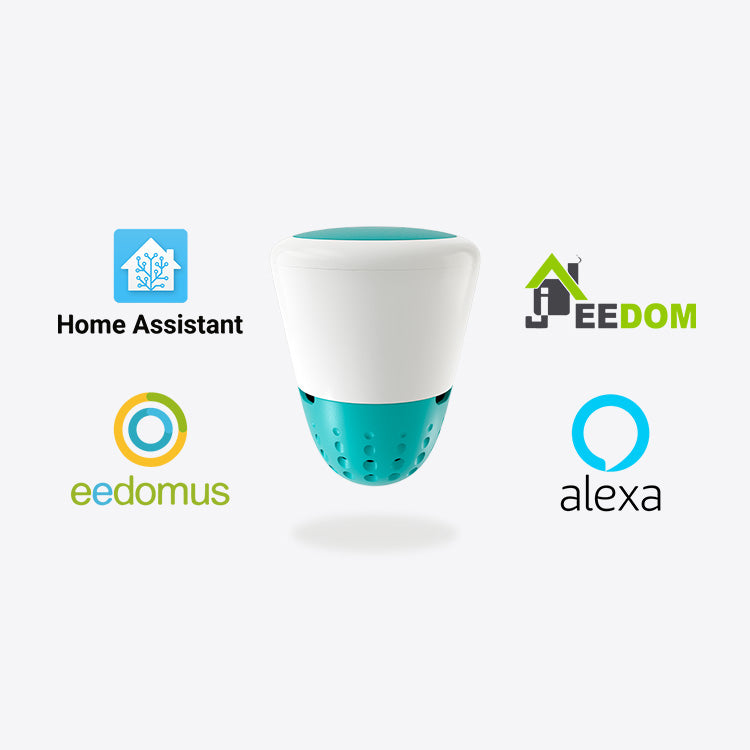
Best forPools using a salt-chlorine generator
The complete ICO configuration for saltwater ownership. A gold ORP probe is matched to salt treatment and the added TDS probe helps track dissolved solids and estimated salt concentration.
Bottom line: Choose this configuration for a salt-chlorine pool, not simply because it records one more value. Its gold ORP and conductivity probes are the reason for the price difference.
See full product detailsA monitor becomes useful when the owner understands what each number represents—and what it leaves out.
pH describes how acidic or basic the water is. It affects swimmer comfort, equipment, scale or corrosion tendency, and the behavior of chlorine. The value can move because of aeration, chemical additions, source water, rain, and the pool's alkalinity. A stable trend is often as meaningful as the exact hundredth shown by an app.
ORP, or oxidation-reduction potential, is an electrical measurement in millivolts. It reflects the combined oxidizing activity in the water. An ORP trend can warn that sanitizer effectiveness has changed, but the reading is influenced by pH and water chemistry. Two pools with the same free-chlorine result can show different ORP values. That is why a DPD free-chlorine test remains important.
Temperature helps put the other readings in context. Warm water can increase swimmer use, evaporation, and sanitizer demand; cold water changes sensor response and winterization decisions. The Salt ICO also uses conductivity to estimate TDS and salt concentration. Conductivity rises with dissolved ions generally, so the result is useful for salt-system operation but should be confirmed when an exact salt value matters.
A complete water-care program also watches total alkalinity, calcium hardness, cyanuric acid, free and combined chlorine, and—when relevant—metals or phosphates. None of those should be inferred from a pH or ORP line alone.
Consumer sensors operate in a demanding environment: sun, scale, body oils, sanitizer, and changing temperature. A smooth and repeatable trend that agrees with manual checks is more trustworthy than a display with extra decimal places. When the app and a good manual test disagree, clean and calibrate the probe before changing the water.
The correct sensor version is only the first decision. Placement, Wi-Fi, covers, and seasonal habits determine whether a monitor delivers clean data or constant frustration.
ICO can float in the pool or operate from a suitable skimmer location, but each position has tradeoffs. Floating exposes the unit to representative pool water and a clearer radio path, while a skimmer can keep it out of the way. A covered or enclosed location may weaken Wi-Fi, and stagnant water around a stopped pump may not represent the whole pool.
Configure the pool profile carefully. Recommendations depend on treatment type, volume, and products. A guessed volume can turn otherwise reasonable advice into an oversized or undersized dose. Measure the pool geometry, account for average depth, and update the profile after equipment or sanitizer changes.
For seasonal pools, plan the monitor's year around opening and winterization. Ondilo recommends calibration at the next season start after the initial factory-calibrated season, or every six months for year-round use. When winterizing, pH and ORP probes must remain moist in KCl storage solution and the device should be kept dry, protected from freezing, and within the documented storage temperature range.
The strongest candidates are owners who want trend visibility, travel regularly, maintain a salt system, or are learning how their pool reacts to use and weather. A monitor is also helpful when multiple people share care, because everyone sees the same history.
A hands-on owner who already tests frequently, keeps detailed records, and enjoys manual chemistry may gain less. A monitor is also a poor purchase if Wi-Fi cannot reach the pool or if the owner is unwilling to clean, calibrate, and store probes correctly.
Connected does not mean maintenance-free. These habits protect the probes and make the app's trend line worth trusting.
Compare pH and sanitizer trends with a fresh, correctly used manual kit. Cross-check more often after setup, chemical changes, extreme weather, or any reading that does not fit what you see.
Inspect for scale or deposits and follow Ondilo's cleaning instructions. Cap pH and ORP probes with moistened sponges whenever the device will remain out of water; use KCl for long storage.
After the initial factory-calibrated period, calibrate at seasonal startup or every six months for year-round use. Use fresh pH 4, pH 7, and ORP 470 mV solutions in the correct sequence.
Remove ICO, cap the probes, dry the unit and your hands, and allow the documented 12-hour drying period before opening the charging port. Never charge the device in water.
We compared the two ICO configurations by treatment compatibility, measurements, probe design, maintenance, connectivity, app cost, and long-term replaceability. Technical statements were checked against current Ondilo product and support documentation. We used CDC residential-pool guidance to keep the role of automated monitoring in perspective.
The ranking is use-case based rather than a claim that one configuration is universally better. Chlorine / Bromine and Salt use different ORP electrodes and the Salt version adds conductivity. Selecting the wrong version to gain an extra graph would be a worse recommendation than choosing the less expensive model matched to the pool.
Prices and availability can change. More importantly, firmware, app requirements, warranties, and supported mobile operating systems can change. Confirm those details on the product page and manufacturer documentation when they are central to the purchase.
No. The ICO app, readings, alerts, history, and treatment recommendations do not carry an annual app fee.
No. Salt and TDS tracking requires the Salt model, which includes a dedicated TDS probe and the appropriate gold ORP probe.
Yes. The pH, ORP, and TDS probes use a Twist & Lock design and are sold individually. The Smart Core electronics are also available separately.
No. Use the monitor for trends and alerts, then confirm important pH and sanitizer decisions with a reliable manual kit. ICO does not directly test free chlorine, alkalinity, calcium hardness, or cyanuric acid.
No. ICO measures ORP in millivolts, which reflects overall oxidation potential and is influenced by pH, stabilizer, temperature, contamination, and probe condition. Verify free chlorine with a direct test.
Ondilo says new ICO probes arrive factory calibrated. After the first season, calibrate at seasonal startup, or every six months for a year-round pool. Also troubleshoot and calibrate when established readings drift.
Use a location allowed by the manufacturer where water is representative and 2.4 GHz Wi-Fi remains dependable. Floating and suitable skimmer placement each have tradeoffs; avoid a stagnant or radio-blocked location.
Tell us how your pool is sanitized and we will confirm the correct probe configuration before you order.


