Your cart is empty
Independent cleaning system
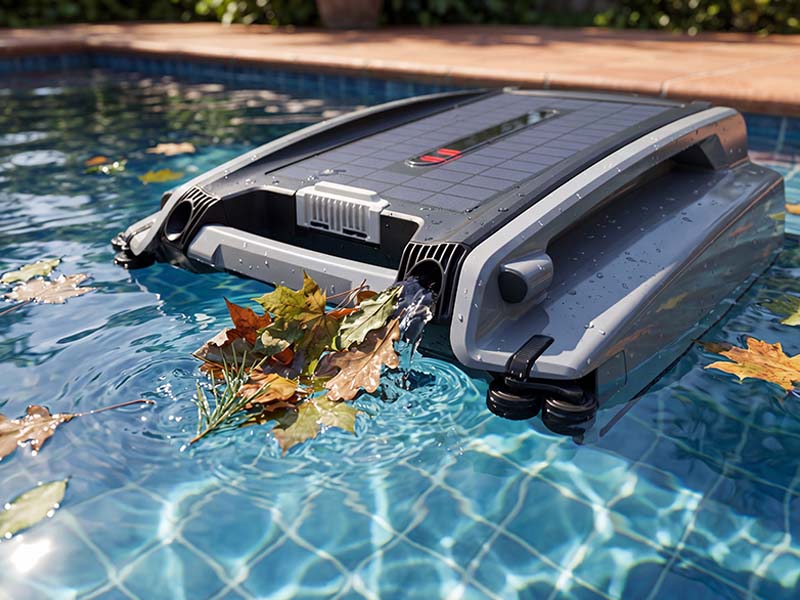
The robot carries its own motor and filter, so captured debris does not have to travel through the pool's pump and primary filter before you can remove it.
Your cart is empty
Start with pool size, then decide how much coverage, filtration flexibility, and remote control you want. The Escape is the lightweight floor-only choice. Cayman adds wall climbing. Quantum, Premier, and Sigma add waterline coverage, with Premier emphasizing filtration flexibility and Sigma adding Wi-Fi control.
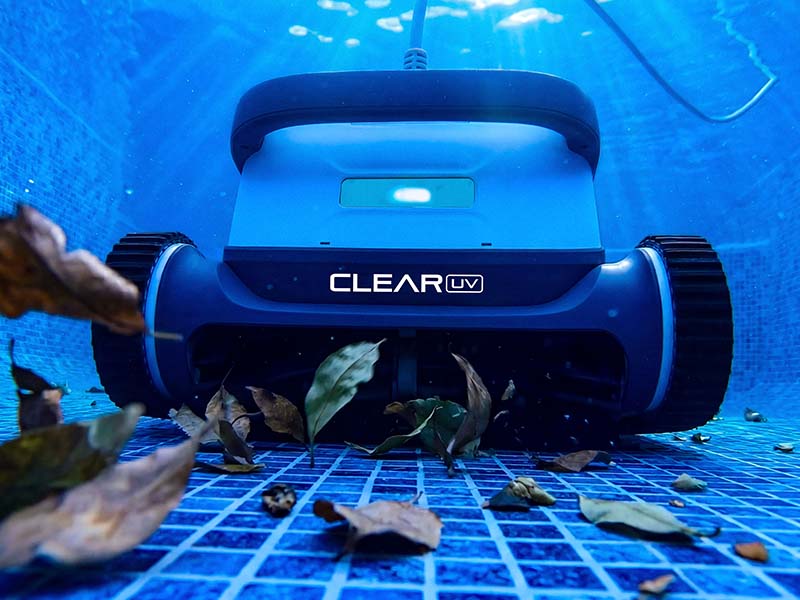 Complete lineup guide
The Dolphin Quantum is our best-balanced pick when you want floor, wall, and waterline cleaning without paying for app control. Escape is the lightweight floor-only value, Cayman adds wall climbing, Premier is the filtration specialist, and Sigma is the Wi-Fi flagship. Buy for the surfaces, pool length, debris, handling weight, and controls you will actually use—not for the highest model name.
Quantum is the balanced pick for full floor-to-waterline cleaning. Escape is the clear value choice for floor-only cleaning, especially in above-ground pools. Cayman adds wall climbing, Premier prioritizes interchangeable filtration, and Sigma adds Wi-Fi control.
A robotic cleaner is a self-contained way to scrub and filter the pool without running debris through the circulation filter. The practical benefit is not that you never touch the pool again; it is that the repetitive floor, wall, and waterline work becomes a predictable cycle instead of a long manual session.
Unlike a suction cleaner, a corded robot uses its own low-voltage power supply, motors, brushes, and onboard filter. It does not connect to the skimmer line or rely on pump suction. That separation can make setup simpler and leaves the pool's circulation system focused on moving and treating water. You place the robot in the pool, let it settle, start the cycle, then remove and rinse it when the work is complete.
The biggest improvement is consistency. Fine dust, leaves, and biofilm do not wait for the weekend. A robot with a weekly timer can repeat a cleaning pattern while the owner handles chemistry, baskets, and the occasional manual detail. Models that reach walls and the waterline also scrub areas that floor-only devices miss.
Robots are not magic. Stairs, benches, drains, sharp transitions, loose objects, and unusual shapes can interrupt coverage. No residential robot guarantees that every step or ledge will be scrubbed on every pass. The filter must be cleaned, the cable managed, and the unit removed before chemical shocking. A model that is too heavy to lift or too complicated to rinse will not save time for long.
The robot carries its own motor and filter, so captured debris does not have to travel through the pool's pump and primary filter before you can remove it.
Brushes and tracks put mechanical action directly against the surface. That is useful for settled dust and adhered material that circulation alone will not lift.
Navigation logic and a defined cycle provide more consistent coverage than a rushed manual vacuum, particularly when cleaning is scheduled several times per week.
You can choose floor-only simplicity, wall climbing, waterline cleaning, filtration flexibility, or app control instead of paying for every feature in one machine.
Swipe the table on a phone. Prices and stock are shown in the detailed cards below.
| Product | Best for | Pool size | Coverage | Standout feature |
|---|---|---|---|---|
| Dolphin Quantum Best overall | Full-surface cleaning without an app | Up to 50 ft | Floor, walls, waterline | Two active brushes |
| Dolphin Escape Best for above-ground pools | Above-ground pools | Up to 30 ft | Floor | Lightweight 90-minute cleaning |
| Dolphin Cayman Best value for in-ground pools | Value floor-and-wall cleaning | Up to 40 ft | Floor and walls | Active brush + weekly timer |
| Dolphin Premier Best filtration flexibility | Changing debris conditions | Up to 50 ft | Floor, walls, waterline | Interchangeable filtration |
| Dolphin Sigma Best smart flagship | App control and automation | Up to 50 ft | Floor, walls, waterline | Wi-Fi + top-access filtration |
Choose in this order: pool fit, cleaning coverage, filtration, handling, then controls. Reversing that order is how owners end up paying for Wi-Fi while missing a wall or cable requirement.
Use the manufacturer's maximum pool length, not just gallons. The robot needs enough cable to reach the far end while the power supply remains the required distance from water. Listings can differ by region, so match the part number to the manual.
Practical check: Measure the longest cleaning path and the route from the outlet. Leave practical slack; do not treat the published maximum as extra cable.
Floor-only is enough for many above-ground pools and lowers weight and cost. Wall climbing helps with in-ground maintenance. Waterline coverage matters where oils and residue form a visible band, but it costs more.
Practical check: Write down floor, wall, waterline, steps, and ledges separately. Only the first three are standard coverage categories in most specifications.
Top-access baskets are convenient for frequent rinsing. Fine filters handle normal particles, while ultra-fine media targets smaller dust. Bags can hold bulky debris but take more effort to turn out and clean. The best media depends on leaves, sand, pollen, and pool finish.
Practical check: If debris changes by season, prioritize interchangeable media over a single impressive micron claim.
An active brush rotates independently from travel speed and can increase agitation. Combined brushes use PVC with foam climbing rings. Manufacturer pages sometimes use broad marketing language while the technical table says 'Active Brush: No,' so use the attributes for model comparison.
Practical check: Check the exact brush type and replacement-part availability for the pool surface instead of relying on the phrase 'powerful scrubbing.'
Dry weight understates the first seconds of lifting because the robot contains water. A top handle, rapid drainage, and pickup mode can help, but the owner still has to bring the unit to the edge and lift by the handle.
Practical check: If lifting 20–25 pounds from below deck level is difficult, favor Escape or Cayman and plan a stable storage location close to the pool.
A weekly timer automates repeat starts. An anti-tangle swivel helps a longer cord move freely. Wi-Fi adds remote schedules and controls but also adds setup and software dependence. These features solve different problems and should not be bundled mentally as 'smart.'
Practical check: Choose the least complicated control system that supports the schedule you will really use.
These robots contain motors, seals, cables, tracks, filters, brushes, and power supplies. Compare warranty length, authorized service access, and the availability of common wear items—not just the cleaner's purchase price.
Practical check: Record the part number and serial number at delivery and register the warranty before the first full season.
Maytronics recommends rinsing the robot and filter, straightening a wet cable before recoiling, draining all water, and storing the cleaner protected from direct sun, rain, frost, and high heat. A caddy helps but does not make an exposed location ideal.
Practical check: Decide where the wet cleaner, cable, and power supply will live before ordering.
These corded cleaners need a correctly located, GFCI-protected supply and the power unit kept out of standing water at the manual's required setback. Swimmers should not enter while the robot is operating.
Practical check: Resolve outlet location and a safe removal routine before purchase; do not plan around an extension cord when the manual prohibits one.
Each option is matched to the pool, task, and ownership priorities it handles best, with clear tradeoffs before you choose.
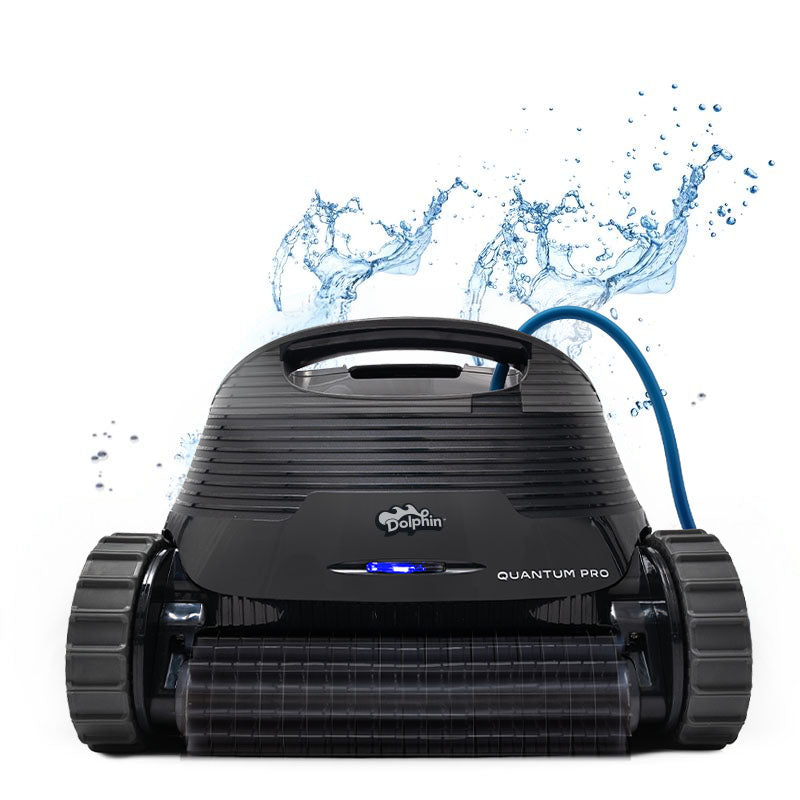
Best forMost in-ground pools that need full-surface cleaning
Quantum hits the strongest middle ground in the lineup: floor, wall, and waterline coverage, two active brushes, top-access filtration, a weekly timer, and an anti-tangle swivel without stepping up to the flagship price.
Bottom line: Choose Quantum when full-surface cleaning and easy filter access matter more than phone control. Confirm the exact model's cable specification if your pool approaches the current U.S. 50-foot rating.
See full product details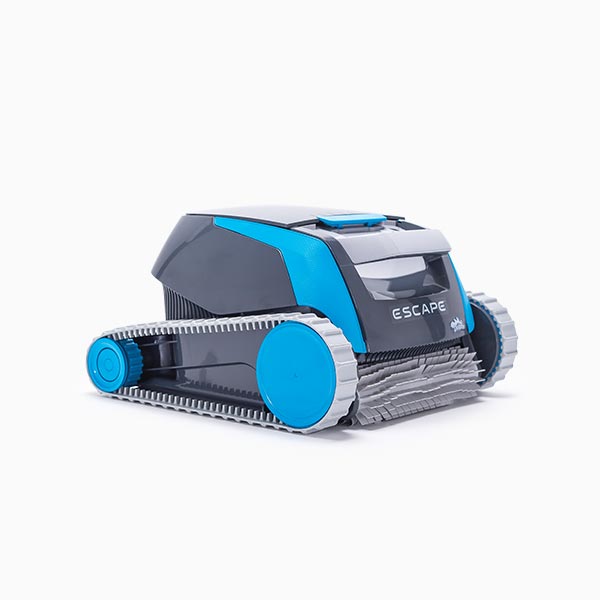
Best forAbove-ground pools up to 30 feet
Escape avoids paying for wall and waterline hardware a floor-focused pool does not need. It is the lightest cleaner here, with an easy top-load fine basket and a short 90-minute cycle.
Bottom line: Escape is the practical value pick when floor cleaning is the job. It is especially attractive for above-ground pools, but it should not be bought with the expectation that it will climb.
See full product details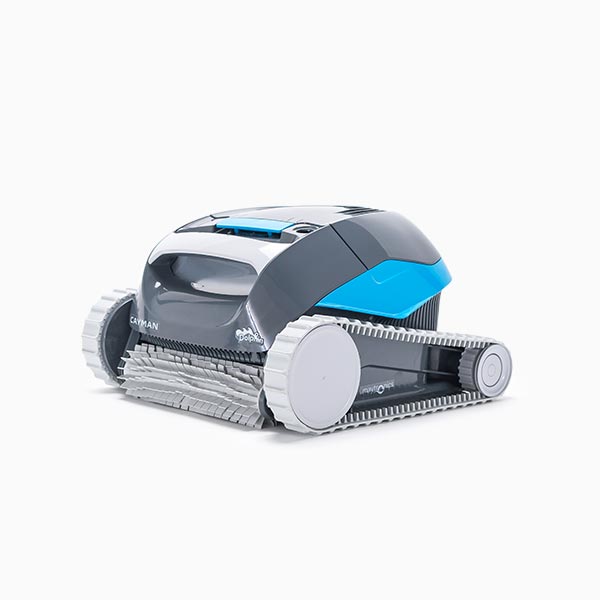
Best forPools up to 40 feet that need floor-and-wall cleaning
Cayman brings active brushing, smart route planning, wall climbing, and a weekly timer into a more approachable package. Choose it when floor-and-wall coverage is enough and you do not need an anti-tangle swivel or app control.
Bottom line: Cayman is the best value when walls matter but waterline cleaning and remote control do not. Its lack of a swivel is the main compromise for owners sensitive to cable management.
See full product details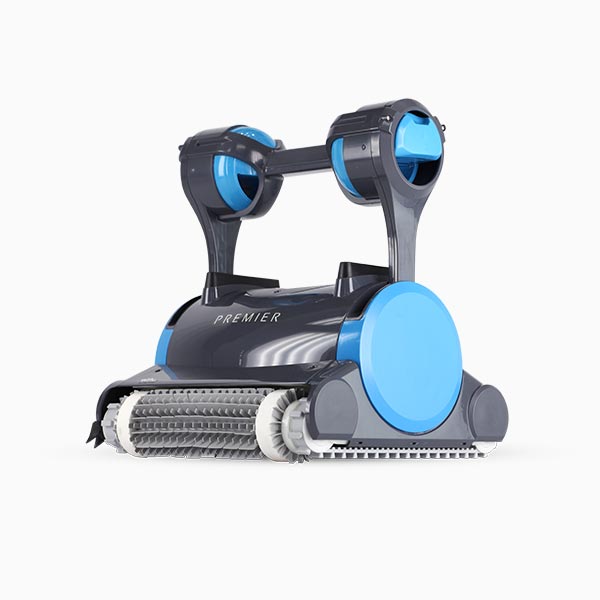
Best forPools that alternate between leaves, sand, and fine debris
Premier is the specialist for changing debris. Its interchangeable bottom-load filter bag and cartridge options let you adapt filtration while retaining complete floor-to-waterline coverage.
Bottom line: Premier earns its place when debris varies enough to justify interchangeable filtration. If you mainly collect ordinary fine debris, Quantum's top access or Sigma's app may be a better reason to spend.
See full product details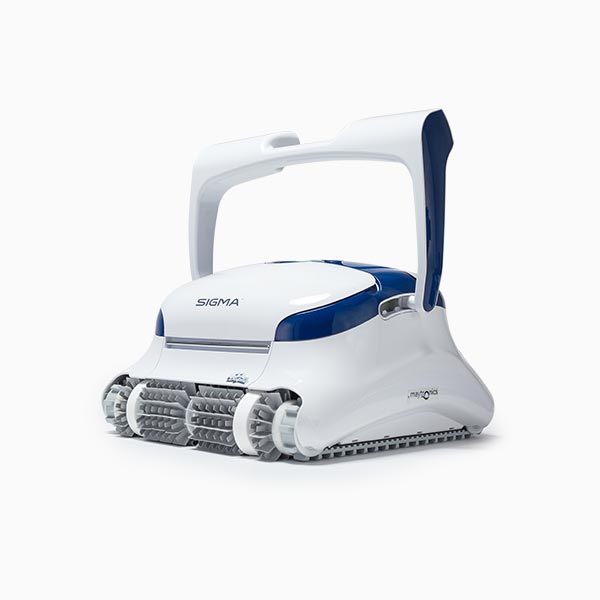
Best forOwners who want Wi-Fi control and the most advanced navigation
Sigma is the feature-first choice. MyDolphin Plus Wi-Fi scheduling, a top-access filter system, waterline coverage, and an anti-tangle swivel make it the most connected cleaner in this group.
Bottom line: Sigma is for the owner who values connected control enough to accept the price and lifting weight. It is not automatically a better clean than every simpler model for every pool.
See full product detailsLeaves, sand, pollen, plaster dust, and fine silt ask different things of a filter.
A large basket is useful only if the media captures the target debris and water can continue to flow through it. Coarser media resists clogging and accepts larger material. Ultra-fine media captures smaller particles but can load faster. Owners in dusty climates often benefit from having both types available rather than running the finest filter for every cycle.
Filter access changes the ownership experience. Escape, Cayman, Quantum, and Sigma use top access: open the lid, lift the basket or filter, and rinse. Premier uses interchangeable bottom-load formats. That flexibility is valuable for mixed debris, but the owner must be comfortable handling and cleaning the bottom assembly.
Rinse media as soon as the robot comes out. Maytronics warns that debris can harden onto a filter if it dries. A clogged filter reduces water flow and can make a capable robot look weak. Inspect the impeller area and brushes periodically, with power disconnected, according to the manual.
Prioritize capacity and a media format that does not clog immediately. Run the robot more often during a heavy drop rather than expecting one cycle to swallow a week's accumulation.
Use the appropriate ultra-fine media and expect more frequent rinsing. Correct water balance and circulation still matter because some fine material remains suspended rather than settling where the robot can reach it.
A robot can scrub and collect dead material, but it does not correct the sanitizer problem that allowed growth. Treat chemistry and circulation first, then clean the robot and filter carefully so contaminated debris is not carried back into the pool.
A five-minute post-cycle routine protects filtration, plastics, seals, and the cable.
Switch off the power supply. Bring the robot to the surface as the manual directs, use the handle for the final lift, and let water drain at the pool edge before carrying it.
Empty and hose the filter immediately. Give the cleaner a quick fresh-water rinse, especially after saltwater use, and inspect the impeller and brushes for wrapped material.
Lay a wet cable flat to release twists, allow it to dry, then coil it without kinks. A swivel reduces tangling during use but does not replace careful storage.
Keep the robot and power supply away from direct sun, rain, frost, excess heat, and chemical fumes. Maytronics documents a long-storage range of 41–113°F (5–45°C).
Stop and remove the cleaner before anyone enters. Remove it before chemical shock, then wait for the manufacturer-specified period and verify acceptable water conditions before redeployment.
We compared current Maytronics product attributes and manuals for maximum pool length, intended coverage, default cycle, filtration, filter access, brush type, timer, swivel, mobile app, weight, and warranty. When a broad marketing phrase conflicted with the technical attributes, we used the attribute table and called out the distinction.
Our verdicts prioritize fit over hierarchy. Escape wins a floor-only use case because its lower weight and price are advantages there. Cayman wins on value when walls matter. Quantum balances complete coverage with straightforward controls. Premier's case is filtration, while Sigma's case is connectivity.
Specifications can vary by region and model suffix. Quantum is a clear example: the current Maytronics U.S. page lists 50 feet while an international page lists 12 meters. Buyers near the limit should confirm the exact part number, cable, and regional manual rather than relying on a rounded category page.
The Dolphin Escape is the simplest match for an above-ground pool up to 30 feet when floor cleaning is the priority. Maytronics lists it for both above-ground and in-ground pools, but it does not climb walls or scrub the waterline.
Quantum, Premier, and Sigma clean the floor, walls, and waterline. Cayman covers the floor and walls; Escape is floor-only.
No. They are self-contained electric robots with their own motors and filters. They connect to the included low-voltage power supply, not the pool pump or suction line.
A weekly timer can automate repeat starts, but Maytronics recommends removing the robot after a cycle for optimal care, rinsing the filter and body, draining it, and storing it protected from weather.
Ultra-fine media is useful for dust, pollen, and small sediment, but it loads faster. Coarser or standard media is often easier during heavy leaf drop. Match the media to the debris and rinse it promptly.
Only if remote scheduling and app control solve a real problem. Sigma is the connected option here; the other models emphasize power-supply controls and simpler ownership.
No. Stop and remove the cleaner before anyone enters the pool. Keep the power supply out of standing water and follow the exact model's electrical, GFCI, setback, and extension-cord instructions.
Send us your pool type, length, and typical debris. We will narrow the five choices to the cleaner that fits.