Your cart is empty
A second disinfection barrier
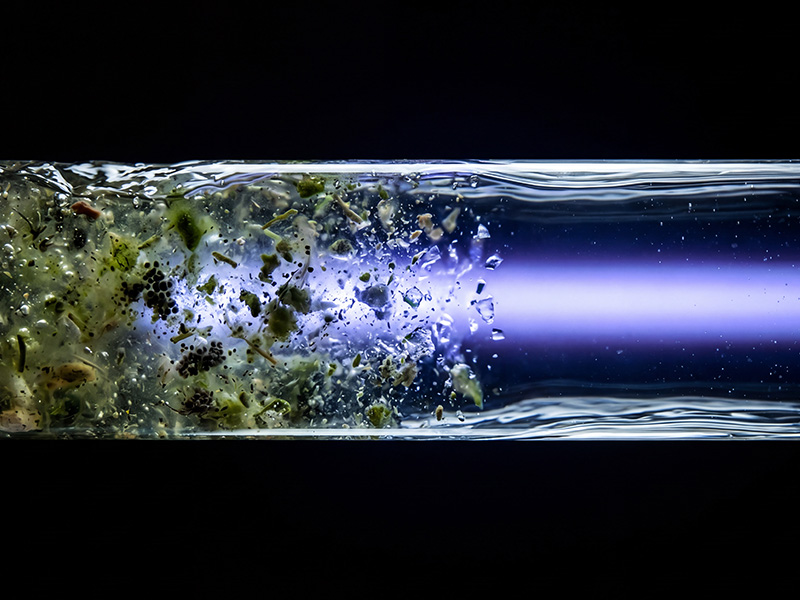
A validated UV dose can inactivate microorganisms during a pass through the chamber, including organisms that are more resistant to ordinary chlorine contact.
Your cart is empty
UV equipment should be sized to circulation flow and target dose—not price alone. The SpectraLight line progresses from compact single-lamp residential units to twin-lamp commercial systems. Use the ranges below as a first pass, then confirm pump flow, plumbing, voltage, and local code with a pool professional.
 Complete lineup guide
Choose a UV system from measured circulation flow and required dose—not pool gallons or price. SL-400 and SL-450 serve lower-flow residential systems; SL-500 and SL-550 cover the core residential range; SL-600 bridges into semi-commercial flow; and the twin-lamp SL-620, SL-650, and SL-800 scale upward. UV is secondary treatment. It does not leave a sanitizer residual, so the pool still needs correctly maintained chlorine or bromine and professional sizing.
SL-400 through SL-550 cover the residential flow range. SL-600 bridges large residential and semi-commercial systems. SL-620 adds twin-lamp output, while SL-650 and SL-800 are designed for increasingly high flow rates.
UV gives a circulation system a second treatment barrier. As water passes through the chamber, ultraviolet energy can inactivate microorganisms that receive the validated dose. Properly designed systems can also support chloramine-control goals, but UV works alongside—not instead of—the primary disinfectant.
Chlorine or bromine remains the first line of defense because it circulates through the pool and leaves a measurable residual. UV has no residual effect after water exits the chamber. A microorganism or contaminant introduced between circulation passes is handled by the primary sanitizer until that water reaches the treatment equipment. CDC's Model Aquatic Health Code therefore classifies UV as secondary or supplemental treatment and continues to require free available chlorine or bromine levels.
The strongest public-health case for validated UV is additional inactivation of chlorine-resistant organisms such as Cryptosporidium. Another reason—especially in indoor or high-bather-load facilities—is control of chloramines and related air-quality complaints. Those are engineering goals with specific dose, spectrum, turnover, and validation requirements; they should not be reduced to a blanket promise that any UV lamp 'eliminates chlorine smell.'
Residential owners may value clearer operating goals, reduced combined-chlorine pressure, or an added treatment barrier. The realistic benefit depends on water clarity, circulation, lamp output, sleeve condition, and how often the full pool volume passes through the chamber. UV does not correct pH, remove debris, replace filtration, or excuse weak sanitizer control.
A validated UV dose can inactivate microorganisms during a pass through the chamber, including organisms that are more resistant to ordinary chlorine contact.
UV adds energy rather than another pool-water ingredient. The tradeoff is precisely why a separate residual sanitizer must remain in the basin.
Correctly specified UV can be part of a chloramine strategy, particularly in demanding indoor applications. Lamp spectrum and dose are critical to that goal.
Once correctly installed and interlocked with circulation, treatment occurs whenever the required flow and UV output conditions are met.
Swipe the table on a phone. Prices and stock are shown in the detailed cards below.
| Product | Best for | Rated power | Listed flow (30 / 60 mJ) | Lamp setup |
|---|---|---|---|---|
| SpectraLight SL-400 Best low-flow residential system | Low-flow residential systems | 40 W | 30 / 7 GPM | Single lamp |
| SpectraLight SL-450 Best compact residential step-up | Compact residential step-up | 80 W | 60 / 30 GPM | Single lamp |
| SpectraLight SL-500 Best residential retrofit | Residential retrofits | 100 W | 110 / 55 GPM | Single lamp |
| SpectraLight SL-550 Best high-flow residential system | Higher-flow residential systems | 130 W | 156 / 78 GPM | Single lamp |
| SpectraLight SL-600 Best large-residential system | Large residential / small commercial | 150 W | 187 / 93 GPM | Single lamp |
| SpectraLight SL-620 Best twin-lamp step-up | Large residential / commercial | 200 W | 220 / 110 GPM | Twin lamp |
| SpectraLight SL-650 Best high-flow step-up | High-flow commercial systems | 260 W | 312 / 156 GPM | Twin lamp |
| SpectraLight SL-800 Highest published capacity | Aquatic facilities / resorts | 300 W | 374 / 187 GPM | Twin lamp |
The selection worksheet starts at the equipment pad, not with the pool's marketing name. Gather measured flow, plumbing, voltage, water quality, and the treatment objective before comparing models.
UV dose decreases as flow increases because water spends less time in the chamber. Use measured or properly calculated system flow at the pump speed that will operate with UV. A variable-speed pump can create several operating points.
Practical check: Record GPM at each programmed pump speed and identify which speeds will energize the UV system.
Disinfection, Cryptosporidium inactivation, and chloramine control are not interchangeable design statements. SpectraLight publishes flow at two nominal dose levels—30 and 60 mJ/cm². The required value must come from the application, validation, and local rules.
Practical check: Never compare a 30 mJ flow from one system with a 60 mJ flow from another as if they were equivalent capacity.
Dissolved and suspended material can absorb or scatter UV before it reaches the target. Clear-looking water is not a laboratory UVT measurement. PWTAG notes that assumed UVT should be conservative and measured at 254 nm for design.
Practical check: Commercial designers should document the UVT used in validation and sizing, not rely on visual clarity.
For regulated or pathogen-inactivation applications, require a validation report that covers the model, lamp, sensor, flow, UVT, dose, and reduction-equivalent-dose bias. A general brand claim or component certification is not the same thing.
Practical check: Ask for the exact NSF/ANSI 50 or other accepted validation document and confirm that the purchased configuration appears in it.
Low-pressure 254 nm lamps are efficient germicidal sources. Broad-spectrum medium-pressure systems are often specified when direct photolysis of di- and trichloramines is a central objective. Ask which technology the exact unit uses and what claims are validated.
Practical check: If indoor-air chloramine control is the project goal, do not assume every UV-C product has equal dechloramination performance.
A serious UV installation needs to know whether lamps are on and whether output and flow remain in the validated range. Commercial codes may require calibrated sensors, alarms, shutoffs, logging, and routine alarm testing.
Practical check: Ask what happens after low UV intensity, lamp failure, loss of flow, excessive flow, or sensor failure.
Confirm port diameter and orientation, pressure, chamber length, service clearance, drainage, bypass needs, 115V or 230V supply, grounding, bonding, and weather protection. SmartConnex rotation begins with SL-500 in the published table.
Practical check: Have the installer draw the chamber, unions, isolation valves, flow direction, and lamp-removal clearance before ordering.
Lamp output declines with use and quartz sleeves foul. The unit should allow safe lamp replacement and sleeve inspection or cleaning. The manufacturer lists 13,000-hour lamp life, but service is based on output and operating guidance, not whether a lamp still glows.
Practical check: Price lamps, sleeves, seals, sensors, and labor, and make sure the chamber can be serviced without dismantling the equipment pad.
Each option is matched to the pool, task, and ownership priorities it handles best, with clear tradeoffs before you choose.
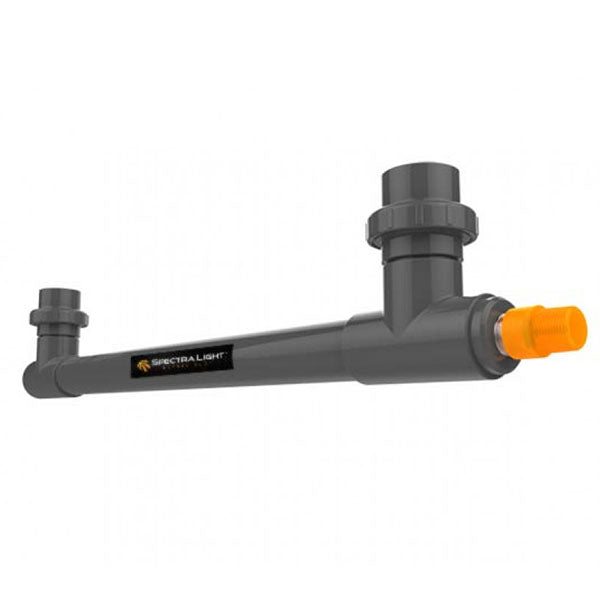
Best forResidential pool or spa systems with low measured flow
The SL-400 is the entry point to SpectraLight UV-C treatment. Its 40-watt single-lamp chamber is listed for 30 GPM at the lower 30 mJ/cm² dose and only 7 GPM at 60 mJ/cm², so measured flow matters more than pool gallons.
Bottom line: SL-400 is a specialty low-flow choice. Do not pair its 30 GPM lower-dose rating with a pump that needs the higher-dose 7 GPM limit, and obtain written confirmation of that unusual published figure.
See full product details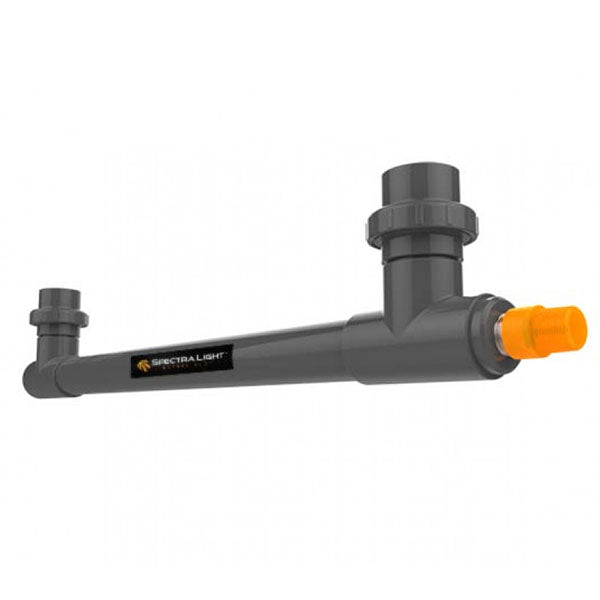
Best forResidential systems needing more dose headroom than SL-400
The SL-450 keeps the compact 80-watt format but raises throughput at the higher listed UV dose. It is a sensible step up for medium residential pools or pumps that move more water.
Bottom line: SL-450 is the compact step-up for a system whose measured flow fits 60 GPM at 30 mJ/cm² or 30 GPM at 60 mJ/cm².
See full product details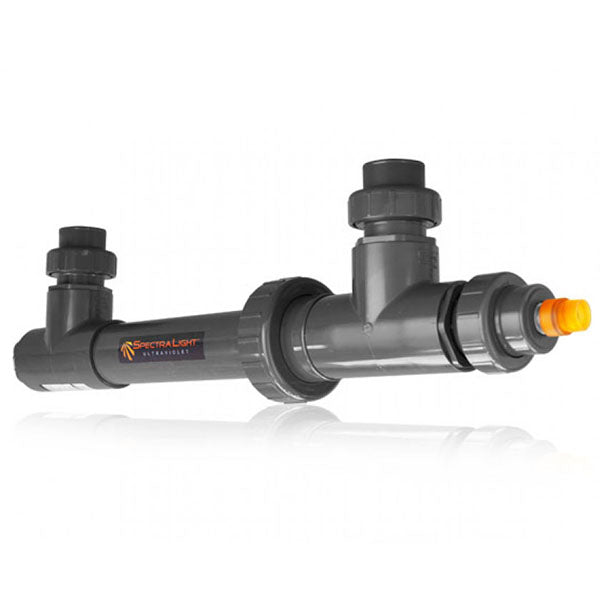
Best forMedium residential pools and easier plumbing retrofits
The SL-500 adds a 100-watt lamp and SmartConnex rotating ports. That combination makes it the most natural residential retrofit when existing plumbing alignment is part of the decision.
Bottom line: SL-500 is the best starting point for many conventional residential retrofits because its ports are flexible and its dose table covers common—but not all—flows.
See full product details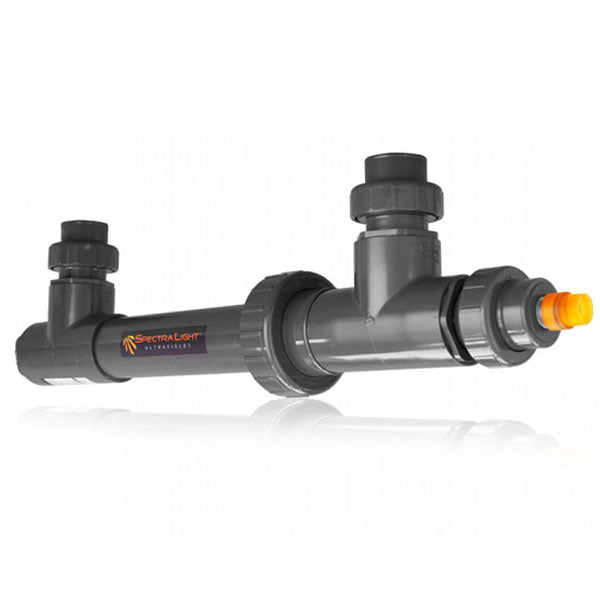
Best forLarger residential pools and higher-flow pumps
The 130-watt SL-550 adds useful sanitization headroom without moving into a longer chassis. It is the high-end residential choice when measured flow fits the listed 156 GPM at 30 mJ/cm² or 78 GPM at 60 mJ/cm².
Bottom line: SL-550 is the high-flow residential sweet spot when measured flow exceeds SL-500's higher-dose range but does not justify the longer SL-600.
See full product details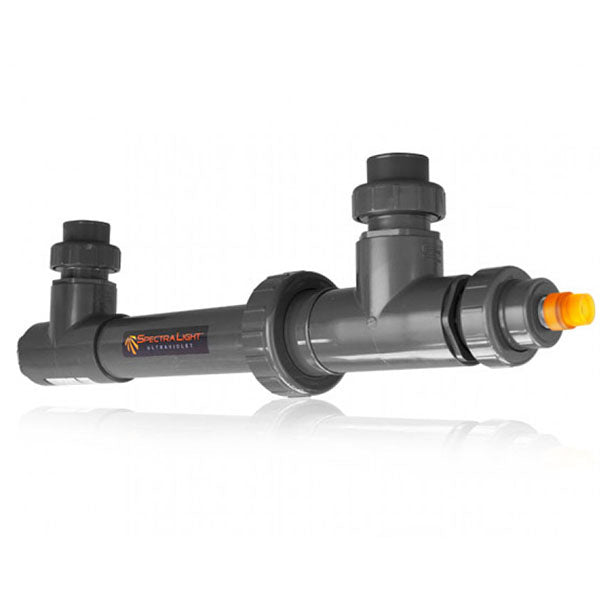
Best forLarge residential and semi-commercial circulation systems
SL-600 is the bridge model: a 150-watt lamp in a longer 42-inch chamber for high-flow residential builds and smaller commercial applications that do not require twin-lamp redundancy.
Bottom line: SL-600 is the best large-residential bridge when 93 GPM at the higher listed dose is enough and twin lamps are not required.
See full product details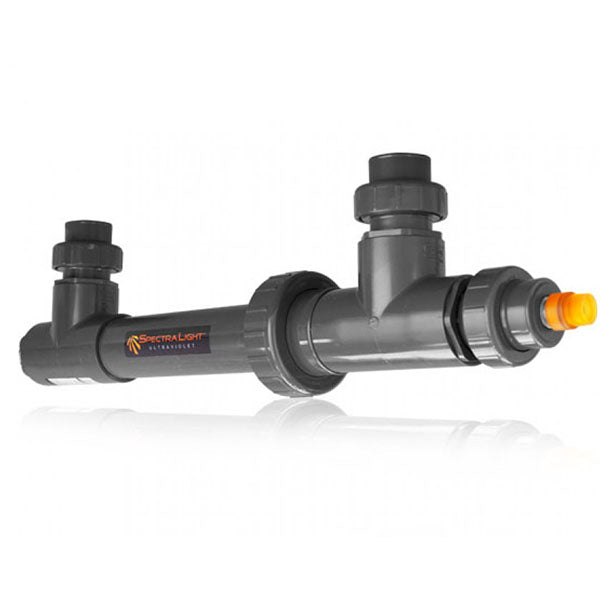
Best forLarge pools needing 200-watt twin-lamp output
The SL-620 is the first twin-lamp model. Two 100-watt lamps raise capacity and may provide reduced treatment if one lamp needs service; controls and validation determine whether that reduced state is acceptable.
Bottom line: SL-620 is the first choice here when twin-lamp output and 110 GPM at the higher listed dose fit the design. Treat 'redundancy' as reduced capacity unless documentation proves otherwise.
See full product details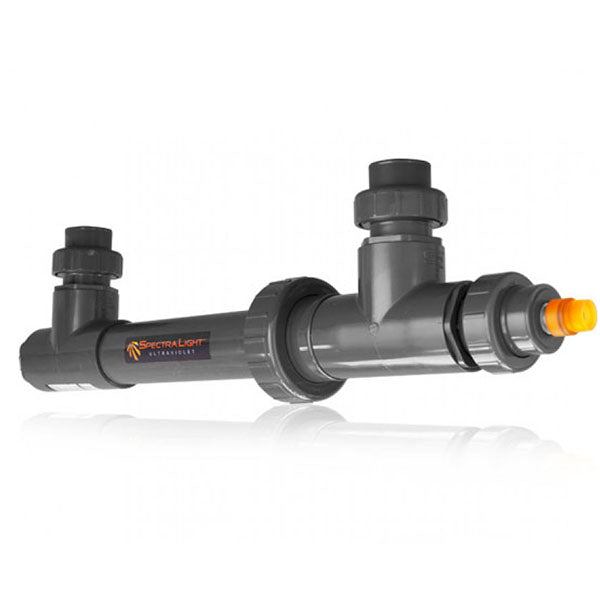
Best forHigh-flow systems within its listed 312 / 156 GPM dose table
The SL-650 uses a re-engineered twin-lamp chamber to increase listed throughput substantially over the SL-620. It is the value point for resort, club, and large custom-pool circulation systems.
Bottom line: SL-650 is the high-flow value only when the project genuinely needs its 156 GPM higher-dose capacity. Oversizing without a design objective wastes budget.
See full product details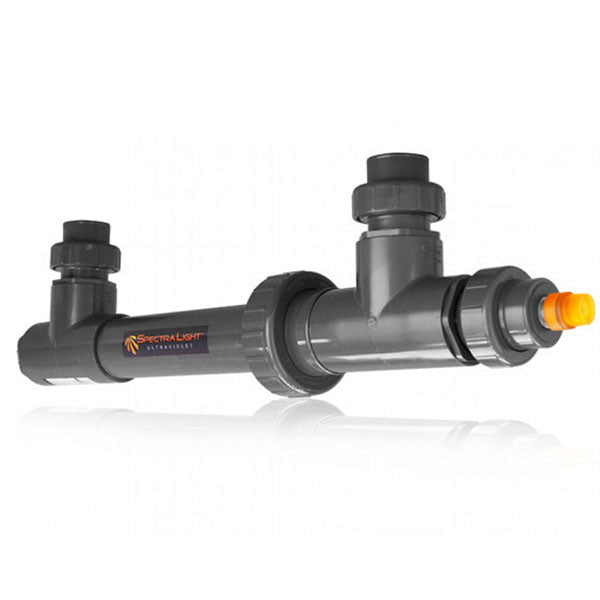
Best forEngineered facilities within its listed 374 / 187 GPM dose table
The SL-800 is the highest-throughput single chamber in this lineup. Its twin-lamp platform is intended for large commercial circulation systems; residential buyers will usually find the SL-600 or SL-620 more appropriate.
Bottom line: SL-800 is the flagship for engineered high-flow work. It belongs in a documented design, not in a residential equipment pad simply because it is the largest model.
See full product detailsDose is the amount of UV energy delivered per unit area. It depends on intensity and exposure time, so flow and water quality directly affect performance.
Slow water remains in the chamber longer and can receive more energy. Faster water has less exposure time. That is why each SpectraLight model shows a lower flow at the higher dose: for example, SL-500 is listed at 110 GPM for 30 mJ/cm² and 55 GPM for 60 mJ/cm².
Manufacturer tables sometimes show the equivalent values as 30,000 or 60,000 microwatt-seconds per square centimeter. One millijoule equals one thousand microwatt-seconds, so those values correspond to 30 and 60 mJ/cm². A table that omits the time component from the unit should be clarified with the manufacturer rather than copied blindly.
UV transmittance describes how much germicidal light passes through the water. Iron, organics, turbidity, and other material can lower it. Validation uses specified UVT and flow conditions. Operating outside those conditions means the displayed lamp wattage alone cannot prove delivered dose.
Two 20,000-gallon pools can have very different pump curves, pipe sizes, turnover goals, and bather loads. Gallons help calculate turnover, but the UV chamber experiences GPM. Size the chamber to actual flow and required dose, then confirm that the operating schedule achieves the broader treatment objective.
Validation tests a defined reactor, lamp, sensor, flow range, UVT range, and challenge organism. It converts measured operating conditions into a reduction-equivalent dose. The value of the certificate is specificity: it shows what the exact system can deliver under stated limits.
A correctly sized chamber can still underperform if plumbing, controls, or maintenance access are wrong.
Public-health guidance places UV in the recirculation line with filtration upstream so clearer water reaches the chamber. Chemical injection points and equipment order must follow the engineered design, product instructions, and local code. Isolation valves, unions, drainage, venting, and a safe bypass strategy make service possible.
Electrical work must match the selected 115V or 230V unit, manufacturer instructions, grounding and bonding requirements, outdoor ratings, and local code. Flow switches and control interlocks should prevent unsafe operation. Never expose eyes or skin to an energized germicidal lamp.
Leave space to remove lamps and sleeves without hitting a wall, heater, or roof. A rotating port helps connect plumbing but does not create service clearance. The equipment pad should also allow sleeve cleaning, sensor access, seal replacement, and drainage without flooding electrical components.
Confirm measured flow, target dose, port size, voltage, chamber length, lamp-removal path, winterization plan, and whether the pool automation can interlock UV with the pump.
Add validation documents, design UVT, log-inactivation requirement, bather load, turnover, duty/standby philosophy, calibrated intensity sensors, alarm testing, data logging, operator training, spare lamps, and authority approval.
UV can support water and air quality, but broad chemical-savings promises need context.
Because UV leaves no residual, chlorine or bromine must remain at the concentration required for the pool. A secondary system may change operating strategy and demand, but the correct residual comes from public-health guidance, local code, bather load, stabilizer, and the primary treatment design—not a universal percentage reduction.
Chloramines form when chlorine reacts with nitrogen-containing contaminants. Better source control, swimmer hygiene, ventilation, water replacement, oxidation, and circulation all matter. UV can be part of the solution, but PWTAG distinguishes broad-spectrum medium-pressure systems for direct treatment of di- and trichloramines from low-pressure 254 nm systems primarily used for germicidal action.
Therefore, ask the manufacturer what lamp technology the exact model uses and request data for the specific chloramine claim. Statements such as 'eliminates chloramines' should not be treated as guaranteed performance across every pool, flow, and contaminant load.
UV is automatic day to day, but its output must be maintained and verified over the life of the lamp.
Confirm flow, lamp status, intensity, alarms, and interlocks at the frequency required by the manual and code. Investigate low-output warnings instead of simply clearing them.
Inspect and clean sleeves using the approved procedure. Scale or film between the lamp and water reduces transmitted energy even when the lamp appears bright.
SpectraLight advertises a 13,000-hour component rating but its current manual and FAQ direct annual lamp replacement. Follow the current model-specific service instruction; visible light is not proof that useful germicidal output remains.
Inspect O-rings and sleeves during service, calibrate sensors as required, test alarms, and record lamp hours, cleaning, replacements, and operating readings.
We used SpectraLight's current model table for lamp wattage, flow at the two listed doses, voltage, approximate length, lamp count, SmartConnex availability, and positioning by application. We normalized the dose discussion to 30 and 60 mJ/cm² because the manufacturer's SL-500 brochure expresses the higher value as 60 mJ/cm².
We did not rank models by wattage alone or repeat unsupported gallon limits. Flow at target dose is the meaningful comparison. CDC MAHC material and PWTAG technical guidance informed the sections on residual sanitizer, validation, UVT, monitoring, chloramine claims, and commercial operation.
We also checked the current NSF ultraviolet-equipment listing and did not find SpectraLight or the eight SL model numbers under the reviewed names. That does not prove no certification exists through another accepted body, but it means certification is unverified until the supplier produces model-specific documents.
This guide is a screening tool, not an engineered design. Final selection—especially for a public, therapy, spray, wading, hospitality, or high-bather-load venue—requires the manufacturer, a qualified aquatic engineer or installer, and the authority having jurisdiction.
No. UV treats water only as it passes through the chamber and leaves no residual in the pool. Chlorine or bromine must still be maintained. Correctly specified UV may support chloramine control, but no universal reduction is guaranteed.
Additional UV capacity generally provides dose headroom, but oversized equipment costs more and still must match plumbing, flow, voltage, and code. Size from the complete system rather than gallons alone.
Twin lamps support higher-output applications. If one fails, some UV may remain, but the rated dose is not assured without a validated degraded-mode curve and approved controls. Do not assume full sanitizing redundancy.
No. Gallons help with turnover calculations, but the UV chamber must be selected from actual flow, required dose, UV transmittance, treatment objective, and applicable code.
UV is installed in the recirculation system according to the manufacturer and engineered equipment order, commonly with filtration upstream. Plumbing, chemical injection, controls, service clearance, and electrical work should be professionally designed.
Not necessarily. Germicidal output declines with lamp age, and a dirty quartz sleeve can block useful UV. Follow lamp-hour, intensity, sleeve-cleaning, sensor, and alarm guidance rather than judging by visible light.
Send us pool volume, pump model and speed, measured flow, pipe size, voltage, and application type. We will help identify the right SpectraLight range.