Your cart is empty
Collect debris before it sinks
Leaves, insects, pollen, and floating hair are generally easier to remove from a basket at the surface than from the floor or primary filter later.
Your cart is empty
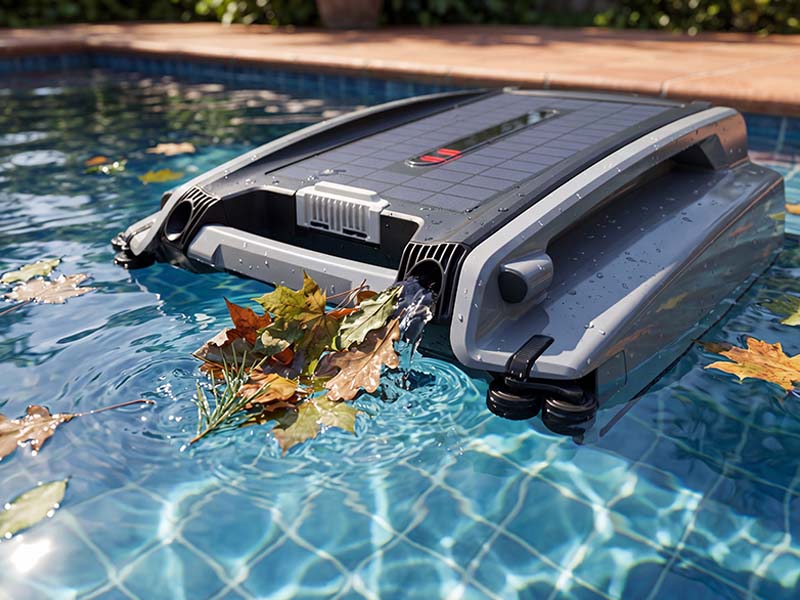
Both skimmers roam the water surface and capture debris before it sinks. Betta SE Plus emphasizes fine filtration and adapter backup. Dolphin Skimmi emphasizes app control, configurable navigation, and solar-first operation in larger pools.
 Complete lineup guide
Betta SE Plus is the better all-around choice for most residential pools because its 200-micron basket targets fine surface debris and the included wall adapter gives you a recovery plan after several cloudy days. Dolphin Skimmi is the better fit when app control, a solar-only routine, and a manufacturer rating for pools up to roughly 60 feet matter more. Neither replaces a floor cleaner or the pool's circulation system.
Betta SE Plus is the more complete all-weather package for most owners because wall charging can bridge cloudy stretches and its 200-micron basket targets fine debris. Choose Skimmi when app control, solar-only operation, or a pool up to 60 feet is the stronger priority.
Leaves and pollen are easiest to remove while they are still floating. A robotic skimmer moves that collection point around the pool instead of waiting for wind and circulation to deliver everything to one wall opening.
A built-in skimmer is part of the circulation system. It works when the pump runs and pulls nearby surface water toward a fixed basket. That is essential equipment, but performance depends on return-jet direction, wind, water level, pump speed, and where debris happens to land. A robotic skimmer adds a mobile intake that travels across open water and carries its own collection basket.
The strongest use cases are pools under trees, pools that collect pollen or insects, and owners who want to intercept debris before it becomes waterlogged and sinks. Capturing organic material sooner can also reduce the amount left for the floor robot and primary filter. The benefit is convenience and division of labor—not a guaranteed percentage reduction in filtration or chemicals.
A surface robot remains a second machine to maintain. It can get confused by complex geometry, become trapped near ledges, or need manual rescue from a cover edge. Its basket fills, solar panels collect film, and batteries age. If a pool gets little floating debris or already has excellent surface circulation, a skimmer robot may add less value than a better floor cleaner or circulation adjustment.
Leaves, insects, pollen, and floating hair are generally easier to remove from a basket at the surface than from the floor or primary filter later.
The robot patrols open water and can reach debris that wind or return flow keeps circling away from the built-in skimmer.
Both models use onboard solar charging and batteries, avoiding a cord across the surface. Betta adds an adapter for backup charging out of the water.
Material captured early never reaches the bottom. That does not eliminate floor cleaning, but it can leave the floor robot with less bulky debris.
Swipe the table on a phone. Prices and stock are shown in the detailed cards below.
| Product | Best for | Power | Filter | Controls |
|---|---|---|---|---|
| Betta SE Plus Best overall | Fine debris and cloudy climates | Solar + wall adapter | 200-micron fine mesh | Wireless remote |
| Dolphin Skimmi Best app-controlled option | Large pools and app control | Solar + internal battery | Coarse debris basket | MyDolphin Skimmi app |
A skimmer's fit is determined at the waterline. Map everything the robot can collide with, pass under, or beach on before comparing apps and marketing claims.
Solar input changes by season and location. A pool shaded by the house or trees may not replace the energy used during a heavy debris day. Betta SE Plus can be turned off and charged with its adapter; Skimmi is designed around solar recharge and energy-saving work cycles.
Practical check: Watch the pool for a full sunny day and note when direct light actually reaches the water—not just the yard.
A tanning shelf can strand a floating robot if the water is shallow enough for the intake or body to contact the surface. Betta documents a 3.5-inch minimum operating depth for SE Plus and uses adjustable anti-stranding rods.
Practical check: Measure water depth over every shelf and step that intersects the robot's path, including when evaporation lowers the pool.
Solar blankets, cleaner hoses, ladders, spillways, ropes, and narrow passages can change navigation. Maytronics uses conflicting wording about 'covering' versus pool coating, and the relevant manual does not verify operation under a deployed cover. No sensor can create clearance or sunlight that is not physically available.
Practical check: Photograph the waterline with all normal accessories installed and ask whether the exact model can pass each obstruction.
Betta publishes a 200-micron mesh that targets pollen and fine material as well as leaves. Skimmi uses a debris tray suited to surface collection. Finer mesh catches more small material but may need more frequent cleaning.
Practical check: Choose for the smallest debris you care about, then make sure the basket is large and accessible enough for the busiest week of the season.
Betta states that its SCT motors are intended for chlorine and salt pools and publishes a 5,000 ppm maximum salt level. Every robot still has documented water-condition limits and should be removed for treatments or conditions outside them.
Practical check: Compare the manual's salt, chlorine, pH, and temperature limits with the pool—not a generic statement that a motor is 'salt tolerant.'
A handheld remote is quick and independent of phone pairing; Betta includes one. Skimmi provides app-based settings and steering. Maytronics has used different apps across Skimmi generations, so confirm the app for the exact product number.
Practical check: Download the named app and review current device requirements before deciding that phone control is an advantage.
Maytronics' support guidance rates Skimmi for pools up to about 60 feet and recommends two units above that. Betta publishes an ideal coverage area up to approximately 40 by 60 feet. Shape and obstacles can matter as much as length.
Practical check: Use the largest open-water dimension and note divided areas that the robot cannot cross.
Solar robots live in heat, UV, moisture, and treated water. Compare warranty, battery-service options, replacement baskets or trays, propellers, motors, and local support before treating the device as maintenance-free.
Practical check: Register the warranty and keep the charger, remote, manual, and serial number together for off-season storage.
Each option is matched to the pool, task, and ownership priorities it handles best, with clear tradeoffs before you choose.
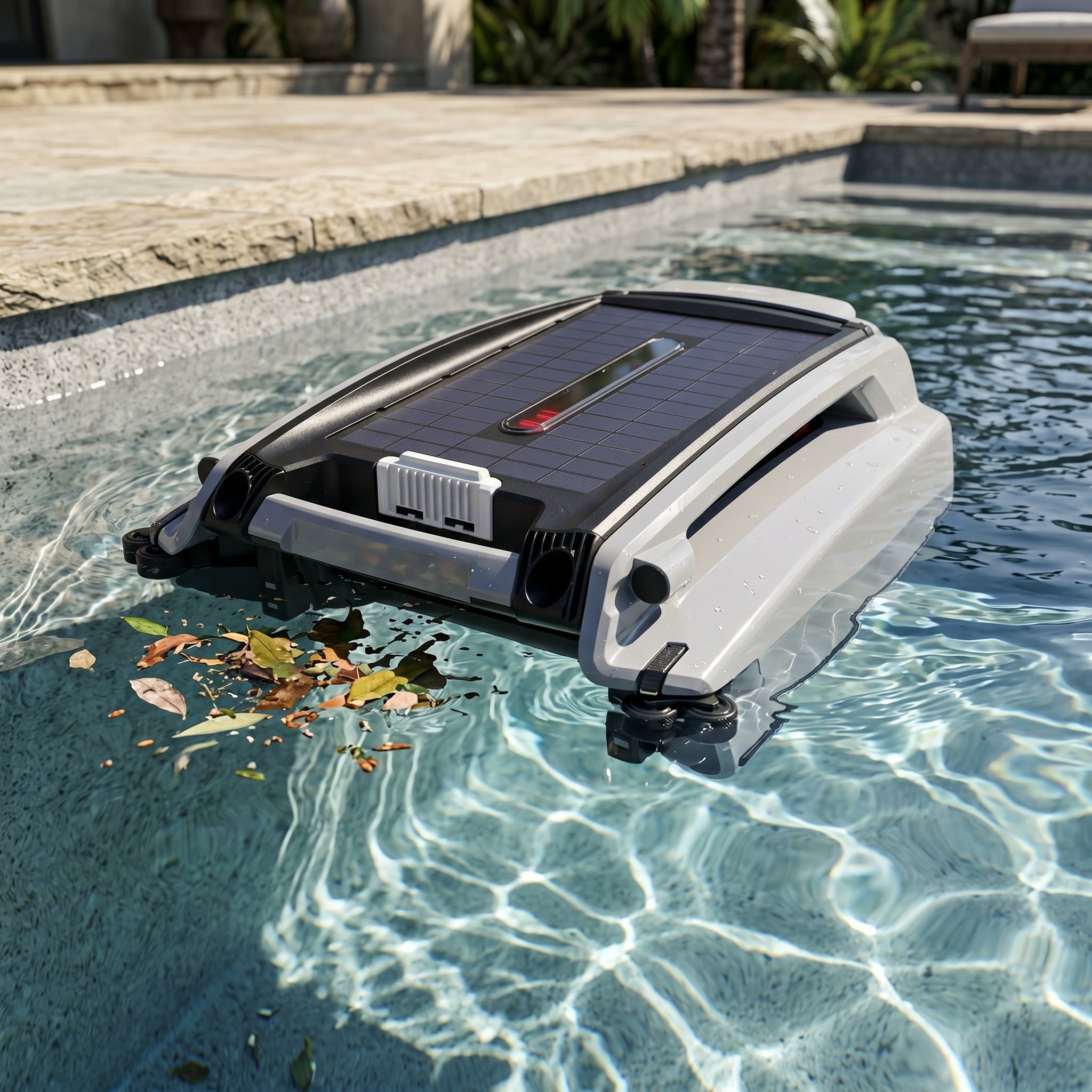
Best forDay-and-night skimming, fine debris, and variable weather
Betta SE Plus is the practical all-rounder. Solar charging handles normal operation, a wall adapter backs it up through cloudy weather, and the 30+ hour battery keeps it working after sunset.
Bottom line: Betta SE Plus is the safer recommendation when dependable recovery from poor solar conditions matters. The fine basket and adapter make it the more versatile ownership package for most pools.
See full product details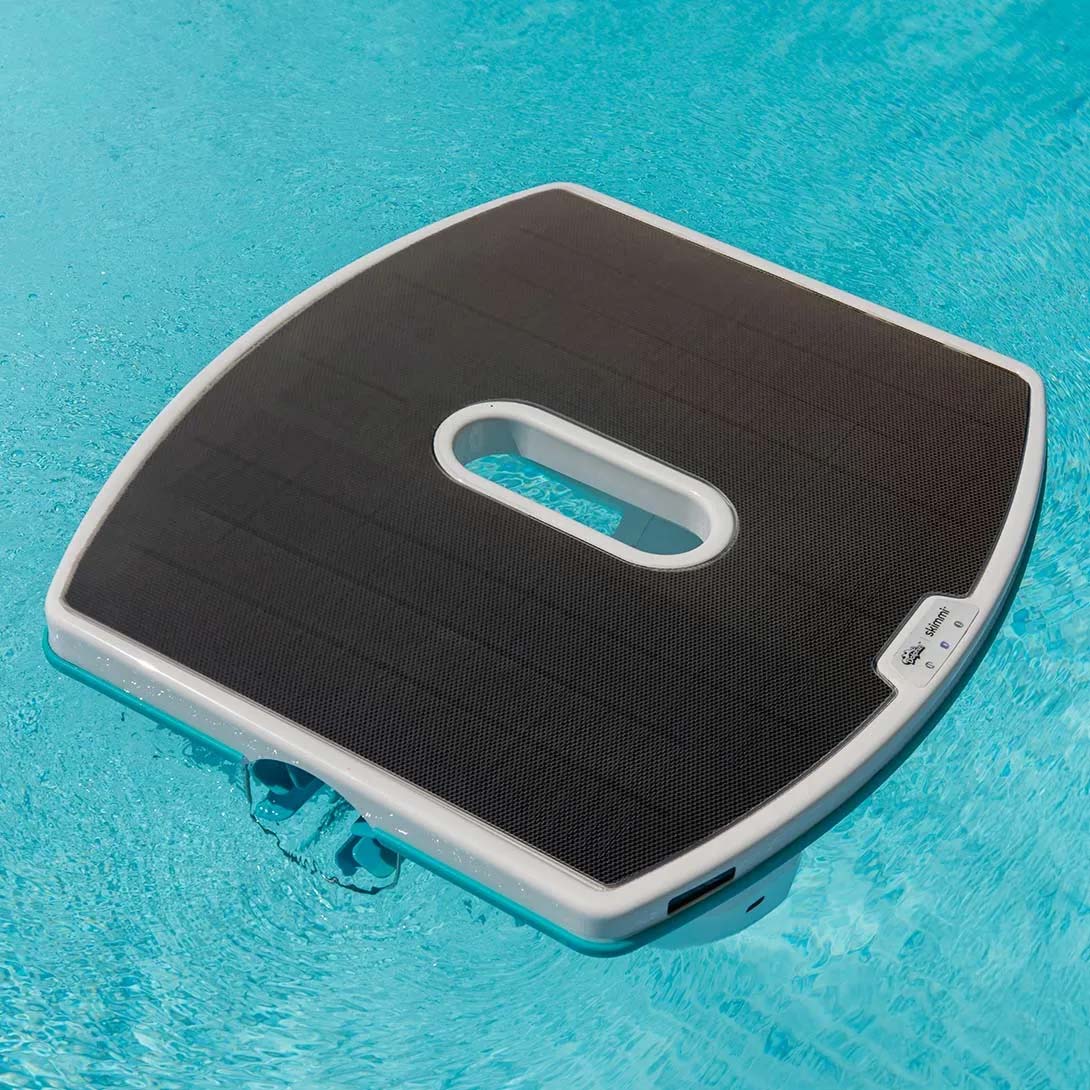
Best forLarge pools and owners who prefer phone-based control
Skimmi is the app-first choice. It runs from integrated solar power, handles pools up to about 60 feet, and lets you adjust settings or steer from the compatible app. Verify the exact model generation, app, and charger support.
Bottom line: Skimmi is the stronger choice for an app-oriented owner with good sun exposure and a larger or unusually shaped pool. Confirm the exact model generation, app, and current availability.
See full product detailsThese products complement one another. Confusing their roles is the fastest route to disappointment.
The built-in skimmer is part of the pool's hydraulic system. It pulls a portion of circulating water through a fixed opening, catches larger material in a basket, and sends water toward the pump and filter. It should continue to work correctly even when a surface robot is present.
A robotic surface skimmer is a mobile debris collector. It follows its own navigation pattern and stores material onboard. It is especially useful when wind or circulation leaves floating debris in zones that do not reach the wall skimmer quickly.
A robotic pool cleaner works below the surface. It carries brushes and stronger filtration for settled material on the floor and, depending on model, walls and waterline. A surface skimmer does not perform that scrubbing job. Owners with heavy tree debris may benefit from both: one catches material early, and the other handles what sinks.
It makes the most sense when floating debris appears most days, manual netting is frequent, the built-in skimmer misses large areas, or leaves routinely sink before the next pump cycle.
Correct a bad water level, blocked skimmer, weak circulation pattern, or broken weir before buying another device. If the surface is usually clean but the floor is dirty, put the budget toward a floor robot instead.
Published runtime is measured under favorable conditions. The daily energy budget is what determines whether the robot keeps working.
A solar panel charges whenever usable light reaches it, while motors and navigation consume power. In strong sun with a modest workload, input can meet or exceed consumption and leave energy for evening operation. In shade, clouds, winter sun, or heavy debris, the same robot may spend more time conserving power or waiting to recharge.
Betta advertises more than 30 hours on a full charge, but its own support guidance explains that fall and winter sunlight can reduce charging and runtime. The adapter is valuable because it restores a known full charge after several poor-weather days. Adapter charging must follow the manual: switch the unit off, open the protected port, and keep the charger away from the pool.
Skimmi manages solar energy through work and recharge sessions. The compatible app can adjust workload and low-light behavior. That approach avoids a wall charger but asks the owner to accept weather-dependent scheduling. Night operation means using energy stored during the day, not charging after sunset.
Keep the panel clean, avoid parking the robot under a cover or deep shade, and use an energy-saving mode when surface debris is light. Remove the unit for off-season charging or storage according to its manual.
Frequent light maintenance is easier than restoring a clogged basket, fouled panel, or jammed propeller.
Check it after storms and heavy leaf drop. A packed basket restricts intake, adds weight, and can make navigation look worse than it is.
With the unit off, remove hair, string, and plant material from the intake and propeller areas as the manual directs. Rinse away residue without using abrasive tools.
Wipe away dust, pollen, sunscreen film, and mineral spots using the approved method. A visually bright day cannot charge effectively through a dirty panel.
Follow the model's off-season charging and temperature guidance. Dry the unit, protect ports, store the remote or charger with it, and keep it away from freezing or extreme heat.
Take the robot out before anyone swims. Remove it before chemical shock, then follow the exact manufacturer guidance for elapsed time and acceptable water conditions before redeployment.
We evaluated the two skimmers by power strategy, published runtime, basket, pool fit, obstacle handling, controls, salt compatibility, maintenance, and manufacturer support. Betta facts were checked against its product page, FAQ, and SE Plus manual. Skimmi facts were checked against Maytronics product, support, and user-manual material.
We did not treat phrases such as '24/7' as a promise of uninterrupted motor operation in every climate. Both brands describe energy-management behavior, and both acknowledge that sunlight and conditions affect operation. Verdicts therefore emphasize the adapter advantage for Betta and the app-plus-solar approach for Skimmi.
Skimmi naming and app support vary by generation and region. The original Skimmi documentation references MyDolphin Skimmi, while newer Skimmi 200 / 300 documentation references Maytronics One. Confirm the exact SKU and app before purchase.
No. These robots collect floating debris at the water surface. Pair one with a robotic pool cleaner when you also want floor, wall, or waterline scrubbing.
Betta SE Plus explicitly uses salt-chlorine-tolerant motors. Always follow the current manufacturer guidance on the product page for the exact pool configuration.
Betta SE Plus has the advantage because its battery can be charged with the included adapter when sunlight is limited.
No. The built-in skimmer remains part of the circulation and filtration system. A robotic skimmer adds a moving surface basket that can collect debris outside the fixed skimmer's effective flow path.
Do not assume it can. Current Maytronics wording is ambiguous between pool covering and pool coating, while the relevant manual does not verify operation under a deployed floating cover. A cover can block travel and solar exposure.
No. The official manuals advise removing the robot before swimmers enter. Also remove it before chemical shock and follow the documented wait and water-condition guidance before returning it.
Tell us about your pool size, ledges, cover, and most common debris. We will help you choose the better surface robot.