
Your cart is empty
How to Get Rid of Algae in Your Pool (Green, Yellow & Black)
A pool can turn from crystal clear to swamp green in a day. Here's the exact battle plan to kill algae, clear the water, and make sure it never comes back.
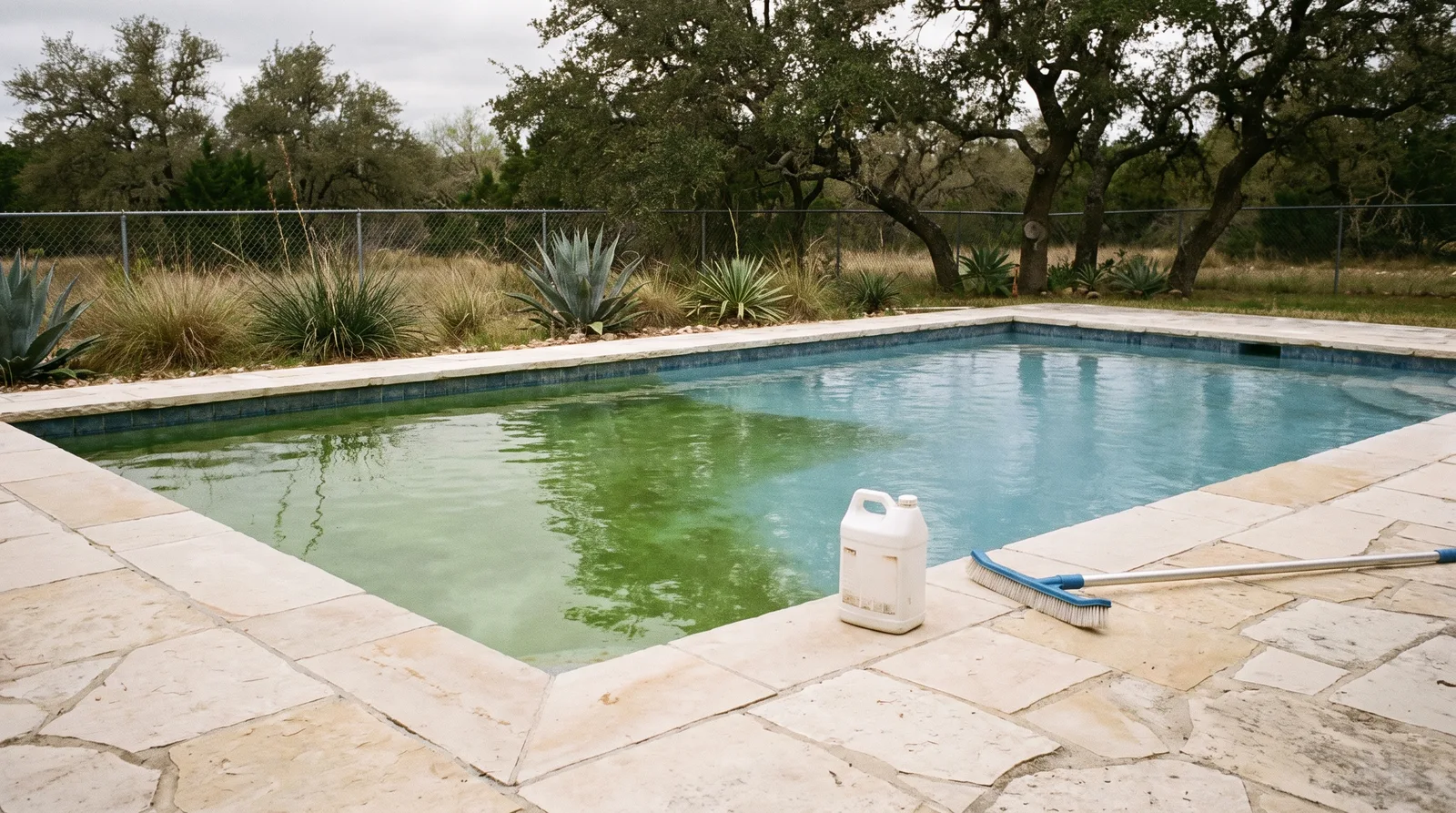
Few things ruin a Texas summer faster than walking outside to a green pool. Algae blooms seem to appear overnight — and in hot weather, they practically do. The good news: algae is almost always beatable with a systematic approach and a weekend of effort. The better news: once you understand why it happened, you can stop it from ever coming back.
This is the complete, no-shortcuts plan for clearing an algae bloom and keeping your water clear.

Why Pools Turn Green
Algae is always present in pool water as microscopic spores blown in on the wind. It only blooms when conditions let it — and those conditions are predictable:
- Sanitizer dropped too low. The number-one cause. When free chlorine (and real sanitizing power) falls, algae explodes.
- Heat and sunlight. Warm water speeds algae growth dramatically — a Texas July is prime bloom weather.
- Poor circulation and filtration. Dead spots and a dirty filter give algae a foothold.
- High pH or over-stabilization. Both cripple chlorine's ability to kill algae even when the number looks fine.
Almost every bloom traces back to sanitizer that quietly fell behind demand — usually during a hot, high-use, low-attention stretch.
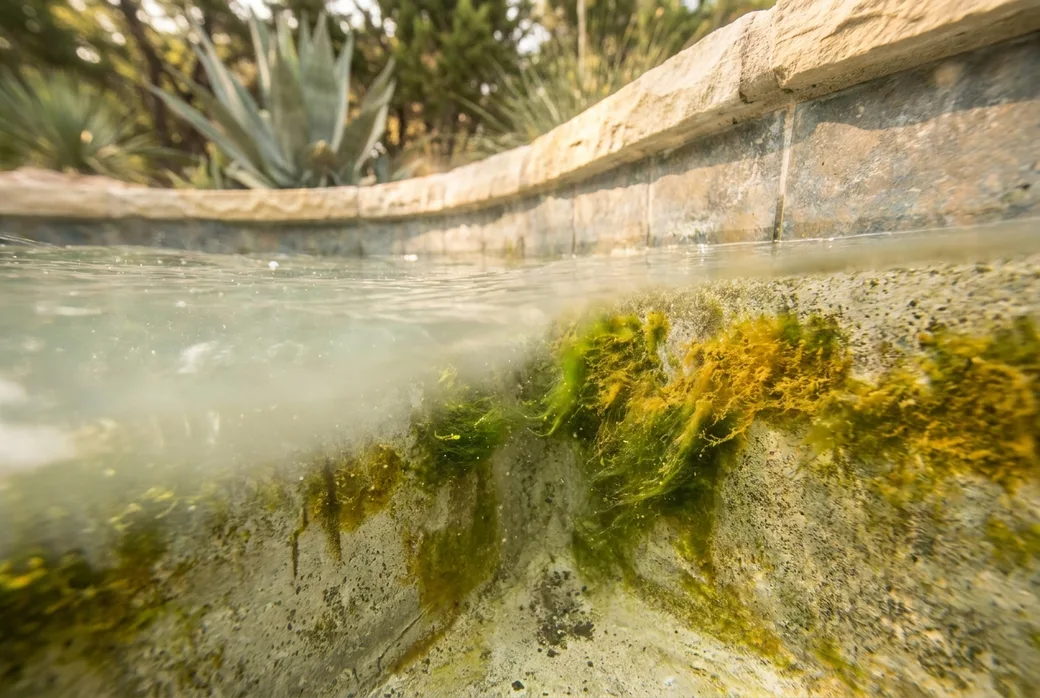
The Types of Pool Algae
Not all algae is equal, and the type changes how hard you'll have to fight:
- Green algae — the common one. Free-floating or clinging, turns water green, and responds well to shocking and brushing.
- Yellow / mustard algae — clings to shady walls, brushes off in clouds, and is stubborn — it resists normal chlorine levels and loves to return.
- Black algae — the worst. Forms hard, rooted spots in plaster that need aggressive brushing and heavy treatment to kill.
Identify what you're dealing with first; mustard and black algae need extra chlorine and persistence beyond a standard green-algae treatment.
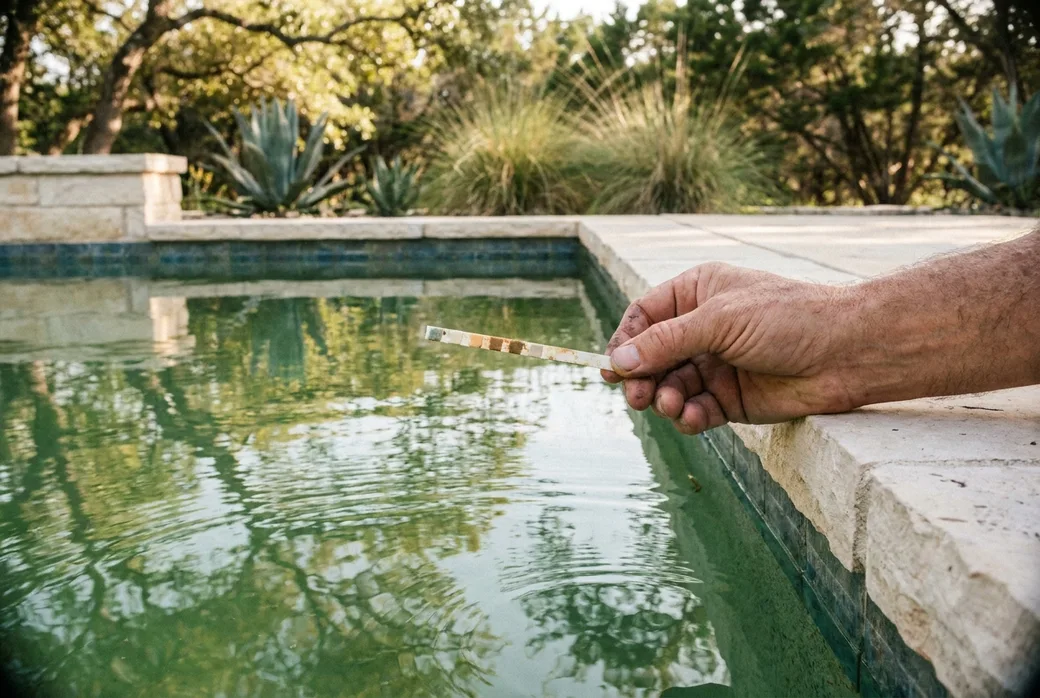
Step 1: Balance and Test Your Water
Before you dump chemicals, get real numbers. Test pH, alkalinity, and cyanuric acid. Two things matter most for killing algae:
- Lower pH toward 7.2 so chlorine hits hardest.
- Check cyanuric acid — if stabilizer is too high, chlorine is over-locked and you'll need proportionally more to reach a killing level.
Balanced water makes every ounce of chlorine that follows far more effective. Skip this and you'll waste shock fighting your own chemistry.
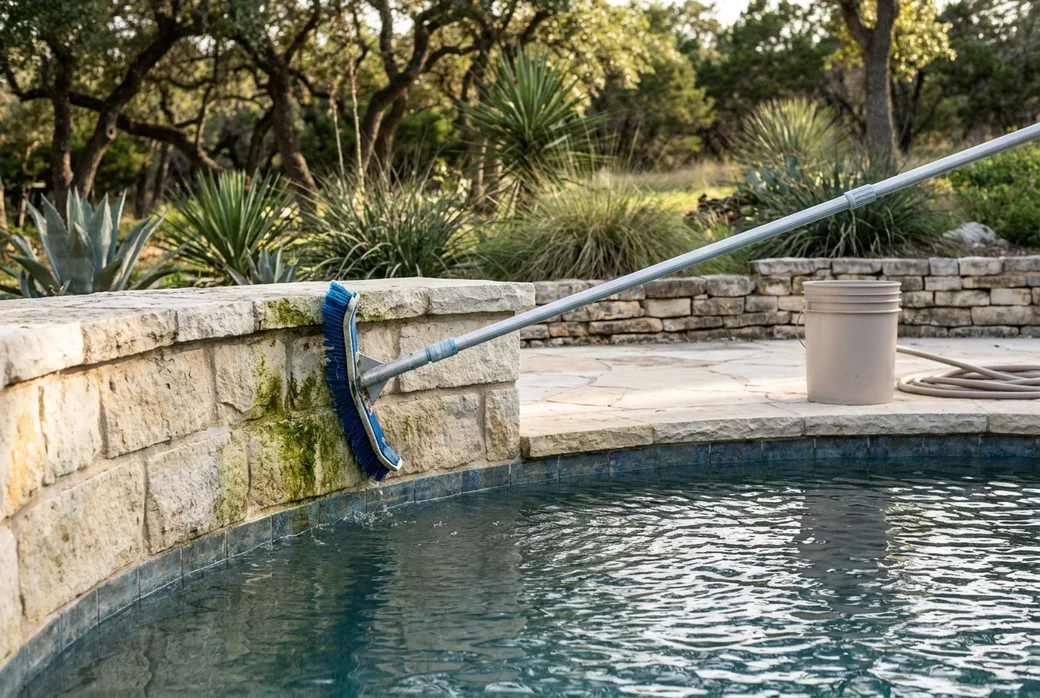
Step 2: Brush Every Surface
Algae protects itself with a slimy film. Brushing physically breaks that barrier so chlorine can reach and kill the cells. Brush everything — walls, floor, steps, and especially shady corners and the waterline. For mustard and black algae, brush hard and repeatedly; black algae heads need a stiff brush to crack their protective caps. This step is tedious but non-negotiable — shock alone won't penetrate un-brushed algae.
Step 3: Shock the Pool Hard
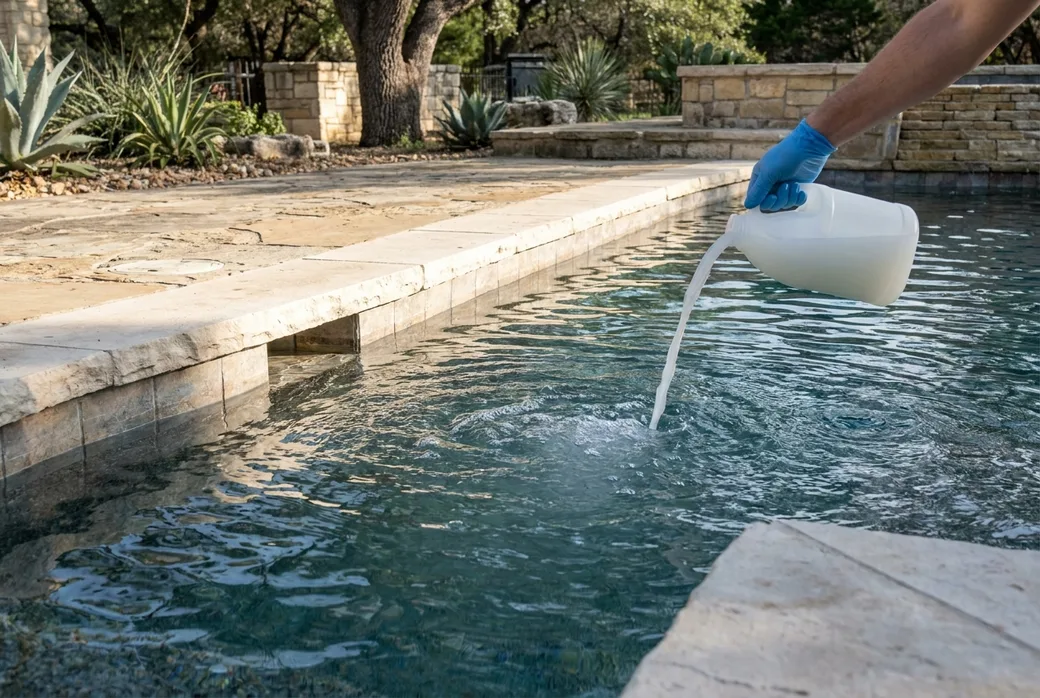
Now hit it with a heavy dose of sanitizer. Algae removal requires shock-level chlorine, well above normal — often 2–3x a standard shock for a serious bloom, and more for mustard or black algae. Pre-dissolve granular shock in a bucket (or use liquid chlorine), pour it around the pool with the pump running, and do it at dusk so sunlight doesn't burn off the chlorine before it works. Keep chlorine elevated until the water turns from green to cloudy blue-gray — that color shift means the algae is dying.
Step 4: Filter, Vacuum, and Repeat
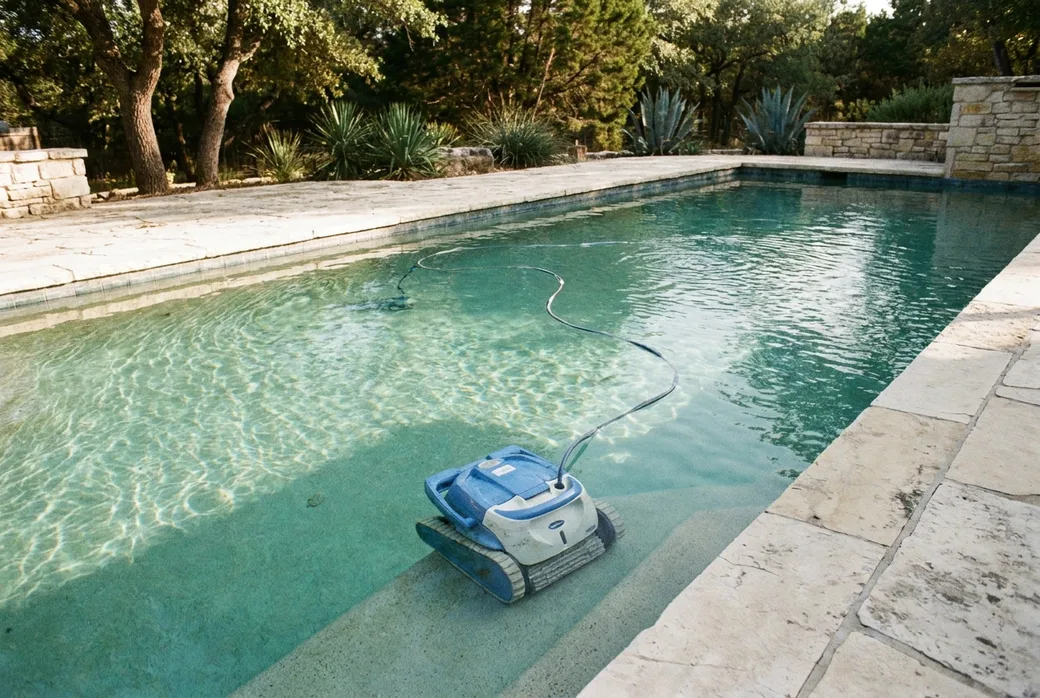
Dead algae doesn't vanish — it turns the water cloudy and has to be filtered out. Run the pump 24/7 during recovery, backwash or clean the filter often, and vacuum settled debris off the floor (vacuum to waste for heavy blooms so you don't clog the filter). A robotic pool cleaner makes this far less painful, scrubbing and lifting dead algae while you do other things. Repeat brush-shock-filter daily until the water is clear and chlorine finally holds steady overnight.
How to Stop Algae from Coming Back
Winning the battle is satisfying; winning the war is about never giving algae the opening again:
- Never let sanitizer dip. Most blooms start during a hot, busy, unwatched week. Keep chlorine and ORP in range consistently.
- Keep pH and CYA in check. Both quietly sabotage chlorine — see our guides on ORP and cyanuric acid.
- Run the pump enough. Good circulation kills dead spots. See how long to run your pump.
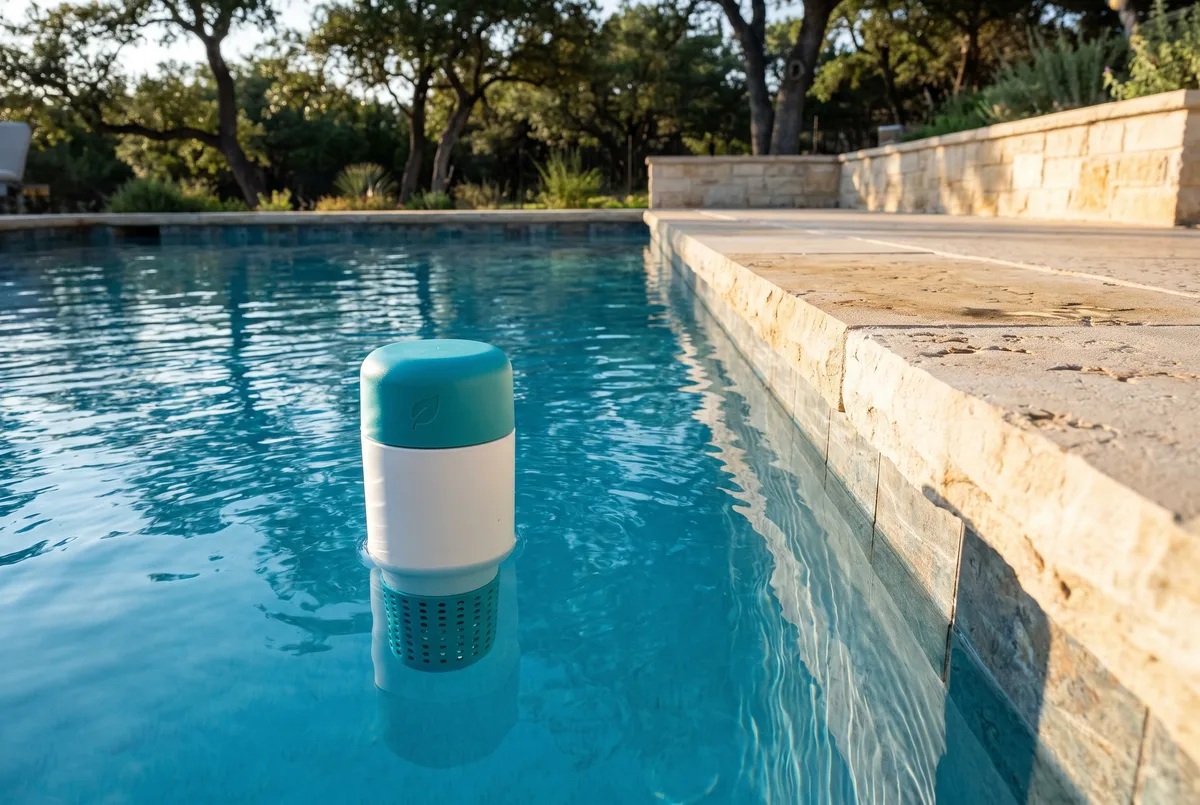
- Watch the trend, not just the moment. Algae wins in the gap between test-strip checks. A smart monitor catches falling sanitizing power days before green appears.
Make pool maintenance effortless
Our smart water monitors track pH, ORP, and more in real time — and tell you exactly what to add. No guessing, no test strips.
Explore Smart Water Monitors