
Your cart is empty
Pool Water Temperature: Ideal Range & Why It Matters
Temperature is the reading everyone feels but few track — yet it silently drives your chemistry, your algae risk, and how much water you lose. Here's why it matters.
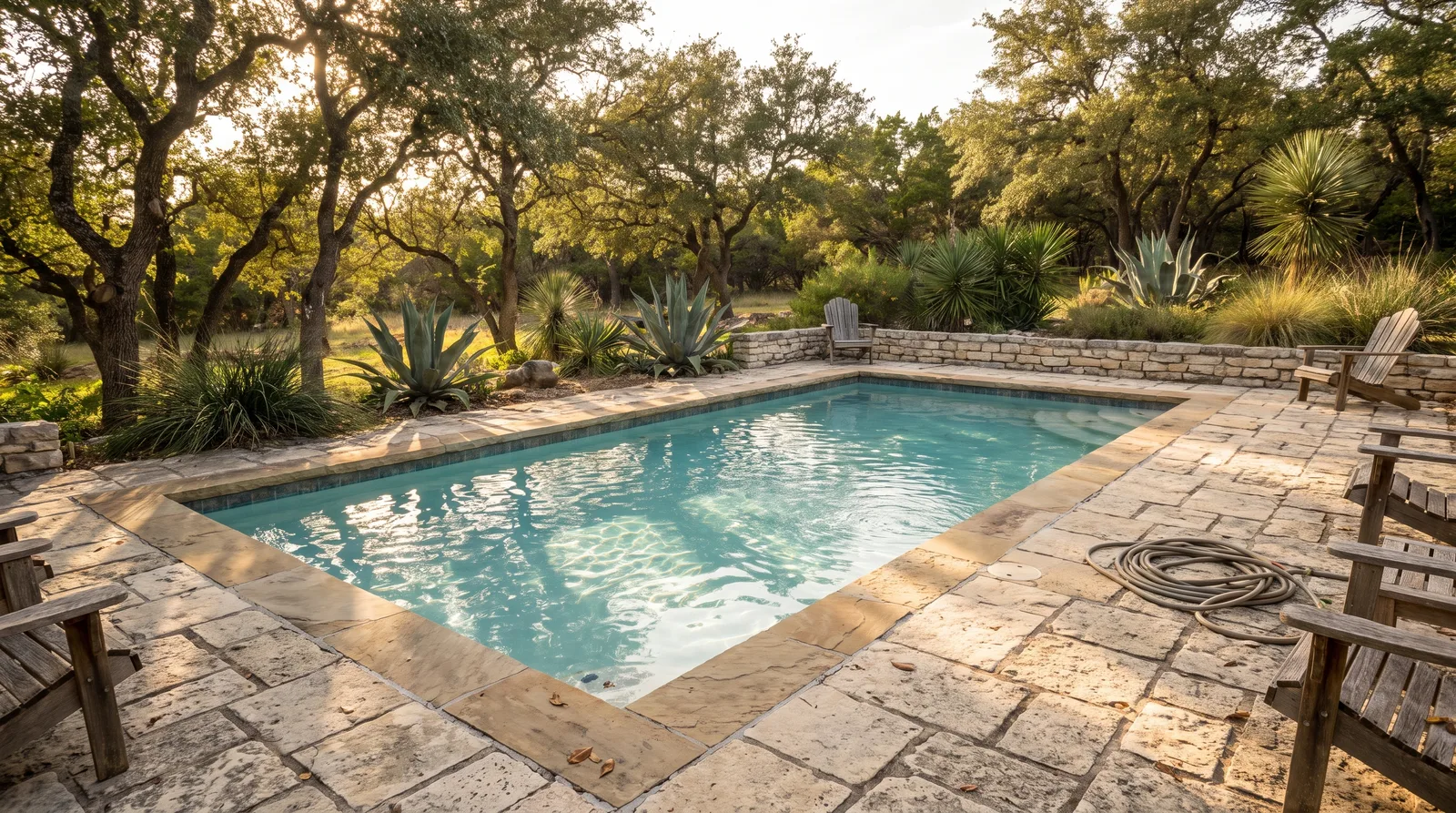
Of all the numbers in pool care, water temperature is the one everyone notices and almost nobody manages. It's easy to think of it as purely about comfort — but temperature is a hidden lever behind your chemistry, your algae risk, your chlorine bill, and how fast your water evaporates. In a hot climate especially, understanding temperature makes the rest of pool care make sense.
The Ideal Pool Temperature
For most swimmers, the comfortable range is 78–82 °F. Within that band:
- Recreational swimming feels best around 82–84 °F.
- Lap swimming and exercise are more comfortable a little cooler, 78–80 °F.
- Children and older swimmers generally prefer the warmer end.
Above ~86 °F, water starts to feel bathlike and — more importantly — chemistry and algae problems accelerate. Below ~70 °F, most people find it bracing. The comfort target and the chemistry-friendly target overlap nicely in that high-70s to low-80s range.

How Temperature Drives Chemistry
Warm water is chemically busier water. As temperature rises, reaction rates speed up across the board — which changes how your pool behaves:
- Chlorine is consumed faster, so sanitizer demand climbs on hot days.
- pH tends to shift more readily as reactions accelerate.
- Scale forms more easily, because warm water holds less dissolved calcium in solution.
This is why the exact same pool needs more attention in July than in October. Temperature isn't a passive reading — it's a multiplier on everything else.
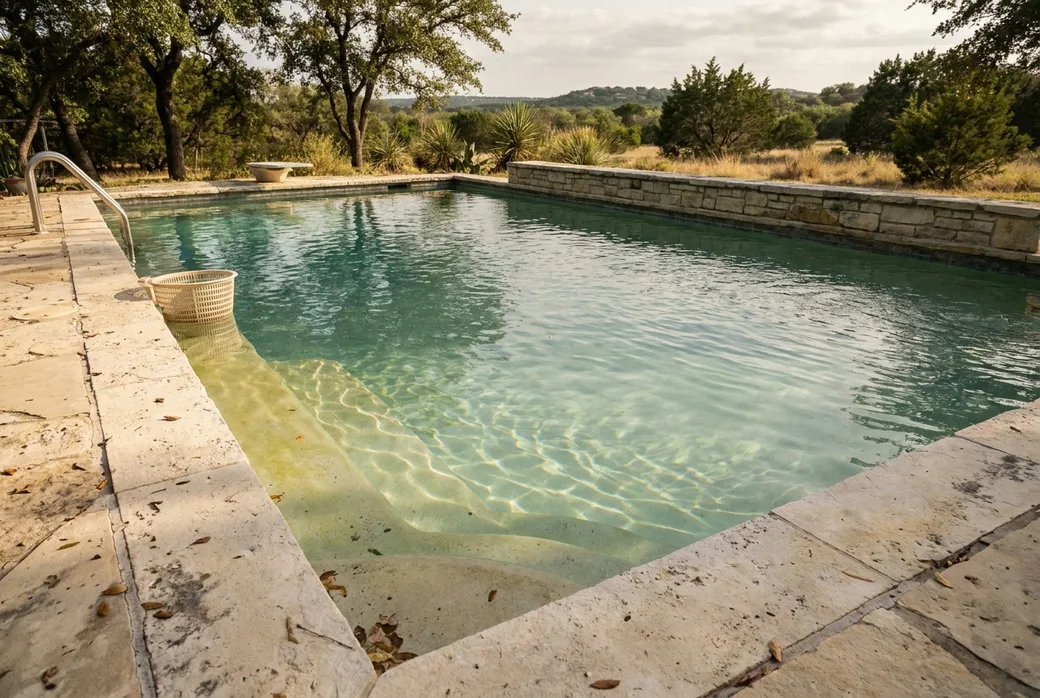
Warm Water, Algae, and Chlorine Demand
Algae loves warmth. As water heats up, algae spores multiply far faster, and they do it exactly when your chlorine is being burned off quickest by sun and heat. That combination — surging algae growth and falling sanitizer — is why blooms happen in the hottest part of summer. The practical takeaway: on hot days, your pool needs more sanitizing power and circulation, not less. Watching demand rise with temperature lets you stay ahead of it instead of reacting to a green pool. See our algae guide for the full battle plan.
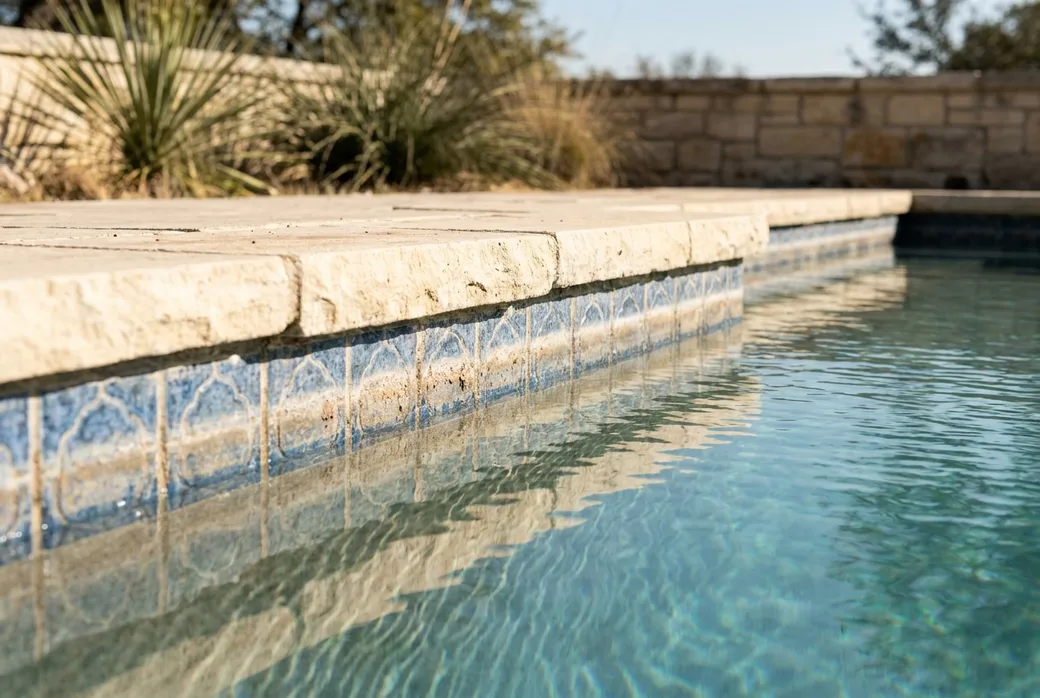
Evaporation and Water Loss
Heat also drives evaporation, and evaporation does more than lower your water level. As water evaporates it leaves dissolved solids behind, so your TDS concentrates over a hot season. You also lose chemicals and have to top off with fresh water — which adds its own minerals. In a Texas summer, a pool can lose a surprising amount of water per week, so keeping an eye on level and topping off is part of hot-weather care. A cover dramatically slows both evaporation and heat loss.
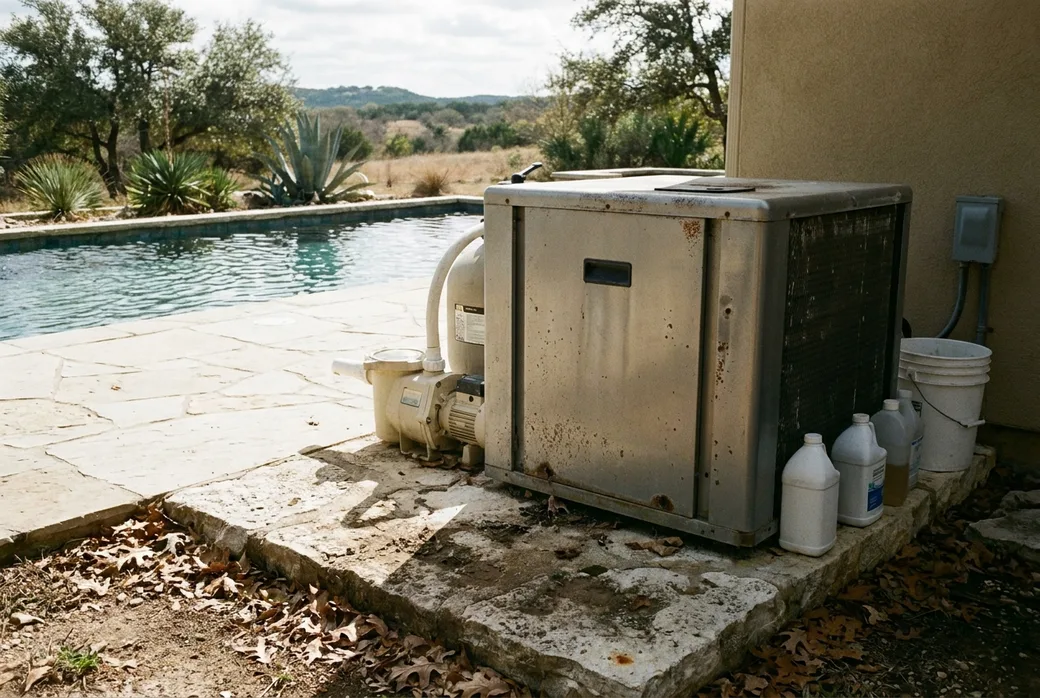
Heating and Cooling Your Pool
To extend the season or fine-tune comfort:
- Gas heaters heat fast, great for on-demand warmth.
- Heat pumps are efficient for maintaining temperature over long stretches.
- Solar heating is low-cost to run and well suited to sunny climates.
- To cool an overheated pool, run features and fountains at night to shed heat by evaporation, or run the pump overnight when air is cooler.
Matching your heating approach to how you use the pool keeps it comfortable without runaway energy costs.
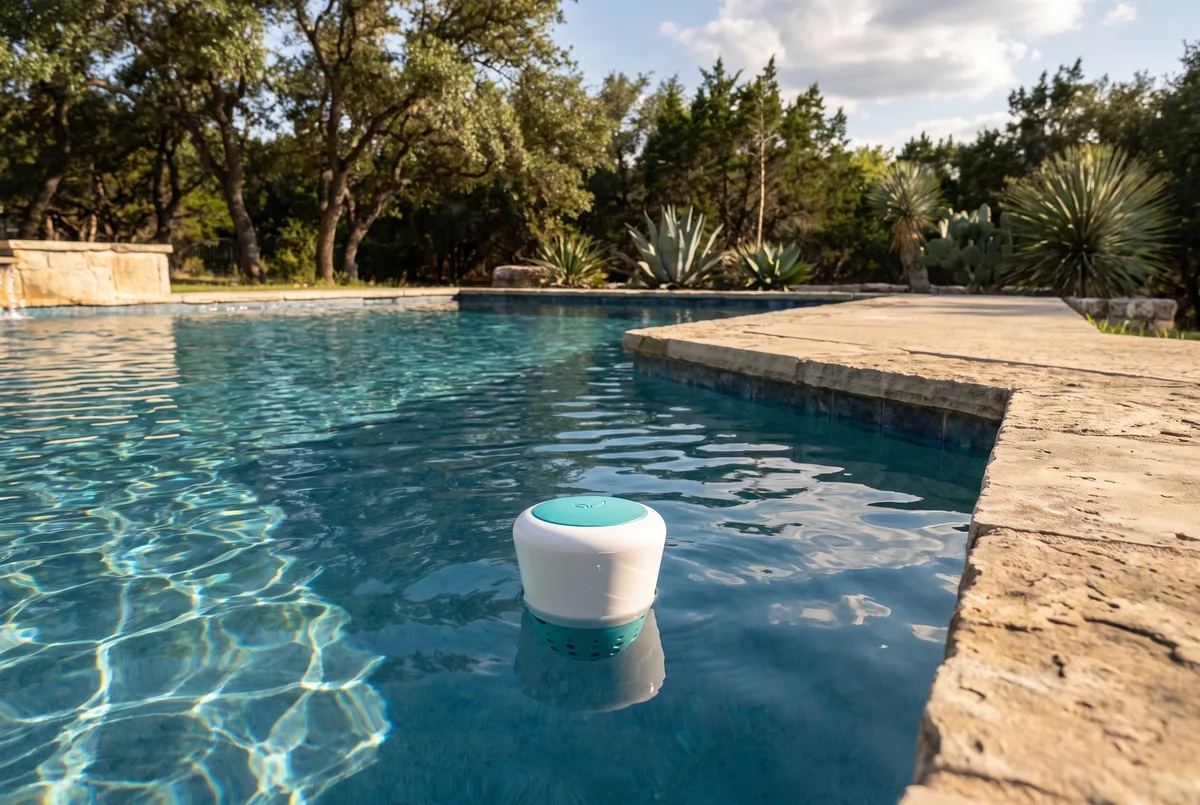
Tracking Temperature Automatically
Because temperature quietly drives everything else, knowing it in real time is more useful than it sounds. A hot spell isn't just "nice swimming weather" — it's advance notice that chlorine demand is about to spike, algae risk is climbing, and evaporation is accelerating. When your monitor factors temperature into its recommendations, you get guidance that fits today's conditions instead of a generic schedule — more attention on the scorching days, less on the mild ones.
Temperature ties the whole system together — see how it fits with the other core readings in our guide to what the ICO tracks.
Make pool maintenance effortless
Our smart water monitors track pH, ORP, and more in real time — and tell you exactly what to add. No guessing, no test strips.
Explore Smart Water Monitors