
Your cart is empty
Salt Water Pool Maintenance: A Complete Guide
Salt water pools trade jugs of chlorine for softer water and less hands-on dosing — but they still need attention. Here's what actually matters.

Salt water pools have a reputation for being effortless — silkier water, no chlorine smell, no hauling jugs. That reputation is mostly earned, but it comes with a catch: a salt pool isn't chlorine-free, it's chlorine-generating. Understanding that distinction is the key to keeping one healthy with minimal fuss.
Here's how salt pools actually work and the handful of things worth staying on top of.
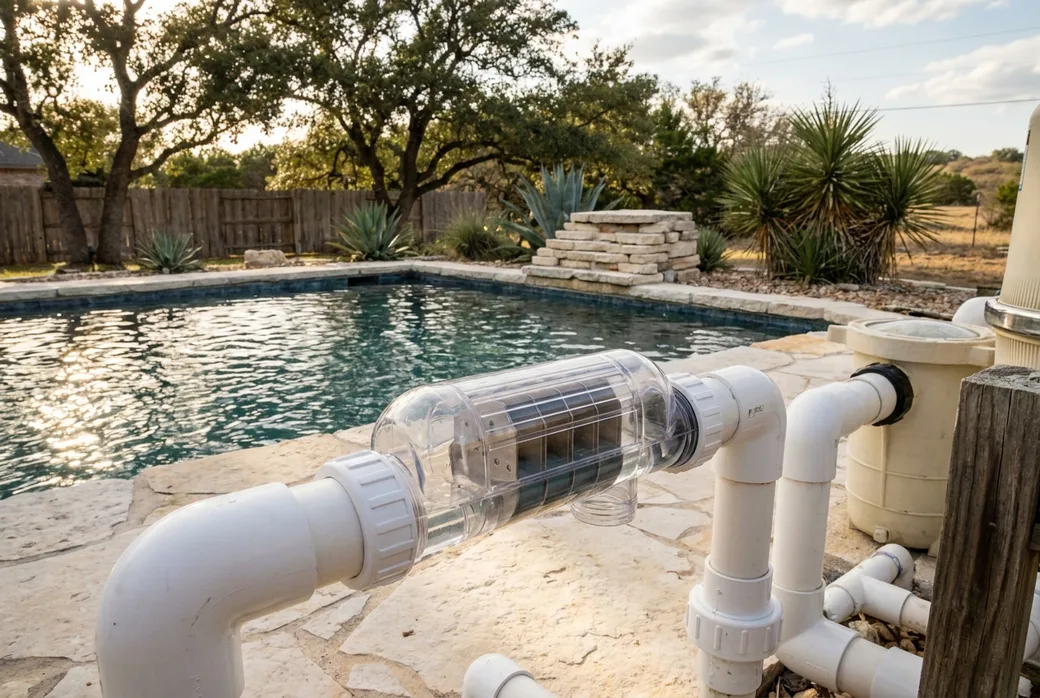
How a Salt Water Pool Actually Works
A salt water pool is still a chlorine pool — it just makes its own chlorine. You add pool-grade salt to the water, and a salt chlorine generator (SWG) passes that salty water over electrically charged metal plates. Electrolysis converts the dissolved salt into chlorine, which sanitizes the pool and then reverts back to salt, ready to be converted again.
The result is a steady, gentle trickle of chlorine instead of periodic big doses — which is why the water feels softer and more consistent. But the generator only makes chlorine; it has no idea whether the water is actually sanitized. That's why the fundamentals still matter.
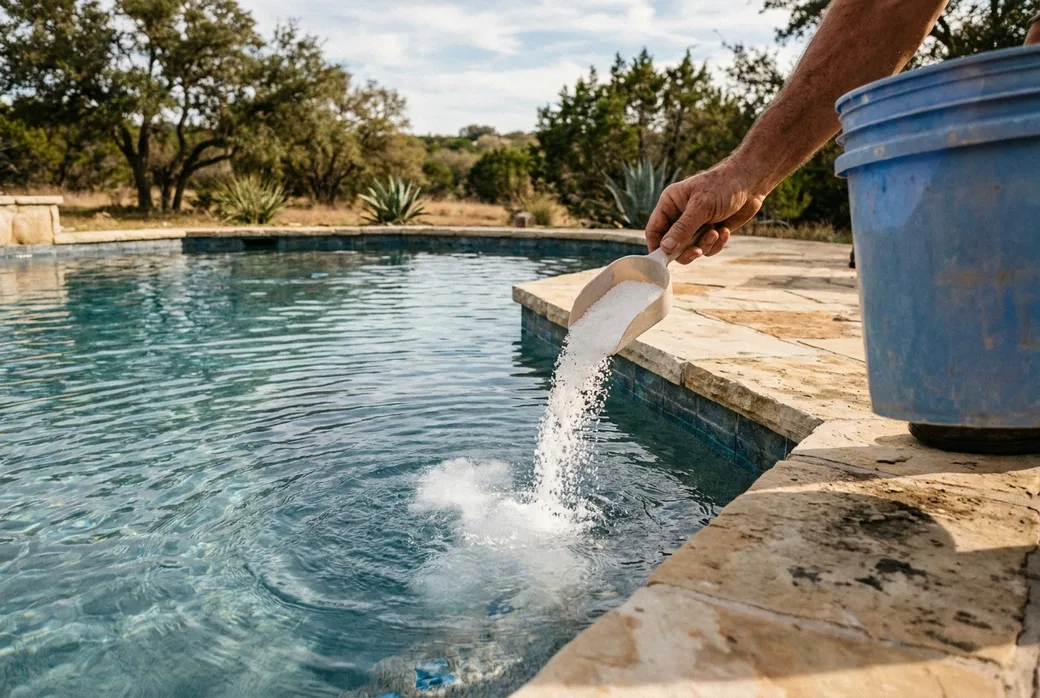
The Numbers to Keep an Eye On
Salt pools need the same balance as any pool, plus one extra:
| Measurement | Target |
|---|---|
| Salt | 2,700–3,400 ppm (check your generator's spec) |
| Free chlorine | 1–3 ppm (set by generator output) |
| pH | 7.4–7.6 (tends to rise in salt pools) |
| Total alkalinity | 80–120 ppm |
| Cyanuric acid | 60–80 ppm |
| ORP | 650–750 mV |
Salt level is the new one: too low and the generator can't make chlorine; too high and you risk corrosion and salty taste. Keep it in your unit's recommended band.
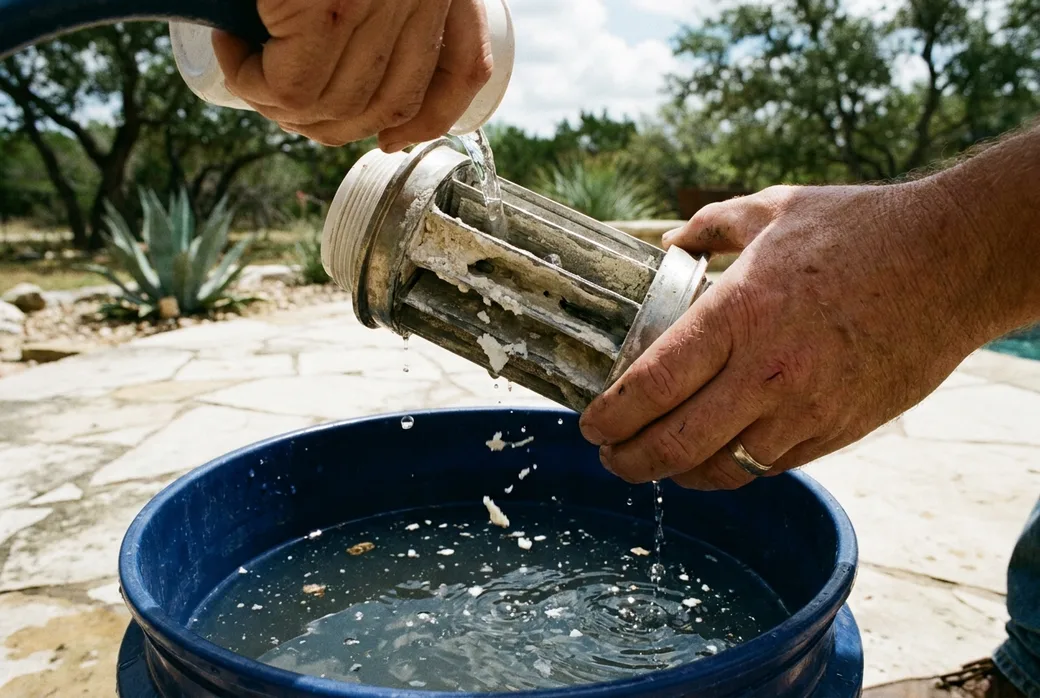
Caring for Your Salt Chlorine Generator
The salt cell is the heart of the system, and it needs periodic attention:
- Inspect for scale. Calcium builds up on the cell's plates over time, reducing output. Check it every few months.
- Clean when needed. Rinse light scale with a hose; for heavier buildup, use a diluted acid solution per the manufacturer's instructions.
- Watch the output. If you're not holding chlorine even at high output, the cell may be scaled or nearing end of life (cells typically last 3–7 years).
Keeping calcium hardness and pH in range dramatically slows scaling — see our calcium hardness guide.
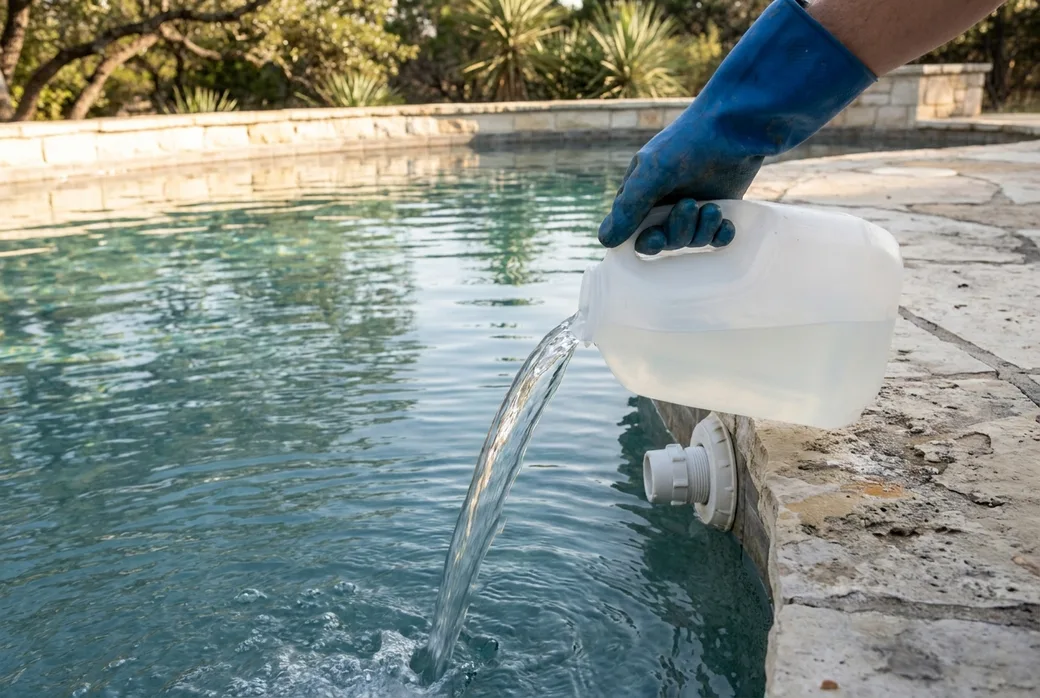
Balancing pH in a Salt Pool
Here's the one quirk every salt-pool owner learns: salt generators push pH up. The electrolysis process is naturally alkaline, so pH tends to climb steadily. Left alone, that leads to scale, cloudy water, and less effective chlorine.
The fix is routine: test pH regularly and add acid to bring it back to 7.4–7.6, and keep total alkalinity toward the lower end (80–100 ppm) so pH is less prone to climbing. Our lowering pool pH guide covers safe acid dosing.
Salt Pools and Cyanuric Acid
Because a salt generator makes chlorine continuously in the sun, cyanuric acid (stabilizer) matters even more here. Salt pools generally run CYA a bit higher — around 60–80 ppm — to protect that continuously produced chlorine from burning off in Texas sunshine. Too little and your generator can't keep up on hot days; too much and chlorine gets over-locked and sanitizing power drops. Check it seasonally. Our cyanuric acid guide explains the balance.
Smarter Salt-Pool Monitoring
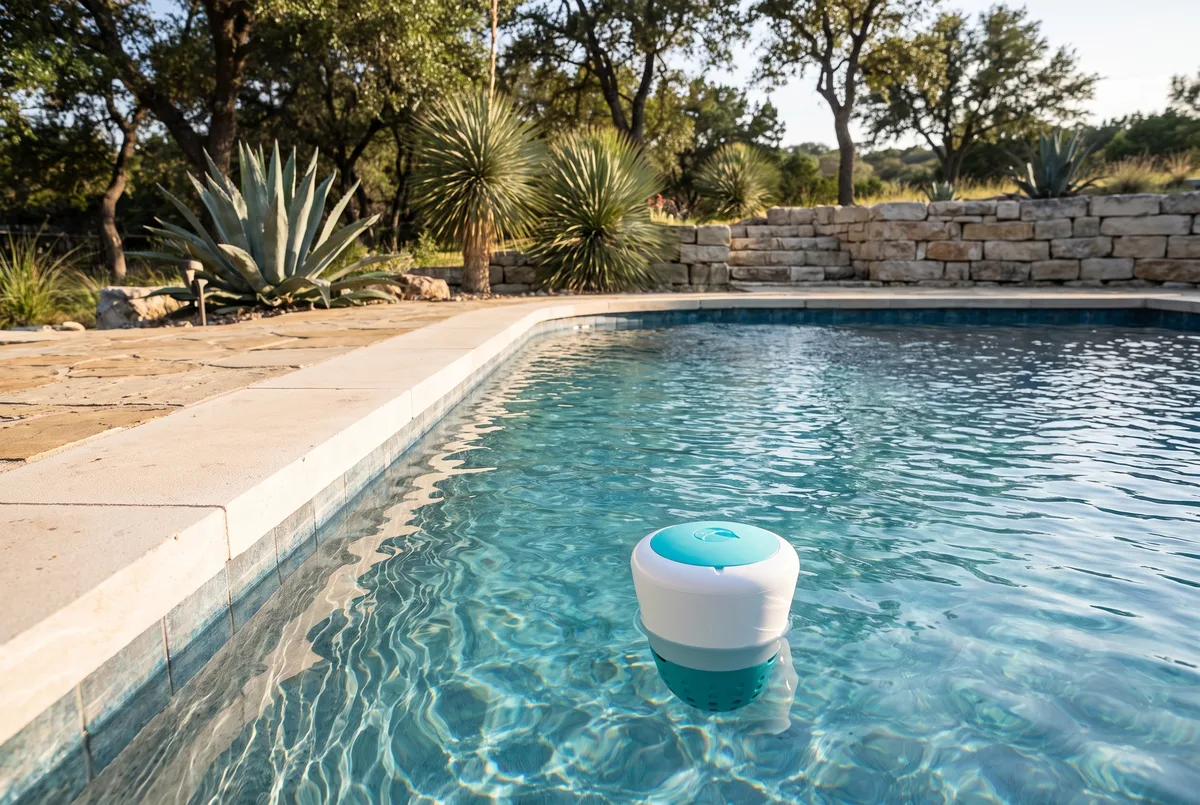
The promise of a salt pool is low effort — and the biggest threat to that promise is drift you can't see. A generator set-and-forget at one output percentage can't adapt to a heat wave or a pool party, and pH creep is silent until scale appears. Continuous monitoring closes that gap: it tells you when salinity is drifting, when pH is climbing, and whether your generator's output is actually keeping ORP where it needs to be — turning "check it and hope" into "know it and relax."
Make pool maintenance effortless
Our smart water monitors track pH, ORP, and more in real time — and tell you exactly what to add. No guessing, no test strips.
Explore Smart Water Monitors